

Product
-
Weather station
-
Road Weather Station
-
Photovoltaic Inspection
-
Atmospheric monitoring
-
Operating condition monitoring
Recommended article
- photovoltaic testers 400V/20A Range Meets the On-Site Testing Needs of Photovoltaic Modules
- Application of Low-Power Meteorological observation equipment in Unattended Field Monitoring
- How Portable Solar Cell Testers Rapidly Perform PV String I-V Curve Testing
- The price of meteorological monitoring systems varies from 3,900 to 39,800 yuan depending on the number of monitored elements
- Power Quality Measurement Makes Power Grid Harmonic Detection and Data Logging More Efficient
- High-Precision Meteorological observation equipment Aids Field Environmental Monitoring
Contact us
Shandong Fengtu IOT Technology Co., Ltd
Sales Manager:Ms. Emily Wang
Cel,Whatsapp,Wechat:+86 15898932201
Email:info@fengtutec.com
Add:No. 155 Optoelectronic Industry Accelerator, Gaoxin District, Weifang, Shandong, China
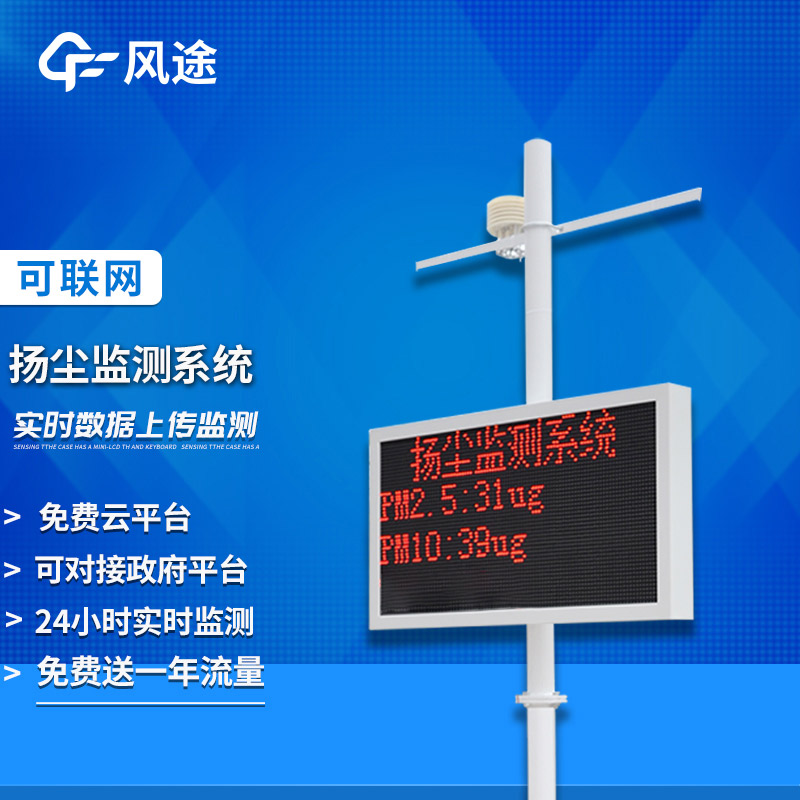
Dust monitoring system installation specification
Article source:Weather station time:2024-06-11 08:53:24 viewed:497times
To ensure the accuracy and effectiveness of dust monitoring at construction sites, the installation of dust monitoring systems must follow a series of carefully developed specifications:
1. the installation of the monitoring equipment should be located within the security fence of the construction area so that the main construction activity area can be fully monitored.
2. monitoring points should be located at the main entry and exit routes for construction vehicles as dust pollution from transport vehicles is more significant at construction sites, especially during deep foundation pit operations. If more than one monitoring point is required, at least one should be located at the main access road.
3. in order to avoid being affected by neighbouring sites, the monitoring point should not be set up on the boundary adjacent to other construction sites.
4. Monitoring equipment should be avoided in areas that may be affected by the direct action of wind or organic particulate emissions.
5. the monitoring point should be located away from any emission outlets that may produce grease and fumes in order to prevent grease and fumes from interfering with the monitoring results.
6. The monitoring point should be free of tall buildings, trees, or other obstructions that could impede air flow. The horizontal distance from the sampling port to the nearest obstruction should be at least twice the vertical distance of the obstruction above the sampling port.
7. The monitoring point should be selected in an area that is safe and has fire protection measures in place.
8. The monitoring equipment should be installed away from sources of strong electromagnetic interference to ensure the accuracy of the monitoring data.
9. The standard installation height of the particulate sampling port is recommended to be 3.5 metres above the ground to capture airborne particles more accurately.
10. Particulate matter sampling tubes should be kept vertical to ensure the representativeness and accuracy of the sampling process.
11. Monitoring instruments on site should be earthed in accordance with the electrical earthing code to ensure safe operation of the equipment.
12. After the monitoring instruments are installed, it should be ensured that there is at least 0.8 metres of operating and maintenance space around the equipment to facilitate regular inspection and maintenance.
This paper addresses:https://fengtuweather.com/industry/405.html
Related products

Related article
-
DC power supply is used for photovoltaic module defect detection
2026-03-06 -
Automatic Weather Station Price Difference Analysis
2026-02-27 -
What are forest fire risk factor collection stations for?
2024-07-17 -
Forestry Weather Station: Your All-in-One Fire Risk Sentinel in the Woods
2024-12-09 -
Ground Penetrating Radar: A Reliable Solution for Detecting Abandoned Mines and Ensuring Engineering Safety
2025-07-23 -
Forestry Weather Station is used for comprehensive monitoring and early warning of grassland and forest fire risk factors
2025-12-17 -
Which IoT devices are suitable for weather stations?
2024-03-13 -
Integrated meteorological monitoring station High-Efficiency Monitoring for Multi-Domain Applications
2026-01-28