

Product
-
Weather station
-
Road Weather Station
-
Photovoltaic Inspection
-
Atmospheric monitoring
-
Operating condition monitoring
Recommended article
- photovoltaic testers 400V/20A Range Meets the On-Site Testing Needs of Photovoltaic Modules
- Application of Low-Power Meteorological observation equipment in Unattended Field Monitoring
- How Portable Solar Cell Testers Rapidly Perform PV String I-V Curve Testing
- The price of meteorological monitoring systems varies from 3,900 to 39,800 yuan depending on the number of monitored elements
- Power Quality Measurement Makes Power Grid Harmonic Detection and Data Logging More Efficient
- High-Precision Meteorological observation equipment Aids Field Environmental Monitoring
Contact us
Shandong Fengtu IOT Technology Co., Ltd
Sales Manager:Ms. Emily Wang
Cel,Whatsapp,Wechat:+86 15898932201
Email:info@fengtutec.com
Add:No. 155 Optoelectronic Industry Accelerator, Gaoxin District, Weifang, Shandong, China
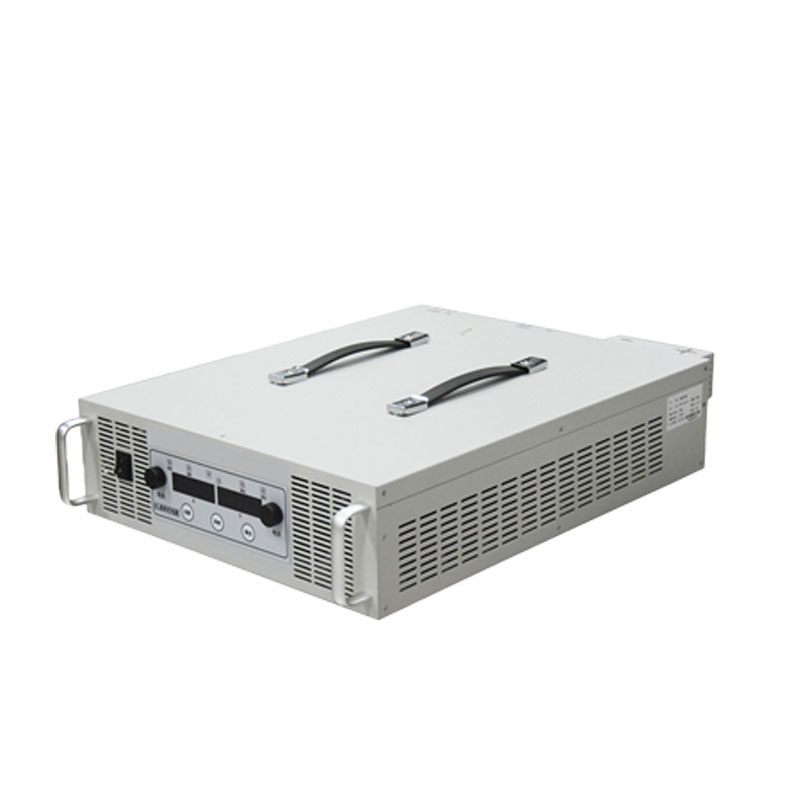
Series power supply for Photovoltaic Power Plant Module Defect Detection
Article source:Weather station time:2025-12-16 09:11:42 viewed:558times
Series power supply is a specialized device designed for on-site testing of photovoltaic power plants. This device converts AC power into stable DC power, which is then applied in reverse to the entire string of photovoltaic modules, exciting their electroluminescence effect. This allows for efficient and safe imaging detection of internal defects such as microcracks and broken grid lines within the modules, making it suitable for rapid troubleshooting during power plant operation and maintenance.
Series power supply is a key piece of equipment in photovoltaic power plant operation, maintenance, and quality inspection, specifically designed for on-site electroluminescence defect detection of installed photovoltaic strings. Its core function is to replace inverters or conventional power supplies, providing stable, controllable, and safe DC power to the entire string of photovoltaic modules to meet the specific electrical conditions of EL testing.
EL detection is a technology that identifies internal defects by detecting the luminescence state of solar cells. When a forward bias is applied to a photovoltaic module, the crystalline silicon inside emits infrared light due to non-equilibrium carrier recombination. If the module has microcracks, broken grid lines, fragments, or sintering defects, the luminescence intensity in that area will weaken or disappear, forming a dark area in the infrared camera image. Series power supply is designed to achieve this detection condition.
The device typically consists of an AC input module, a rectification and power conversion module, a precision DC output control module, protection circuits, and a human-machine interface. During operation, the device connects to the on-site industrial frequency AC power, and after rectification, filtering, and high-frequency inversion, it outputs continuously adjustable DC current and voltage through closed-loop control technology. The operator connects the positive and negative terminals of the output to the DC cables of the string under test, establishing a current path from the combiner box to the modules. The device features soft start, overvoltage and overcurrent protection, and insulation monitoring functions to ensure a response to possible ground faults or module damage, guaranteeing the safety of operators and power plant equipment.
Compared to traditional methods of testing individual modules one by one, Series power supply offers significant advantages. It allows maintenance personnel to quickly power up dozens of modules in a string directly from the combiner box side without disconnecting the string wiring, greatly improving on-site testing efficiency. Its output parameters are specially optimized to adapt to the electrical characteristics of strings of different lengths and specifications, providing sufficient and stable test current to ensure that each module achieves sufficient luminescence intensity, thereby obtaining clear EL images. The portable or mobile design of the device allows it to adapt to the operational needs of different areas within the power plant.
This power supply is mainly used for commissioning, periodic inspections, and troubleshooting in photovoltaic power plants. During the later stages of power plant construction, it can quickly screen for hidden damage to modules caused during transportation and installation. During the operation phase, it can regularly assess the health of the modules, locate performance degradation units caused by hot spots and aging, and provide direct evidence for power plant maintenance and power generation assurance. When selecting such equipment, key considerations include whether the maximum output power and voltage range match the power plant's string configuration, the stability and adjustment accuracy of the output current, the equipment's protection level and heat dissipation capabilities, and whether it integrates data recording and remote control functions to adapt to complex on-site operating environments.
This paper addresses:https://fengtuweather.com/industry/854.html
Related products

Related article
-
How Scenic Weather Stations Enhance the 'Natural Oxygen Bar' Tourism Experience
2025-02-11 -
The Portable Meteorograph for Mobile Weather Tracking
2024-09-02 -
Agricultural Environment Monitoring System for more scientific agricultural production
2024-07-26 -
From Parks to Multiple Fields: Fengtu's Environmental Monitoring Stations at Work
2024-10-17 -
How Ultrasonic Snow Depth Monitoring Stations Achieve Accurate Snow Depth Measurement
2026-07-16 -
Scenic Negative Oxygen Ion Environmental Monitoring Station
2024-08-01 -
How Dust Monitoring Equipment Safeguards Construction Site Air Quality
2025-08-14 -
Negative Oxygen Ion Detector Company
2024-05-14