

Product
-
Weather station
-
Road Weather Station
-
Photovoltaic Inspection
-
Atmospheric monitoring
-
Operating condition monitoring
Recommended article
- The forest meteorological fire risk monitoring station collects real-time meteorological data related to forest fire risk
- Radar speed gun utilizes the Doppler effect to achieve multi-scenario speed measurement
- Ultrasonic Snow Depth Detector Automated Snow Depth Measurement Using Ultrasonic Technology
- Speed enforcement system Achieves Precise Speed Measurement and Evidence Collection Based on the Doppler Principle
- Miniature Weather Stations Enable Precise Multi-Parameter Integrated Environmental Meteorological Monitoring
- What Testing Instruments are Required for Photovoltaic Power Generation Acceptance?
Contact us
Shandong Fengtu IOT Technology Co., Ltd
Sales Manager:Ms. Emily Wang
Cel,Whatsapp,Wechat:+86 15898932201
Email:info@fengtutec.com
Add:No. 155 Optoelectronic Industry Accelerator, Gaoxin District, Weifang, Shandong, China
How Tunnel COVI Detectors Protect Driving Safety in Real Time
Article source:Weather station time:2026-05-21 10:58:02 viewed:246times
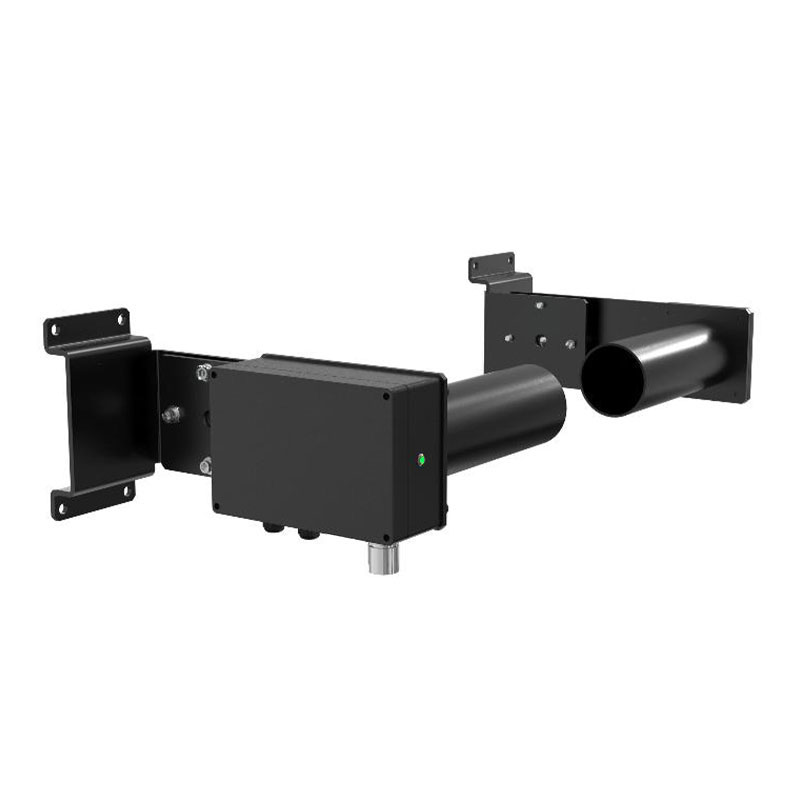
Tunnel COVI detectors are devices used to monitor carbon monoxide concentration and visibility in tunnels. They employ a light projection method, supporting simultaneous or separate measurements of CO and VI values. Data is uploaded to a monitoring center in real time, providing a basis for ventilation system adjustments.
Tunnel COVI detectors operate based on the principle of transmission. The transmitter and receiver are installed opposite each other, with a 3-meter interval, forming a dual-path optical system with an actual detection optical path of 6 meters. The highly focused beam emitted by the optical components passes through the tunnel air. Due to the attenuation effect of dust particles, the intensity of the light signal received by the receiver changes, and the measured value is obtained after processing. Carbon monoxide concentration detection uses an electrochemical sensor, determining the concentration through the current signal generated by the chemical reaction between CO gas and an electrolyte. This device supports simultaneous or separate measurements of visibility (VI value, unit L/m) and carbon monoxide (CO concentration, unit PPM), with a measurement range of VI 0–35 × 10⁻³ L/m and CO 0–1000 PPM, and an accuracy of VI ±0.0001 L/m and CO ±1 PPM. The device features high-resolution visibility measurement capabilities, is completely unaffected by stray light sources, and is specifically designed for harsh environments such as high humidity, dust, and vehicle vibration in tunnels. It has a built-in compensation function that automatically compensates for gain when the optical lens is contaminated, effectively extending maintenance intervals. The device also includes status display, fault alarm, and data storage functions. Users can obtain monitoring data via an RS485 digital output interface or a 4–20mA analog signal interface.
In practical applications, the tunnel COVI detector is installed on the tunnel roof or sidewall, and data is transmitted in real-time to the tunnel monitoring center via wired or wireless means. When the carbon monoxide concentration exceeds the standard or visibility falls below the safe threshold, the monitoring system can automatically activate ventilation equipment to start exhaust or trigger an early warning to notify management personnel. The Xiamen Bridge and Tunnel Center conducted unified testing on COVI devices in 18 tunnels throughout the city to ensure accurate data and normal operation, demonstrating the practical value of this type of equipment in tunnel operation and management.
When using tunnel COVI detectors, users should ensure the correct installation orientation and that the transmitter and reflector beams are aligned before use. The lens protection window of the equipment needs to be cleaned regularly; otherwise, the measured values will be too high. Cleaning is typically done every three months, and the frequency should be increased in windy and dusty areas. In case of equipment malfunction, users should not disassemble or repair it themselves but should contact the manufacturer immediately.
This paper addresses:https://fengtuweather.com/company/946.html
Related products

Related article
-
Automated Weather Station Installation Costs Range from ¥3,900 to ¥9,800
2026-05-06 -
Infrared Thermal Imaging Camera FT-HYS5: Breaking Visual Barriers for Efficient and Safe Underwater Operations
2025-07-15 -
Price Variations in Six-Element Weather Stations: Driven by Sensor Principles and Configuration Requirements
2026-05-09 -
Dust monitoring equipment selection points
2024-02-07 -
Fengtu Small Automatic Weather Station: Integrated Monitoring for Timely Meteorological Insights
2025-07-10 -
Speed enforcement system Achieves Precise Speed Measurement and Evidence Collection Based on the Doppler Principle
2026-08-14 -
The price of small weather stations varies depending on their model and configuration
2026-08-06 -
Principle of field mini weather station
2024-04-09