

Product
-
Weather station
-
Road Weather Station
-
Photovoltaic Inspection
-
Atmospheric monitoring
-
Operating condition monitoring
Recommended article
- What Testing Instruments are Required for Photovoltaic Power Generation Acceptance?
- Road meteorological monitoring systems collect road condition and meteorological data to ensure road safety
- The PV module IV tester performs volt-ampere characteristic testing on outdoor PV modules
- The price of small weather stations varies depending on their model and configuration
- photovoltaic testers 400V/20A Range Meets the On-Site Testing Needs of Photovoltaic Modules
- Application of Low-Power Meteorological observation equipment in Unattended Field Monitoring
Contact us
Shandong Fengtu IOT Technology Co., Ltd
Sales Manager:Ms. Emily Wang
Cel,Whatsapp,Wechat:+86 15898932201
Email:info@fengtutec.com
Add:No. 155 Optoelectronic Industry Accelerator, Gaoxin District, Weifang, Shandong, China
What Testing Instruments are Required for Photovoltaic Power Generation Acceptance?
Article source:Weather station time:2026-08-11 09:35:41 viewed:1times
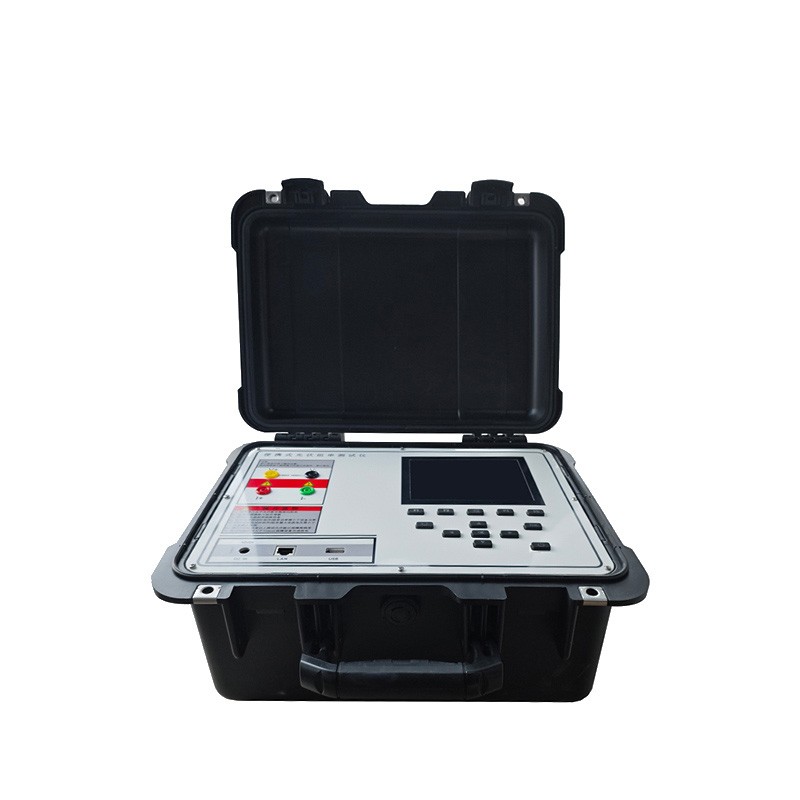
The acceptance of photovoltaic power generation systems utilizes several professional testing instruments. A portable IV curve tester is responsible for measuring the power generation parameters of photovoltaic strings, suitable for on-site testing of high-power power plants, and is a core piece of equipment in the acceptance phase. It supports voltage up to 1500V and current up to 20A, and can test photovoltaic strings up to 30kW. Combined with sensors to collect data on sunlight and module temperature, it can complete a complete performance test in a short time.
The grid-connected acceptance of photovoltaic power plants has standardized testing items. Electrical safety, module power generation performance, and line hazard investigation all require corresponding instruments for verification. Among these, the module power generation capacity test directly determines the upper limit of the entire photovoltaic array's power generation. The portable IV curve tester is the main equipment for this project. Most conventional testers on the market can only handle module testing up to 1000V. This portable IV curve tester has an expanded voltage range, making it suitable for current high-voltage photovoltaic strings. It has a built-in high-precision capacitive load, scans and analyzes the complete IV curve, and accurately reads key acceptance indicators such as open-circuit voltage, short-circuit current, and peak maximum power.
Equipped with photoelectric radiation sensors and backsheet temperature sensors, the equipment can simultaneously record irradiance and module temperature values even under natural light conditions. This eliminates the need for personnel to carry multiple additional sensors, reducing the tool burden during outdoor acceptance testing. The machine features a unibody design with a clear and intuitive button layout, allowing even novice operators to quickly learn how to use it. A single module or string test takes only 5 seconds, and all test data can be exported with a single click, facilitating the organization of test logs and submission of acceptance documents by acceptance personnel.
Third-party testing agencies and photovoltaic power plant operation and maintenance teams face heavy daily acceptance tasks. The stability and testing speed of instruments are crucial for testing large quantities of photovoltaic strings. This IV tester offers the advantage of continuous scanning, preventing data drift even during prolonged outdoor operation, and comprehensively identifies issues such as module solder joint defects, cell microcracks, and module shading mismatch. After completing all module performance tests, personnel can then use infrared thermal imagers, insulation resistance testers, and grounding testers to complete the remaining safety inspections. The entire testing process is compliant and efficient, ensuring the photovoltaic power plant successfully passes power generation acceptance.
This paper addresses:https://fengtuweather.com/technical/986.html
Related products
Related article
-
What is the Sky Scanner? A handy and useful cloud measuring instrument
2024-05-22 -
How Dust Monitoring Equipment Safeguards Construction Site Air Quality
2025-08-14 -
Portable Vehicle-Mount Weather Station: Precision Meteorological Monitoring for On-Road Safety
2025-07-24 -
Handheld Radar SpeedGun Supports Both Manual and Automatic Sampling Modes
2026-04-30 -
EL Test Power Supply is used for batch EL defect detection and production testing of photovoltaic modules
2025-12-24 -
Advantages of Atmospheric Negative Oxygen Ion Monitoring System
2024-02-05 -
The All - in - One Grassland Ecological Monitoring Station (FT - CQX9)
2025-01-23 -
Sensors, the sensing equipment of a weather station system
2024-06-14