

Product
-
Weather station
-
Road Weather Station
-
Photovoltaic Inspection
-
Atmospheric monitoring
-
Operating condition monitoring
Recommended article
- photovoltaic testers 400V/20A Range Meets the On-Site Testing Needs of Photovoltaic Modules
- Application of Low-Power Meteorological observation equipment in Unattended Field Monitoring
- How Portable Solar Cell Testers Rapidly Perform PV String I-V Curve Testing
- The price of meteorological monitoring systems varies from 3,900 to 39,800 yuan depending on the number of monitored elements
- Power Quality Measurement Makes Power Grid Harmonic Detection and Data Logging More Efficient
- High-Precision Meteorological observation equipment Aids Field Environmental Monitoring
Contact us
Shandong Fengtu IOT Technology Co., Ltd
Sales Manager:Ms. Emily Wang
Cel,Whatsapp,Wechat:+86 15898932201
Email:info@fengtutec.com
Add:No. 155 Optoelectronic Industry Accelerator, Gaoxin District, Weifang, Shandong, China
Introduction to the Integrated Forest and Grassland Fire Risk Factor Monitoring Station
Article source:Weather station time:2024-02-06 10:21:35 viewed:569times
Forests are the "lungs of the earth", consuming carbon dioxide and releasing oxygen. Autumns and winters are dry and prone to fires, which are difficult to control. Fires destroy forests, harm animals, pollute the environment and upset the ecological balance. Therefore, it is crucial to prevent forest fires and we need to take measures to protect forest resources.
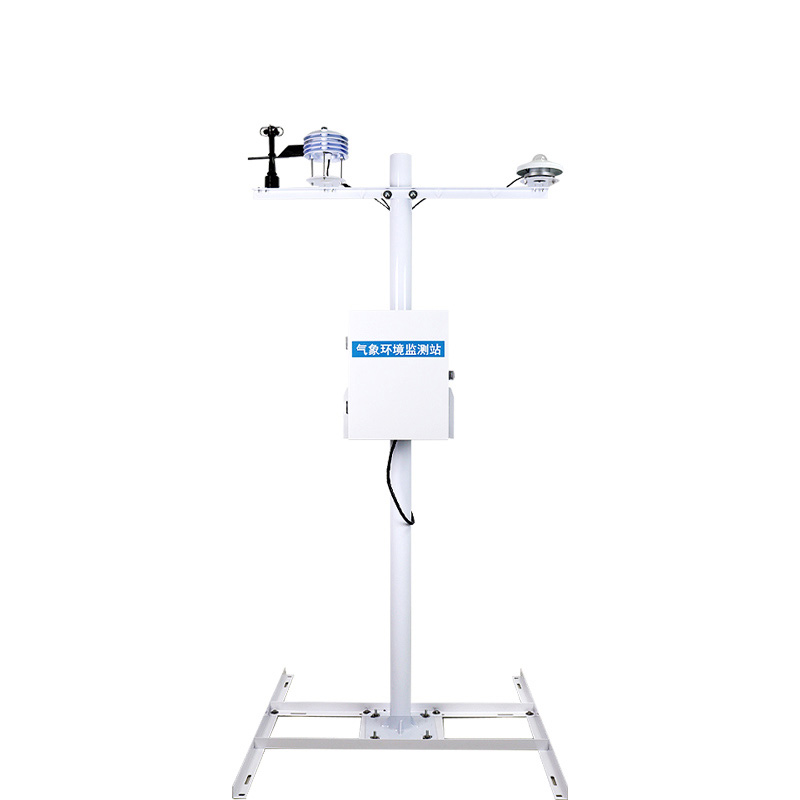
Setting up fire risk factor monitoring stations in forests enables real-time monitoring of changes in key factors such as the meteorological environment, temperature environment and soil moisture content. Once abnormalities are detected, these monitoring stations are equipped with sound and light alarms that will immediately sound an alarm, alerting people to the fire danger in a timely manner. This early warning mechanism is of great significance in preventing forest fires and protecting forest resources. Through these monitoring stations, we can better understand the changes in the forest environment and take timely measures to cope with potential fire risks, thus effectively reducing the possibility of fire.
The Integrated Forest and Grassland Fire Risk Factor Monitoring Station enables the Forest Fire Prevention Command Centre to observe the conditions of the forest area in real time, so as to detect the source of fire and take effective measures to prevent fire in time. Once a fire breaks out, the system can immediately transmit images of the scene back to the command centre, providing strong support for remote dispatch and command and helping to minimise fire losses. In addition, the system can also record the occurrence, development and end of the whole process of the fire, for the prevention and management of fire to provide real and complete historical information, for the subsequent fire prevention work to provide an important reference basis. Forests are the "lungs of the earth", consuming carbon dioxide and releasing oxygen. Autumn and winter are dry and prone to fires, which are difficult to control. Fires destroy forests, harm animals, pollute the environment and upset the ecological balance. Therefore, it is crucial to prevent forest fires and we need to take measures to protect forest resources.
Setting up fire risk factor monitoring stations in forests enables real-time monitoring of changes in key factors such as the meteorological environment, temperature environment and soil moisture content. Once abnormalities are detected, these monitoring stations are equipped with sound and light alarms that will immediately sound an alarm, alerting people to the fire danger in a timely manner. This early warning mechanism is of great significance in preventing forest fires and protecting forest resources. Through these monitoring stations, we can better understand the changes in the forest environment and take timely measures to cope with potential fire risks, thus effectively reducing the possibility of fire.
The Integrated Forest and Grassland Fire Risk Factor Monitoring Station enables the Forest Fire Prevention Command Centre to observe the conditions of the forest area in real time, so as to detect the source of fire and take effective measures to prevent fire in time. Once a fire breaks out, the system can immediately transmit images of the scene back to the command centre, providing strong support for remote dispatch and command and helping to minimise fire losses. In addition, the system is able to record the whole process of fire occurrence, development and ending, providing real and complete historical information for fire prevention and management, and providing important reference basis for subsequent fire prevention work.

This paper addresses:https://fengtuweather.com/company/129.html
Related products
Related article
-
Evaluating Photovoltaic Module Quality with Portable EL Detectors
2025-08-04 -
Integrating Safety and Efficiency: The Road Weather Station for Traffic Management
2024-09-12 -
Visibility, Road Condition & Wind Monitoring: Key Equipment Safeguarding Highway Traffic Against Meteorological Risks
2025-09-02 -
Forest Weather Monitoring System to protect against hill fires
2024-04-29 -
Laser snow depth monitor is applicable to snow depth observation in meteorology, traffic and disaster warning
2025-12-15 -
photovoltaic testers 400V/20A Range Meets the On-Site Testing Needs of Photovoltaic Modules
2026-07-31 -
Are field microclimate observatories useful?
2024-04-15 -
Tailored for Emergencies: The Complementary Advantages of Two Weather Monitoring Tools
2025-04-22