

Product
-
Weather station
-
Road Weather Station
-
Photovoltaic Inspection
-
Atmospheric monitoring
-
Operating condition monitoring
Recommended article
- photovoltaic testers 400V/20A Range Meets the On-Site Testing Needs of Photovoltaic Modules
- Application of Low-Power Meteorological observation equipment in Unattended Field Monitoring
- How Portable Solar Cell Testers Rapidly Perform PV String I-V Curve Testing
- The price of meteorological monitoring systems varies from 3,900 to 39,800 yuan depending on the number of monitored elements
- Power Quality Measurement Makes Power Grid Harmonic Detection and Data Logging More Efficient
- High-Precision Meteorological observation equipment Aids Field Environmental Monitoring
Contact us
Shandong Fengtu IOT Technology Co., Ltd
Sales Manager:Ms. Emily Wang
Cel,Whatsapp,Wechat:+86 15898932201
Email:info@fengtutec.com
Add:No. 155 Optoelectronic Industry Accelerator, Gaoxin District, Weifang, Shandong, China
Odor gas detector Real-time Monitoring of Odor Concentration (OU) and Concentration of Multiple Odor Gases
Article source:Weather station time:2025-12-18 09:29:22 viewed:610times
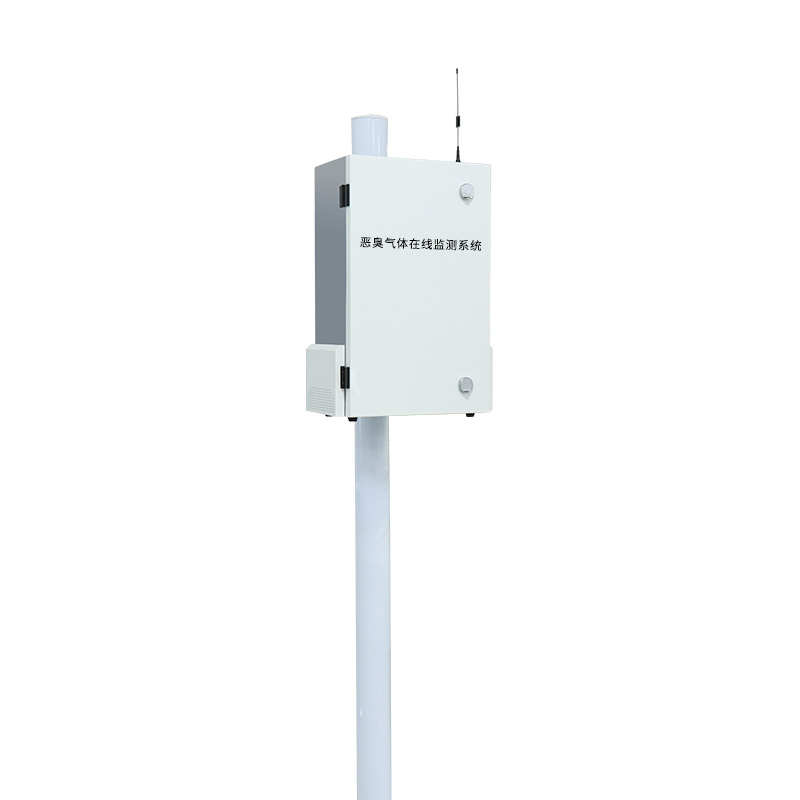
Odor gas detector system employs a high-sensitivity sensor to continuously monitor parameters such as odor concentration (OU), ammonia, hydrogen sulfide, and VOCs in ambient air in real time. It is suitable for monitoring fugitive emissions from locations such as landfills, sewage treatment plants, and livestock farms, providing accurate data support for odor pollution control.
Odor gas detector is a device for continuous automatic monitoring of various odorous substances in ambient air. This system is mainly used in areas prone to odor generation, such as landfills, sewage treatment plants, livestock farms, and chemical industrial parks, to monitor fugitive odor pollution in real time, providing a basis for environmental management, pollution source tracing, and remediation assessment.
This instrument has the capability for simultaneous monitoring of multiple parameters. Its core monitoring indicators include comprehensive odor concentration (OU) and multiple characteristic odorous substances. Specific monitored components typically include ammonia, hydrogen sulfide, methanethiol, dimethyl sulfide, dimethyl disulfide, carbon disulfide, styrene, trimethylamine, and total volatile organic compounds (VOCs). By simultaneously acquiring odor (OU) values and the concentrations of multiple characteristic gases, the system comprehensively reflects the overall intensity and specific chemical composition of odor pollution, facilitating accurate identification of pollution sources.
The instrument employs a combination of high-sensitivity sensors based on different principles to achieve accurate measurements. For example, electrochemical sensors are commonly used to monitor inorganic gases such as hydrogen sulfide and ammonia; photoionization detectors or metal oxide semiconductor sensors are used to monitor VOCs and some organic sulfides. For monitoring odor concentration (OU values), some devices use sensor arrays conforming to olfactory principles or a combination of dynamic dilution and sensors. These sensors are integrated into a single analytical unit, enabling continuous and automated analysis of sample gases through optimized gas path design.
In practical deployments, the system is typically installed within the plant boundary or area requiring monitoring, such as downwind of the prevailing wind direction, near the plant boundary, or near the main odor-generating unit. The device continuously draws ambient air through a built-in sampling pump, pre-processes it, and then sends it to the sensor module for analysis. Monitoring data (including real-time values of various gas concentrations, historical trends, statistical indicators, etc.) is recorded by a data acquisition unit and remotely transmitted to a central monitoring platform or environmental data center via wired or wireless networks. The central monitoring platform is responsible for receiving and managing data. The platform software features real-time data display, historical data query, statistical analysis, and report generation. Users can intuitively view the concentration change curves of pollutants at each location. The system typically includes a tiered alarm function. When the concentration of any monitored parameter exceeds the preset limit, the system automatically triggers audible and visual alarms, SMS alerts, or platform message alarms, promptly notifying relevant personnel to investigate abnormal emissions or assess the impact of the event.
Therefore, Odor gas detector, with its multi-parameter, continuous, and automatic monitoring characteristics, has become an effective tool for resolving odor pollution complaints, implementing corporate environmental responsibility, and achieving refined control of odor at factory boundaries. It transforms the traditional intermittent monitoring mode, which relies on manual olfaction, into an objective, continuous, and data-driven proactive monitoring mode, improving the environmental supervision and control capabilities for odor pollution.
This paper addresses:https://fengtuweather.com/company/856.html
Related products
Related article
-
Vehicle - Mount Weather Station,Mobile Monitoring in Action
2024-12-27 -
Dust Monitoring Equipment & Supporting Data Platform
2025-09-03 -
Integrated Road Weather Station: Simplifying Installation, Optimizing Monitoring
2025-04-02 -
Introduction to the Meteorological Department's Traffic Weather Visibility Monitoring Stations
2024-06-24 -
Comparative Analysis of Ultrasonic and Automatic Weather Stations in Meteorological Monitoring
2025-01-13 -
Two distinctive features of the solar-powered automatic weather station
2024-01-26 -
All-in-one vehicle-mounted weather station
2024-04-10 -
Real-time data from the road meteorological monitoring system supports traffic early warning
2026-06-01