

Product
-
Weather station
-
Road Weather Station
-
Photovoltaic Inspection
-
Atmospheric monitoring
-
Operating condition monitoring
Recommended article
- EL series of DC power supply Completes EL Inspection of Internal Defects in Photovoltaic Power Plant Modules
- The price of Fengtu automatic weather stations is affected by the configuration of monitoring elements
- Odor gas detector Enables 24-Hour Continuous Monitoring of Odor Pollution in Industrial Plants
- Shandong Fengtu, a manufacturer of meteorological observation equipment, supplies high-precision integrated field monitoring equipment
- Odor gas detector utilizes a multi-sensor array to perform on-site monitoring of odor factors according to national standards
- Application Introduction of Weather Monitoring Equipment High-Precision Environmental Monitoring Equipment in the Field
Contact us
Shandong Fengtu IOT Technology Co., Ltd
Sales Manager:Ms. Emily Wang
Cel,Whatsapp,Wechat:+86 15898932201
Email:info@fengtutec.com
Add:No. 155 Optoelectronic Industry Accelerator, Gaoxin District, Weifang, Shandong, China
Real-time data from the road meteorological monitoring system supports traffic early warning
Article source:Weather station time:2026-06-01 10:22:15 viewed:220times
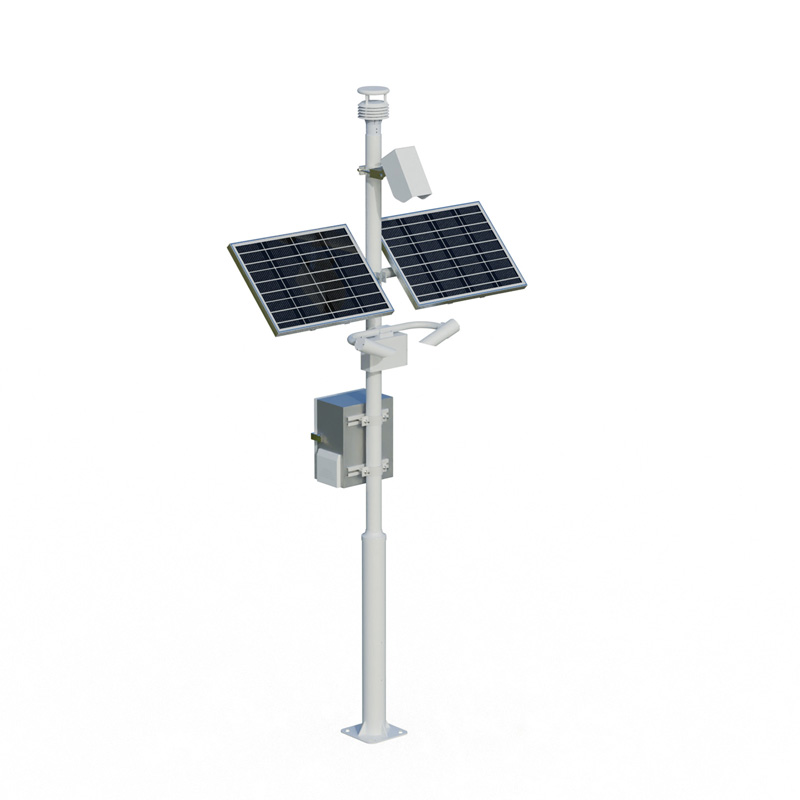
The road meteorological monitoring system integrates sensors for visibility, wind speed and direction, temperature and humidity, rainfall, and road surface conditions. It transmits real-time data to transportation departments remotely, assisting in severe weather warnings and road management, thereby improving traffic safety.
The road meteorological monitoring system is an integrated monitoring facility specifically designed for traffic meteorological services, capable of continuously acquiring meteorological information along transportation routes. Its core function is to monitor various meteorological elements in real time, including visibility, wind speed, wind direction, temperature, humidity, atmospheric pressure, rainfall, and road surface conditions such as dryness/wetness, icing, and snow accumulation. The system aggregates and transmits this data remotely to transportation management departments in real time, providing first-hand information for meteorological support services along transportation routes. Based on this, it can provide timely meteorological information services to highway safety authorities and the public.
In terms of technical architecture, the road meteorological monitoring system integrates core equipment such as visibility meters, wind speed and direction sensors, temperature and humidity sensors, piezoelectric rainfall sensors, and remote-sensing road surface condition sensors. Visibility monitoring utilizes aerosol forward scattering technology to accurately identify sudden weather phenomena such as fog patches. Road condition monitoring employs infrared remote sensing technology to provide real-time feedback on water accumulation, icing, or snow accumulation. The system, through high-precision sensors and intelligent algorithms, accurately identifies severe weather conditions such as heavy fog, heavy rain, and road icing, triggering multi-channel early warning mechanisms including audible and visual alarms, SMS messages, and app push notifications to assist traffic management departments in making informed decisions such as speed limits and lane closures. The system adopts a modular design, supporting both solar and mains power supply options, and can be flexibly deployed in various scenarios including highways, national and provincial trunk roads, urban roads, bridges, tunnels, and airport perimeters.
Regarding industry standardization, the national standard GB/T 33697-2017, "Technical Requirements for Highway Traffic Meteorological Monitoring Facilities," specifies the system composition, monitoring items, and monitoring equipment requirements for highway traffic meteorological monitoring facilities, applicable to highway traffic meteorological monitoring. The implementation of this standard has effectively promoted the standardization and systematization of highway traffic meteorological monitoring facilities in my country. The China Meteorological Administration, in conjunction with the Ministry of Public Security and the Ministry of Transport, has issued the "Technical Requirements for Integrated Traffic Meteorological Monitoring Instruments" to promote equipment standardization and achieve high integration of multi-element sensors using domestically produced core components. According to actual application data, Jiangsu Province has built 304 highway traffic meteorological stations, with a monitoring density of 10-15 kilometers, and the traffic accident rate on pilot road sections has decreased by 43.6%. Road meteorological monitoring systems have been deployed and optimized in high-impact road sections affected by severe weather in 31 provinces across my country. Through integrated design, construction costs have been effectively reduced, providing reliable technical support for the construction of intelligent transportation systems.
This paper addresses:https://fengtuweather.com/company/952.html
Related products
Related article
-
When buying a weather station, there are a few things to think about
2024-03-25 -
Meteorological Monitoring for Drone Takeoff and Landing: Application of Vehicle Weather Station
2025-05-20 -
Handheld Radar SpeedGun Calculating the Speed of Moving Objects Based on the Doppler Effect
2026-04-28 -
Odor Monitoring System is suitable for various complex malodorous gas detection environments
2025-11-27 -
Price Variations in Six-Element Weather Stations: Driven by Sensor Principles and Configuration Requirements
2026-05-09 -
Combatting Dust: The Role of Dust Monitoring Equipment in Protecting Air Quality
2025-01-02 -
Scenic Negative Oxygen Ion Environmental Monitoring Station
2024-08-01 -
Dust Monitoring Equipment: Real-Time Monitoring Solution for Fugitive Dust Pollution Management
2025-09-11