

Product
-
Weather station
-
Road Weather Station
-
Photovoltaic Inspection
-
Atmospheric monitoring
-
Operating condition monitoring
Recommended article
- How Portable Solar Cell Testers Rapidly Perform PV String I-V Curve Testing
- The price of meteorological monitoring systems varies from 3,900 to 39,800 yuan depending on the number of monitored elements
- Power Quality Measurement Makes Power Grid Harmonic Detection and Data Logging More Efficient
- High-Precision Meteorological observation equipment Aids Field Environmental Monitoring
- How Forest Weather Station Improves Forest Fire Risk Early Warning Capabilities Through Real-Time Data Acquisition
- The Electrical Power Analyzer's four-channel synchronous measurement capability enhances the efficiency of photovoltaic grid-connected testing
Contact us
Shandong Fengtu IOT Technology Co., Ltd
Sales Manager:Ms. Emily Wang
Cel,Whatsapp,Wechat:+86 15898932201
Email:info@fengtutec.com
Add:No. 155 Optoelectronic Industry Accelerator, Gaoxin District, Weifang, Shandong, China
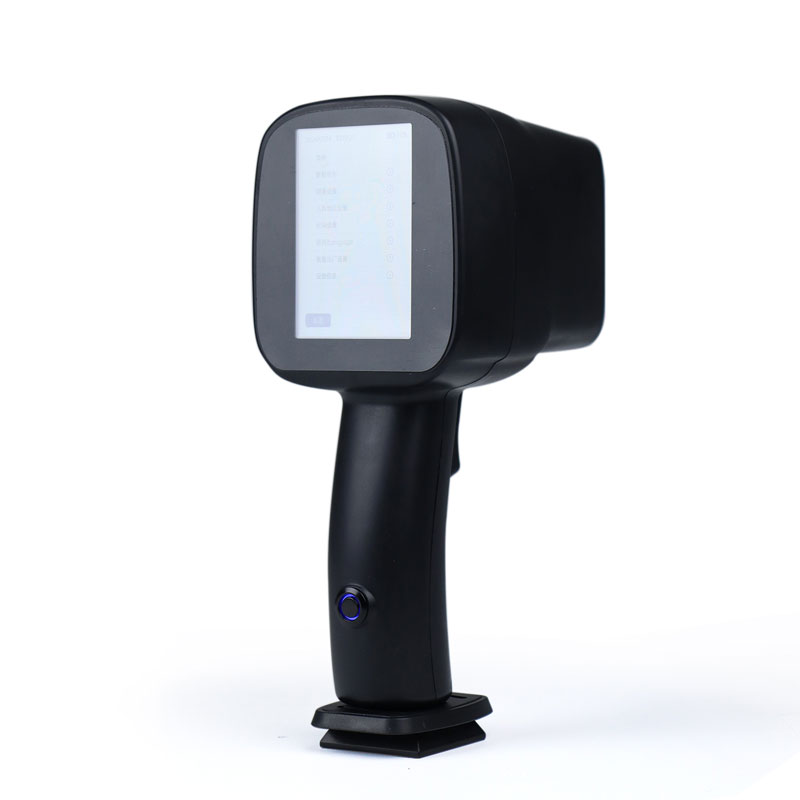
Handheld Radar SpeedGun Calculating the Speed of Moving Objects Based on the Doppler Effect
Article source:Weather station time:2026-04-28 09:52:47 viewed:299times
Handheld Radar SpeedGun calculates the speed of moving objects based on the principles of the Doppler effect by emitting radio waves and analyzing the frequency shifts of the reflected waves. It supports dynamic vehicle speed measurement—including vehicle-mounted applications—and can display data in real-time while interfacing with automated image capture or warning systems. This technology is widely utilized in fields such as traffic law enforcement, industrial inspection, and sports analytics.
The operational principle of Handheld Radar SpeedGun is rooted in the Doppler effect. When the device emits radio waves of a specific frequency toward a moving object, a portion of these waves reflects back to the antenna upon encountering the moving target. The frequency of the reflected waves shifts in direct correspondence with the speed of the moving object. By calculating the frequency difference between the emitted and reflected waves—and leveraging the physical constant of the speed of light—the device automatically computes the target's velocity. When a vehicle approaches the radar, the frequency of the reflected signal is higher than that of the emitted signal; conversely, when the vehicle moves away, the reflected signal frequency is lower. This frequency shift is directly proportional to the relative velocity between the device and the target. Since this measurement method involves no physical contact with the object being measured, it does not interfere with the target's movement.
The technical specifications of the device determine its specific application scenarios. The speed measurement range of Handheld Radar SpeedGun spans from low velocities to high velocities. In the context of traffic law enforcement, the radar speed gun can accurately capture vehicle speeds from a distance of up to 300 meters. In the realm of sports analytics, the device is frequently used to measure metrics such as baseball pitch speeds, tennis shot speeds, race car cornering speeds, and golf ball initial velocities. Taking ball-speed measurement as an example, the precision of certain devices can reach ±0.1 km/h, thereby ensuring the credibility and reliability of sports performance data. In industrial inspection applications, high-precision radar speed sensors are employed to assess the travel speeds of off-road vehicles; by utilizing non-contact measurement, this method eliminates the potential for factors such as wheel slippage or variations in tire circumference to skew speed readings.
Handheld Radar SpeedGun finds its most extensive application within the field of traffic law enforcement. The device displays vehicle speeds in real-time and integrates with camera systems to automatically trigger image capture—recording information such as license plate numbers and the time of the infraction—whenever a vehicle exceeds the speed limit. Furthermore, the device supports two distinct deployment modes: fixed-point installation and dynamic vehicle-mounted speed measurement. The dynamic vehicle-mounted speed measurement capability allows law enforcement officers to monitor the speeds of surrounding vehicles while on patrol, enabling data collection to be completed without the need to bring their patrol vehicle to a halt. Compared to a laser beam, a radar beam covers a larger area; this facilitates target acquisition without the need for precise aiming, thereby lowering the operational threshold. Furthermore, the device can integrate with intelligent traffic management platforms to upload and aggregate real-time monitoring data, providing a valuable reference for traffic condition analysis and management decision-making. Through non-contact measurement, Handheld Radar SpeedGun effectively enhances both operational efficiency and data accuracy across a wide range of speed-monitoring scenarios.
This paper addresses:https://fengtuweather.com/company/931.html
Related products
Related article
-
Meteorological station Solar-Powered and Modularly Designed for Long-Term Field Monitoring
2026-04-21 -
Ground Penetrating Radar: A Reliable Solution for Detecting Abandoned Mines and Ensuring Engineering Safety
2025-07-23 -
How Landslide Monitoring Systems Work to Mitigate Geological Hazards
2024-12-04 -
FT - Y6 Six element sensor: All - in - One Solution for Vehicle and Ship Meteorological Monitoring
2025-04-27 -
The 'Doctor' of Roads: Portable Ground Penetrating Radar for Detecting Underground Cavities
2025-02-25 -
Photovoltaic Weather Stations: Optimizing Solar Farm Performance through Environmental Monitoring
2025-09-30 -
Odor Online Monitoring System Enables 24-Hour Continuous Monitoring of Odor Concentration (OU), Ammonia, and Hydrogen Sulfide
2026-04-14 -
Functions, Advantages and Applications of Visibility Monitoring Station in Traffic Safety Guarantee
2025-08-21