

Product
-
Weather station
-
Road Weather Station
-
Photovoltaic Inspection
-
Atmospheric monitoring
-
Operating condition monitoring
Recommended article
- Odor gas detector utilizes a multi-sensor array to perform on-site monitoring of odor factors according to national standards
- Application Introduction of Weather Monitoring Equipment High-Precision Environmental Monitoring Equipment in the Field
- Police radar gun Achieves Precise Speed Measurement in Multiple Scenarios Based on the Doppler Effect
- The forest meteorological fire risk monitoring station collects real-time meteorological data related to forest fire risk
- Radar speed gun utilizes the Doppler effect to achieve multi-scenario speed measurement
- Ultrasonic Snow Depth Detector Automated Snow Depth Measurement Using Ultrasonic Technology
Contact us
Shandong Fengtu IOT Technology Co., Ltd
Sales Manager:Ms. Emily Wang
Cel,Whatsapp,Wechat:+86 15898932201
Email:info@fengtutec.com
Add:No. 155 Optoelectronic Industry Accelerator, Gaoxin District, Weifang, Shandong, China
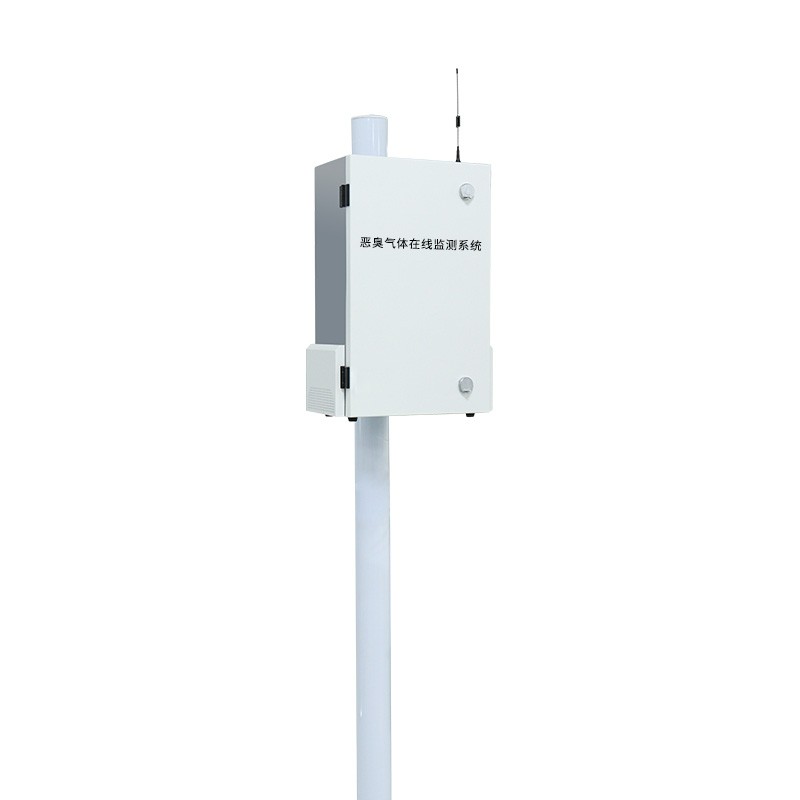
Odor gas detector utilizes a multi-sensor array to perform on-site monitoring of odor factors according to national standards
Article source:Weather station time:2026-08-25 10:41:16 viewed:2times
Odor gas detector supports intermittent or 24-hour continuous monitoring, capable of detecting all odor pollutants according to GB14554 standards. It employs multi-type sensor arrays and pump sampling; sensors can be plugged in and calibrated on-site, simulating manual olfaction for quantitative odor detection.
Odor gas detector is designed for environmental odor monitoring in polluted areas. The equipment supports intermittent monitoring and can also achieve continuous 24-hour data collection, covering all pollutant control categories specified in GB14554 standards, including odor concentration (OU), ammonia, styrene, hydrogen sulfide, VOCs, trimethylamine, dimethyl sulfide, methanethiol, dimethyl disulfide, and carbon disulfide, meeting the practical needs of odor monitoring at factory boundaries and pollution source locations.
The Odor gas detector device employs a hybrid array of multiple sensors, including metal oxide sensors, PID photoionization detectors, electrochemical sensors, and ETO sensors. Each sensor features an independent modular design, allowing for individual plug-and-play functionality. Maintenance personnel can calibrate individual sensors and replace components on-site, eliminating the need to transport the entire device back to the laboratory for calibration, thus reducing maintenance time and transportation costs.
The Odor gas detector device utilizes pump-suction sampling and multi-sensor array fusion technology. Gas samples are stably delivered into the sensing chamber, and the device establishes an analysis curve matching human olfactory identification methods. It simulates the human olfactory system to comprehensively determine the composition of mixed odorous gases, converting complex odor signals into recordable and comparable quantitative monitoring data. This overcomes the shortcomings of traditional manual olfactory identification methods, such as the inability to continuously monitor and significant subjective errors.
In practical applications, Odor gas detector can be deployed in high-odor locations such as chemical industrial parks, waste disposal sites, sewage treatment plants, and livestock and poultry breeding areas. It continuously outputs the concentrations of various characteristic gases and odor concentration (OU) values. The monitoring data can be archived, providing objective evidence for internal odor control within enterprises and for environmental protection departments to collect evidence. The modular sensor structure also facilitates the adjustment of monitoring components as needed, adapting to odor monitoring tasks under different on-site conditions and ensuring stable operation of monitoring work under long-term outdoor conditions.
This paper addresses:https://fengtuweather.com/industry/995.html
Related products
Related article
-
Weather Monitoring Equipment system comprises five parts: a sensor, a data logger, a solar power supply, a pole support, and a cloud platform
2026-05-12 -
Pavement Condition Detectors: Advantages of Laser Remote Sensing Technology
2024-07-19 -
Mastering Road Conditions with Road Weather Station
2025-01-09 -
Vehicle - Mount Weather Station,Mobile Monitoring in Action
2024-12-27 -
High-Precision Meteorological observation equipment Aids Field Environmental Monitoring
2026-07-21 -
Forest Weather Station Real-time Monitoring of Forest Area Weather and Fire Risk Levels
2026-02-12 -
PV Module IV Curve Tester Measures 400V Module Open-Circuit Voltage and Short-Circuit Current
2026-04-24 -
How PV Weather Station Optimizes Photovoltaic Power Generation and Management
2024-11-28