

Product
-
Weather station
-
Road Weather Station
-
Photovoltaic Inspection
-
Atmospheric monitoring
-
Operating condition monitoring
Recommended article
- photovoltaic testers 400V/20A Range Meets the On-Site Testing Needs of Photovoltaic Modules
- Application of Low-Power Meteorological observation equipment in Unattended Field Monitoring
- How Portable Solar Cell Testers Rapidly Perform PV String I-V Curve Testing
- The price of meteorological monitoring systems varies from 3,900 to 39,800 yuan depending on the number of monitored elements
- Power Quality Measurement Makes Power Grid Harmonic Detection and Data Logging More Efficient
- High-Precision Meteorological observation equipment Aids Field Environmental Monitoring
Contact us
Shandong Fengtu IOT Technology Co., Ltd
Sales Manager:Ms. Emily Wang
Cel,Whatsapp,Wechat:+86 15898932201
Email:info@fengtutec.com
Add:No. 155 Optoelectronic Industry Accelerator, Gaoxin District, Weifang, Shandong, China
Choosing the Right Dust Detector: A Guide for Different Scenarios
Article source:Weather station time:2025-03-27 09:11:18 viewed:453times
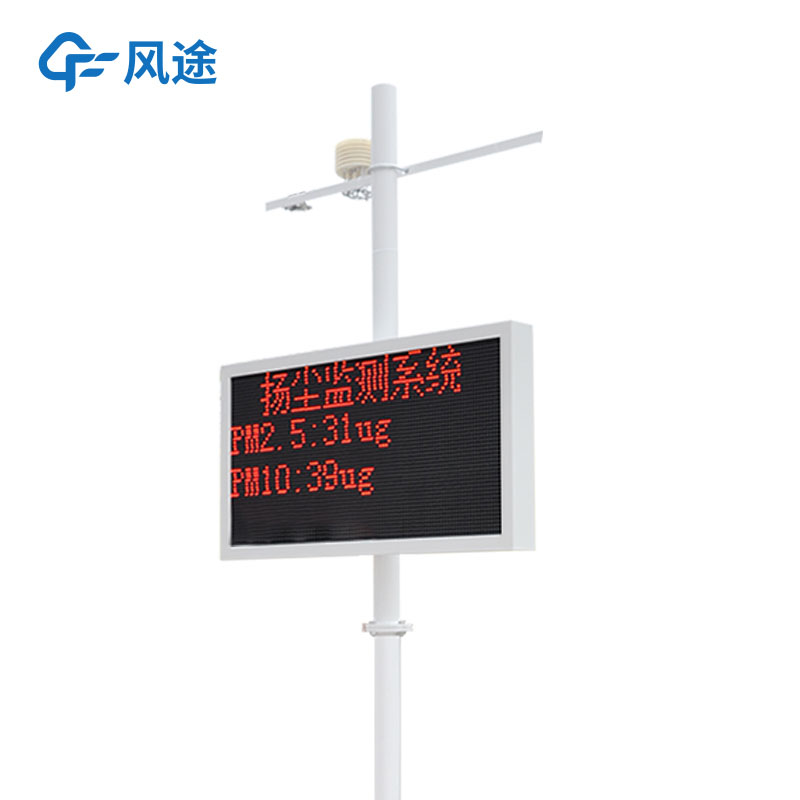
As environmental awareness continues to grow, the environmental issue of dust pollution has drawn significant public attention. Dust not only severely impacts air quality and endangers human health but can also trigger a series of environmental problems, such as ozone pollution. The Dust detector, an essential regulatory tool for controlling dust pollution, enables real - time and accurate collection of dust data, facilitating the formulation of targeted pollution control measures.
Currently, the following are the main types of Dust detectors available on the market:
Laser dust meter
It operates based on the principle of laser scattering. When laser light shines on dust particles in the air, scattered light is generated. The dust concentration is calculated by measuring the intensity of the scattered light.
It features high measurement accuracy, a fast response, and real - time monitoring capabilities. It can conduct classified measurements of dust particles of different sizes and is widely used for dust monitoring in industrial production, construction sites, and other locations.
Beta - ray dust monitor
It measures the mass concentration of dust by leveraging the degree of absorption of beta - rays as they pass through the dust. When beta - rays emitted by a beta - ray source pass through air containing dust, the dust absorbs part of the beta - rays. The dust concentration is calculated by detecting the intensity of the remaining beta - rays.
This device offers high measurement accuracy and is immune to environmental factors such as temperature and humidity. It is suitable for dust monitoring under various environmental conditions and is particularly widely applied in ambient air quality monitoring.
Light - scattering dust monitor
Based on the principle of light scattering, when light shines on dust particles, scattering occurs. The concentration and particle size distribution of dust particles are calculated by detecting the intensity and angle of the scattered light.
This type of device can monitor dust concentration in real - time and continuously. It has high sensitivity and resolution and can simultaneously measure the concentrations of dust particles in multiple particle - size ranges. It is suitable for dust monitoring in urban environments, industrial plants, and other areas.
Different types of dust monitors vary in function and price. So, how do we make a selection?
First, different monitoring environments have distinct requirements for the performance and adaptability of instruments. For example, in industrial production workshops where dust concentrations are high, an instrument with a large measurement range and high accuracy is needed. A laser dust meter is often the best choice. In urban environments, long - term stability and anti - interference capabilities are highly valued, making beta - ray dust monitors or light - scattering dust monitors suitable.
Secondly, if high - precision measurement of dust concentration is required, beta - ray dust monitors or laser dust meters with high accuracy should be selected. For locations where the demand for accuracy is not extremely strict, such as dust monitoring at construction sites, a regular light - scattering dust monitor suffices.
Furthermore, different types of Dust detectors vary greatly in price. When making a selection, budget considerations are necessary. Generally, laser dust meters and beta - ray dust monitors are relatively expensive, while light - scattering dust monitors are more affordable.
This paper addresses:https://fengtuweather.com/industry/657.html
Related products
Related article
-
Fengtou Farming Weather Station Provides Weather Services for Sheep Farming
2024-07-29 -
Fengtu's Negative Oxygen Ion Monitoring Systems: Empowering Environmental Monitoring and Decision-Making
2024-10-23 -
Advantages of the box-type radar speedometer
2024-01-22 -
Weather on the Move: The Power of Vehicle-Mount Weather Stations
2025-05-14 -
Road Weather Station FT - GQX8: Empowering Traffic Decisions with Real - time Weather Data
2025-02-10 -
Shandong Fengtu An Integrated Manufacturer of Weather Stations with a Complete Production Chain
2026-03-25 -
Fengtu Vehicle-Mounted Weather Station Monitoring System: Empowering Mobile Meteorological Data Acquisition
2025-07-18 -
Advanced Geological Prediction in Tunnels with Ground Penetrating Radar
2025-03-17