

Product
-
Weather station
-
Road Weather Station
-
Photovoltaic Inspection
-
Atmospheric monitoring
-
Operating condition monitoring
Recommended article
- photovoltaic testers 400V/20A Range Meets the On-Site Testing Needs of Photovoltaic Modules
- Application of Low-Power Meteorological observation equipment in Unattended Field Monitoring
- How Portable Solar Cell Testers Rapidly Perform PV String I-V Curve Testing
- The price of meteorological monitoring systems varies from 3,900 to 39,800 yuan depending on the number of monitored elements
- Power Quality Measurement Makes Power Grid Harmonic Detection and Data Logging More Efficient
- High-Precision Meteorological observation equipment Aids Field Environmental Monitoring
Contact us
Shandong Fengtu IOT Technology Co., Ltd
Sales Manager:Ms. Emily Wang
Cel,Whatsapp,Wechat:+86 15898932201
Email:info@fengtutec.com
Add:No. 155 Optoelectronic Industry Accelerator, Gaoxin District, Weifang, Shandong, China
Ultrasonic Weather Stations: Low-Maintenance, High-Precision Monitoring Powerhouses
Article source:Weather station time:2025-04-21 09:15:46 viewed:496times
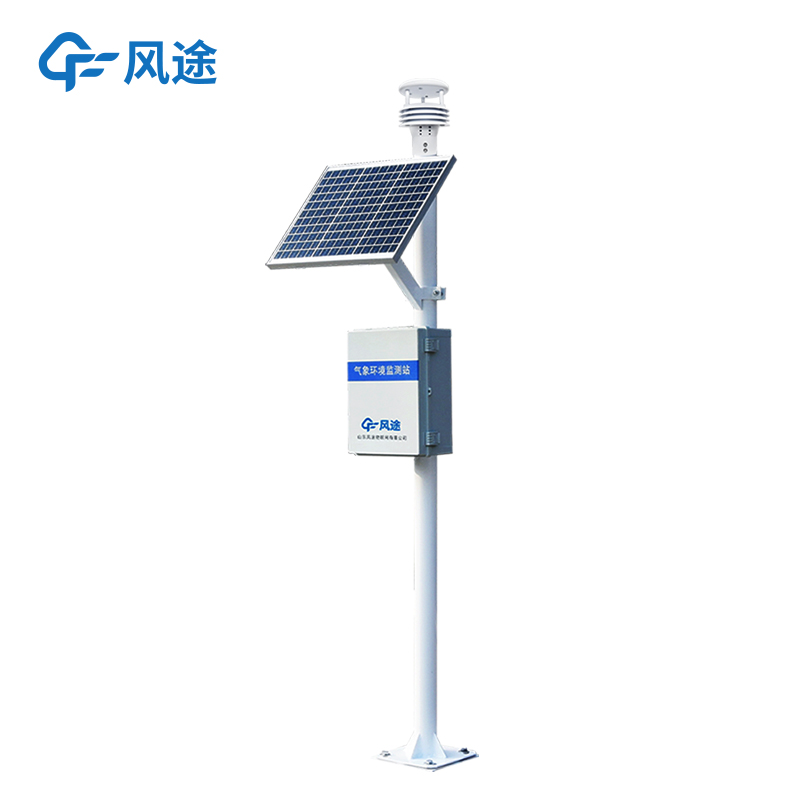
In the field of meteorological monitoring, there are various types of meteorological stations, each with its own characteristics. The Ultrasonic weather station, as one of them, has unique advantages and shows obvious differences from other meteorological stations.
For example, ordinary meteorological stations rely on mechanical components such as anemometers and wind vanes to measure wind speed and direction. In contrast, the Ultrasonic weather station uses ultrasonic technology. The sensor is equipped with four ultrasonic probes. When there is no wind, the ultrasonic waves emitted by each probe take the same time to reach the receiving probe. When there is wind, the wind will change the transmission time of the ultrasonic waves. By calculating the time difference, the wind speed and direction can be accurately obtained. This non-mechanical measurement method avoids the problems that mechanical components are prone to wear and are greatly affected by the environment.
Since ordinary meteorological stations are composed of multiple independent sensors, each sensor needs to be calibrated and debugged separately during installation. The process is cumbersome and requires high professional skills from the installers. Moreover, mechanical components are prone to wear during long-term use and require regular maintenance and replacement, resulting in relatively high maintenance costs. In contrast, the Ultrasonic weather station mostly adopts an integrated design. During installation, it only needs to be placed horizontally without the need for complex orientation calibration, and the operation is simple. Without mechanical rotating parts, it greatly reduces the probability of failures, has a long maintenance cycle and low cost, and the service life of the equipment is also longer.
This paper addresses:https://fengtuweather.com/industry/678.html
Related products
Related article
-
Tunnel Geological Prediction and Ground Penetrating Radar
2025-03-07 -
Fog and Visibility Monitoring Technology
2025-11-03 -
Scenic Negative Oxygen Ion Environmental Monitoring Station
2024-08-01 -
Vehicle - Mount Weather Station,Mobile Monitoring in Action
2024-12-27 -
How Forest Weather Station Improves Forest Fire Risk Early Warning Capabilities Through Real-Time Data Acquisition
2026-07-20 -
FT-CZ5S Vehicle Weather Station: Mobile 5-Element Visual Meteorological Monitoring System
2025-10-30 -
The Crucial Link: Photovoltaic Weather Station and Efficient PV Generation
2025-01-20 -
Application of the Series power supply 1500V High-Voltage Output in EL Testing
2026-07-15