

Product
-
Weather station
-
Road Weather Station
-
Photovoltaic Inspection
-
Atmospheric monitoring
-
Operating condition monitoring
Recommended article
- EL series of DC power supply Completes EL Inspection of Internal Defects in Photovoltaic Power Plant Modules
- The price of Fengtu automatic weather stations is affected by the configuration of monitoring elements
- Odor gas detector Enables 24-Hour Continuous Monitoring of Odor Pollution in Industrial Plants
- Shandong Fengtu, a manufacturer of meteorological observation equipment, supplies high-precision integrated field monitoring equipment
- Odor gas detector utilizes a multi-sensor array to perform on-site monitoring of odor factors according to national standards
- Application Introduction of Weather Monitoring Equipment High-Precision Environmental Monitoring Equipment in the Field
Contact us
Shandong Fengtu IOT Technology Co., Ltd
Sales Manager:Ms. Emily Wang
Cel,Whatsapp,Wechat:+86 15898932201
Email:info@fengtutec.com
Add:No. 155 Optoelectronic Industry Accelerator, Gaoxin District, Weifang, Shandong, China
Atmospheric electric field meters provide early warnings of thunderstorm activity by monitoring changes in the ground electric field
Article source:Weather station time:2026-06-02 09:57:04 viewed:215times
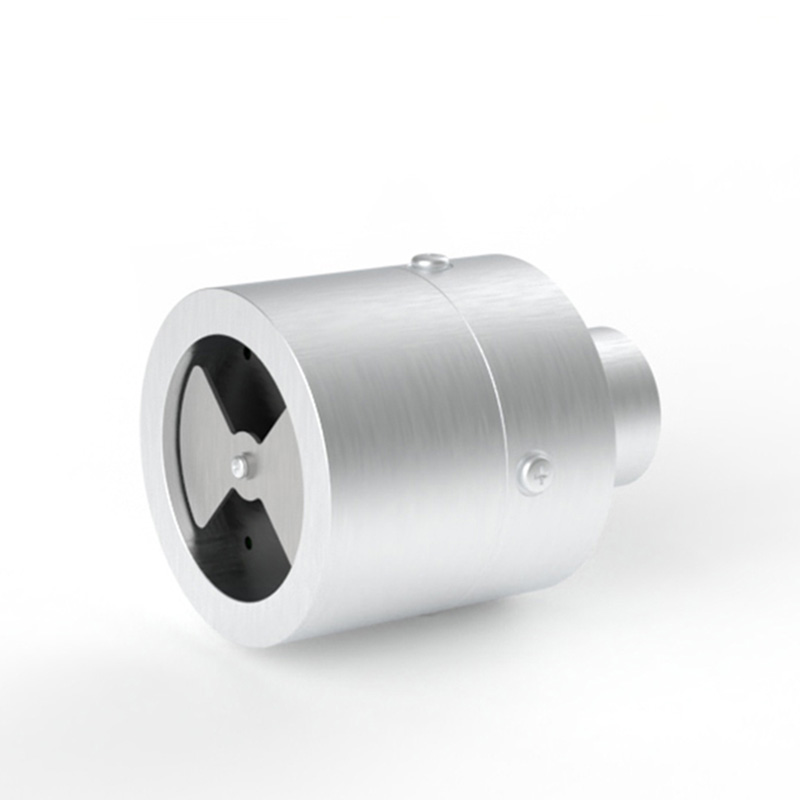
An atmospheric electric field meter is a high-precision lightning monitoring device used to measure the intensity and changes of the atmospheric electric field. It employs the field-milling induction principle to measure the intensity and polarity changes of the ground-based atmospheric electric field in real time. Based on the principle that a conductor generates induced charges in an electric field, this device analyzes electric field data to issue early warnings of thunderstorms. It is widely used in lightning monitoring and protection in meteorological stations, aerospace, power systems, and petrochemical industries.
Atmospheric electric field meters are devices used to measure the intensity and changes of the atmospheric electric field, belonging to the field of atmospheric science. When charge separation occurs in clouds, the ground electric field changes accordingly. Its intensity is related to the accumulation and distribution of charges in the clouds. Therefore, by measuring changes in the ground-based atmospheric electric field, changes in the upper-level cloud electric field can be inferred, allowing for forecasting of the risk of lightning strikes. The device mainly consists of an electric field detection probe, an electric field data processor, a central data processor, and client-side data display and analysis software. The electric field data processor can read the current electric field value in real time and transmit the electric field data measured by the electric field meter to a computer for analysis and processing by specialized software. This allows for short-term forecasts of potential thunderstorm activity and the risk of electrostatic discharge in localized areas.
Technically, the atmospheric electric field meter is based on the principle of induced charge generated in a conductor within an electric field, employing a field milling design. The sensor consists of a fixed plate and a moving plate. The rotation of the moving plate converts the induced charge on the fixed plate into a voltage proportional to the atmospheric electric field. The motor rotates at approximately 1560 revolutions per minute. The fixed plate of the electric field meter sensor, used to sense the charge, remains stationary. The moving plate, driven by the motor and connected to the ground, rotates. As the moving plate rotates, the fixed plate is alternately exposed to the atmospheric electric field, generating an alternating electrical signal. The signal magnitude is proportional to the atmospheric electric field strength. The signal processing circuit amplifies and processes the alternating electrical signal into the signal required by the system and uses a phase-sensitive detection method to distinguish the positive and negative polarities of the electric field. To withstand harsh weather conditions, the sensor head's outer shell is made of cast aluminum, with chrome-plated blades to prevent rust. The sensor plate is supported by an acrylic column and fitted with a waterproof cover, and the circuit board is housed in a sealed metal container to prevent moisture.
Atmospheric electric field meters have important applications in numerous fields, including meteorological stations, aerospace support, petrochemicals, power systems, forest fire prevention, and tourist attractions. The Fengtu atmospheric electric field meter has a measurement range of 100 kV/m to 100 kV/m, with an accuracy of ±0.001% F.S., and can transmit data via wired or wireless communication modules. By establishing the Fengtu electric field monitoring and early warning system, the atmospheric electric field can be monitored in real time, issuing alarms before lightning strikes. Combining lightning location data with atmospheric electric field data provides a more intuitive reflection of local atmospheric electric field changes and the occurrence of lightning in the surrounding area, enabling more accurate lightning forecasts. In practical applications in the Guizhou region, the atmospheric electric field's warning lead time for lightning is 1 to 26 minutes, averaging about 8 minutes. The atmospheric electric field changes after the monitoring network is established have certain indicative significance for predicting lightning movement paths.
This paper addresses:https://fengtuweather.com/industry/953.html
Related products
Related article
-
The Versatile Applications and Features of Car Vehicle Mounted Auto Weather in Meteorology
2025-02-20 -
The FT - FGF11: A Multifunctional PV Weather Station for Efficient Power Plant Management
2025-03-19 -
Vehicle - Mount Weather Stations: Applications and Advantages
2024-11-11 -
Scenic Negative Oxygen Ion Environmental Monitoring Station
2024-08-01 -
Dust Detector and Mobile Monitoring in Air Quality Protection
2025-01-06 -
Series power supply Enabling Precise Detection of Internal Defects in PV Modules via Reverse-Bias Electroluminescence
2026-04-16 -
Beyond Gas and Particles: The Versatile Air Quality Monitoring Station
2025-08-07 -
The Crucial Link: Photovoltaic Weather Station and Efficient PV Generation
2025-01-20