

Product
-
Weather station
-
Road Weather Station
-
Photovoltaic Inspection
-
Atmospheric monitoring
-
Operating condition monitoring
Recommended article
- Odor gas detector Enables 24-Hour Continuous Monitoring of Odor Pollution in Industrial Plants
- Shandong Fengtu, a manufacturer of meteorological observation equipment, supplies high-precision integrated field monitoring equipment
- Odor gas detector utilizes a multi-sensor array to perform on-site monitoring of odor factors according to national standards
- Application Introduction of Weather Monitoring Equipment High-Precision Environmental Monitoring Equipment in the Field
- Police radar gun Achieves Precise Speed Measurement in Multiple Scenarios Based on the Doppler Effect
- The forest meteorological fire risk monitoring station collects real-time meteorological data related to forest fire risk
Contact us
Shandong Fengtu IOT Technology Co., Ltd
Sales Manager:Ms. Emily Wang
Cel,Whatsapp,Wechat:+86 15898932201
Email:info@fengtutec.com
Add:No. 155 Optoelectronic Industry Accelerator, Gaoxin District, Weifang, Shandong, China
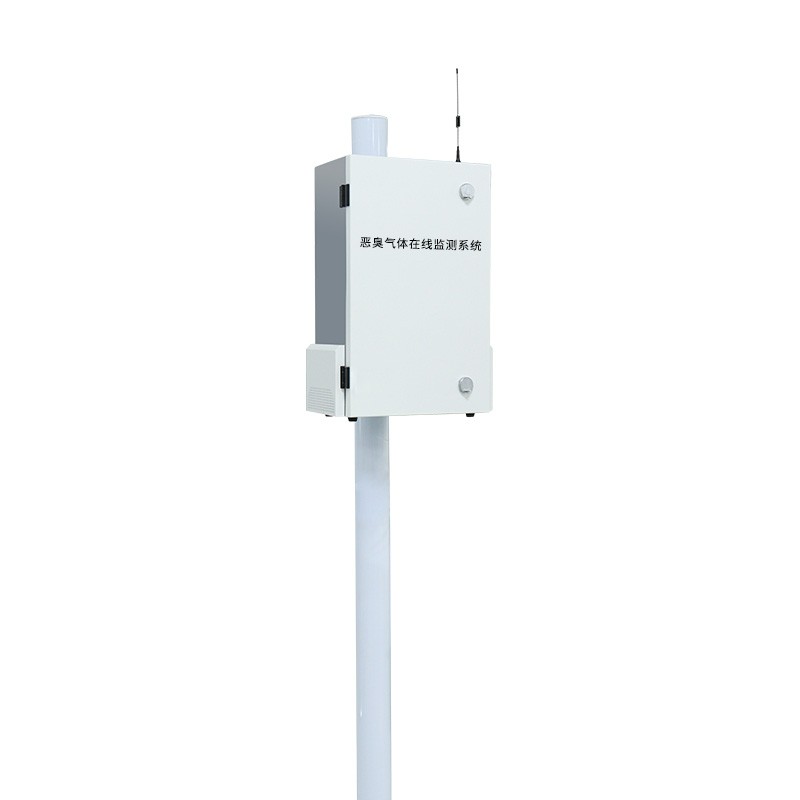
Odor Monitoring System Employs Multi-Sensor Array Technology to Simulate Manual Olfactory Assessment
Article source:Weather station time:2026-07-13 09:39:19 viewed:40times
Odor Monitoring System is an environmental monitoring device that integrates a hybrid array of sensors—including metal oxide, PID (photoionization), and electrochemical types—to simultaneously monitor ammonia, hydrogen sulfide, and odor concentration (OU values). Compliant with the GB14554 standard, it is suitable for 24-hour continuous monitoring at facilities such as waste treatment plants, sewage treatment plants, and chemical industrial parks.
Odor Monitoring System is designed for areas prone to malodorous pollution, such as waste treatment plants, sewage treatment plants, chemical industrial parks, and pharmaceutical factories. In accordance with the *Emission Standards for Odor Pollutants (GB14554-1993)*, the system simultaneously monitors pollutants specified in the standard, including ammonia, hydrogen sulfide, and the dimensionless odor concentration (OU value). Through continuous, uninterrupted 24-hour sampling and monitoring, the system tracks real-time fluctuations in malodorous gas concentrations within the monitored area.
The core of Odor Monitoring System lies in its multi-sensor hybrid array technology. The system typically integrates four metal-oxide semiconductor sensors, one photoionization detector (PID), and two to four electrochemical sensors. Metal-oxide sensors capture a broad spectrum of malodorous gases; the PID utilizes ultraviolet light to ionize volatile organic compound (VOC) molecules; and electrochemical sensors provide precise detection of reducing gases such as hydrogen sulfide and ammonia. These diverse sensors work in concert to simultaneously detect and identify various malodorous components. Ambient air is drawn in via a sampling pump, passed through a pretreatment unit to remove moisture and dust, and then delivered to the sensor detection unit for analysis.
Regarding data analysis, Odor Monitoring System establishes operational analysis curves that align with manual olfactory assessment methods. The system processes sensor array data using algorithms for data fusion, compensation, and cross-interference correction to generate characteristic pollutant fingerprints. It features a built-in odor concentration (OU) database for direct analysis and detection, while also allowing users to customize their own databases. Final outputs display both individual gas concentration values and the dimensionless odor concentration (OU value).
Ease of on-site calibration and maintenance is a key feature of Odor Monitoring System. Each sensor features an independent, plug-and-play design, allowing for individual calibration and replacement without the need to return the entire unit to the factory. The device supports on-site calibration, enabling users to calibrate the instrument directly at the monitoring location rather than sending it to a laboratory. The system supports various wired and wireless transmission methods, such as RS485, GPRS, and LoRa. Data is transmitted in real-time to a monitoring center via the network, and users can access real-time and historical data at any time using a computer, smartphone, or tablet. Monitoring instruments can be added freely to create a networked monitoring system, with no limit on the number of units.
This paper addresses:https://fengtuweather.com/industry/968.html
Related products
Related article
-
FT-CQX5 Micro Weather Station: Meteorological Monitoring at Your Fingertips
2024-11-05 -
Portable Vehicle-Mount Weather Station: Precision Meteorological Monitoring for On-Road Safety
2025-07-24 -
Vehicle - Mount Weather Station: Mobility & Precision
2025-03-14 -
Negative Oxygen Ion Detector Company
2024-05-14 -
Visibility, Road Condition & Wind Monitoring: Key Equipment Safeguarding Highway Traffic Against Meteorological Risks
2025-09-02 -
Reducing Accident Risk with Road Weather Stations
2024-09-04 -
The 'Doctor' of Roads: Portable Ground Penetrating Radar for Detecting Underground Cavities
2025-02-25 -
Dust Monitoring Equipment with Spray Linkage: Intelligent System for Construction Site Dust Control
2025-07-07