

Product
-
Weather station
-
Road Weather Station
-
Photovoltaic Inspection
-
Atmospheric monitoring
-
Operating condition monitoring
Recommended article
- The price of Fengtu automatic weather stations is affected by the configuration of monitoring elements
- Odor gas detector Enables 24-Hour Continuous Monitoring of Odor Pollution in Industrial Plants
- Shandong Fengtu, a manufacturer of meteorological observation equipment, supplies high-precision integrated field monitoring equipment
- Odor gas detector utilizes a multi-sensor array to perform on-site monitoring of odor factors according to national standards
- Application Introduction of Weather Monitoring Equipment High-Precision Environmental Monitoring Equipment in the Field
- Police radar gun Achieves Precise Speed Measurement in Multiple Scenarios Based on the Doppler Effect
Contact us
Shandong Fengtu IOT Technology Co., Ltd
Sales Manager:Ms. Emily Wang
Cel,Whatsapp,Wechat:+86 15898932201
Email:info@fengtutec.com
Add:No. 155 Optoelectronic Industry Accelerator, Gaoxin District, Weifang, Shandong, China
How Ultrasonic Snow Depth Monitoring Stations Achieve Accurate Snow Depth Measurement
Article source:Weather station time:2026-07-16 09:32:22 viewed:40times
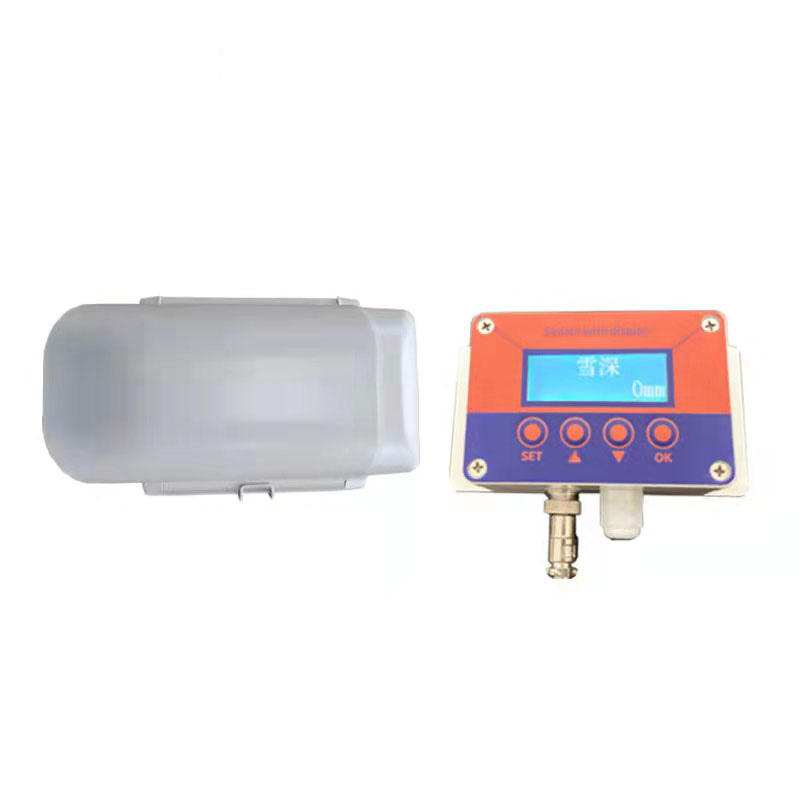
Ultrasonic snow depth monitoring stations measure snow depth using the ultrasonic pulse-echo time-of-flight method. This involves emitting high-frequency sound waves into the snow surface and receiving the reflected signals to calculate the snow layer thickness. The equipment features automatic temperature compensation, millimeter-level accuracy, and supports GPRS wireless data transmission, making it applicable to meteorology, transportation, hydrology, and other fields.
Accurate snow depth measurement is of significant practical importance in weather forecasting, traffic management, hydrological monitoring, and agricultural production. Traditional manual snow depth observation methods are not only time-consuming and labor-intensive but also suffer from significant measurement errors, making real-time continuous monitoring difficult. The emergence of ultrasonic snow depth monitoring stations provides an effective technical solution to this problem.
The core working principle of ultrasonic snow depth monitoring stations is based on the ultrasonic pulse-echo time-of-flight method. The equipment uses an ultrasonic sensor installed at a fixed height to emit high-frequency ultrasonic pulses into the snow surface below. The pulses are reflected upon encountering the snow surface, and the sensor receives the reflected echoes, calculating the distance between the emission point and the snow surface based on the speed of sound in air. By subtracting the measurement distance from the sensor's installation height, the actual snow thickness can be obtained. This equipment also features automatic temperature compensation, correcting the ultrasonic wave propagation speed based on the actual temperature to ensure measurement accuracy even in suboptimal environments.
Compared to other types of snow depth sensors, ultrasonic snow depth monitoring stations offer significant advantages. Optical sensors are easily affected by snowflake obstruction and light attenuation during snowfall, while ultrasonic technology is unaffected by lighting conditions and can operate normally in various weather conditions. The equipment employs a non-contact measurement method, avoiding interference from physical contact and extending its lifespan. Measurement accuracy reaches the millimeter level, enabling real-time monitoring of minute changes in snow thickness to meet the needs of refined monitoring.
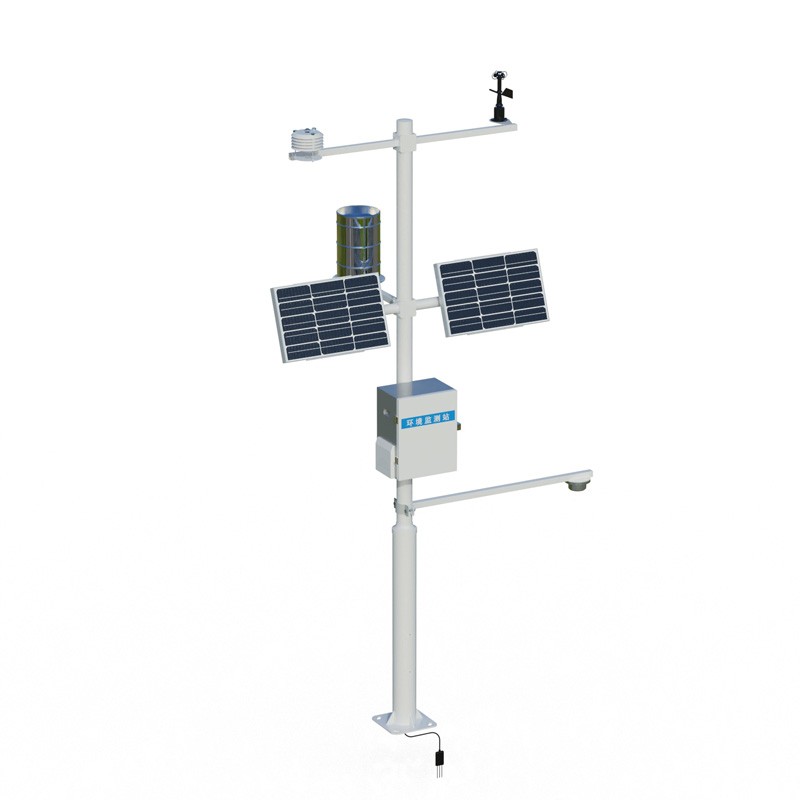
In terms of system composition, an ultrasonic snow depth monitoring station typically consists of an ultrasonic sensor, a data acquisition unit, a power supply system, and a communication module. The data acquisition unit uses a GX-12-4P power supply interface with an input voltage of 8-16V and supports RS485 output in JSON format. The power supply system employs a combination of solar power and lead-acid batteries, with optional configurations of 30W 20AH, 50W 40AH, or 100W 100AH. The charging controller utilizes MPPT (Multi-Point Power Tracking) technology, improving efficiency by 20%. The data upload interval is adjustable from 1 minute to 1000 minutes. The equipment supports GPRS wireless network data transmission, allowing data from various monitoring points to be aggregated at the control center for unified processing, enabling multi-point network monitoring.
The ultrasonic snow depth monitoring station has applications across multiple fields. In meteorology, it provides accurate snow depth data to meteorological departments, helping to improve the precision of weather forecasts. In transportation, it helps traffic management departments monitor road snow accumulation in real time and formulate timely snow removal plans. In hydrology, snow depth monitoring data helps predict spring snowmelt, providing a reference for reservoir scheduling and water resource management. In agriculture, farmers can use the monitoring data to rationally plan agricultural production activities. This equipment has been applied in many fields, including meteorological stations, ports, road traffic, aviation, construction, and hydrology and water conservancy.
This paper addresses:https://fengtuweather.com/industry/971.html
Related products
Related article
-
Visibility sensor: Unlocking Precision in Atmospheric Visibility Measurement and Beyond
2024-11-25 -
Construction Dust: Hazards and the Solution of Dust Monitoring Equipment
2024-11-22 -
Advantages of Negative Oxygen Ion Monitoring Stations
2024-03-12 -
How Tunnel COVI Detectors Protect Driving Safety in Real Time
2026-05-21 -
Police radar gun Precise, Non-Contact Speed Measurement via Radio Waves
2026-03-27 -
24/7 Meteorological Support for Fisheries: Solar Powered Weather Stations
2025-08-01 -
Fighting Against Dust: The Role of Dust Detector in Urban Sustainability
2024-12-18 -
Dust Detector Systems: Comprehensive Environmental Monitoring for Effective Pollution Control
2025-09-25