

Product
-
Weather station
-
Road Weather Station
-
Photovoltaic Inspection
-
Atmospheric monitoring
-
Operating condition monitoring
Recommended article
- The price of Fengtu automatic weather stations is affected by the configuration of monitoring elements
- Odor gas detector Enables 24-Hour Continuous Monitoring of Odor Pollution in Industrial Plants
- Shandong Fengtu, a manufacturer of meteorological observation equipment, supplies high-precision integrated field monitoring equipment
- Odor gas detector utilizes a multi-sensor array to perform on-site monitoring of odor factors according to national standards
- Application Introduction of Weather Monitoring Equipment High-Precision Environmental Monitoring Equipment in the Field
- Police radar gun Achieves Precise Speed Measurement in Multiple Scenarios Based on the Doppler Effect
Contact us
Shandong Fengtu IOT Technology Co., Ltd
Sales Manager:Ms. Emily Wang
Cel,Whatsapp,Wechat:+86 15898932201
Email:info@fengtutec.com
Add:No. 155 Optoelectronic Industry Accelerator, Gaoxin District, Weifang, Shandong, China
3-meter laser snow depth monitoring station achieves millimeter-level snow depth measurement using phase-based laser ranging
Article source:Weather station time:2026-07-14 09:43:54 viewed:44times
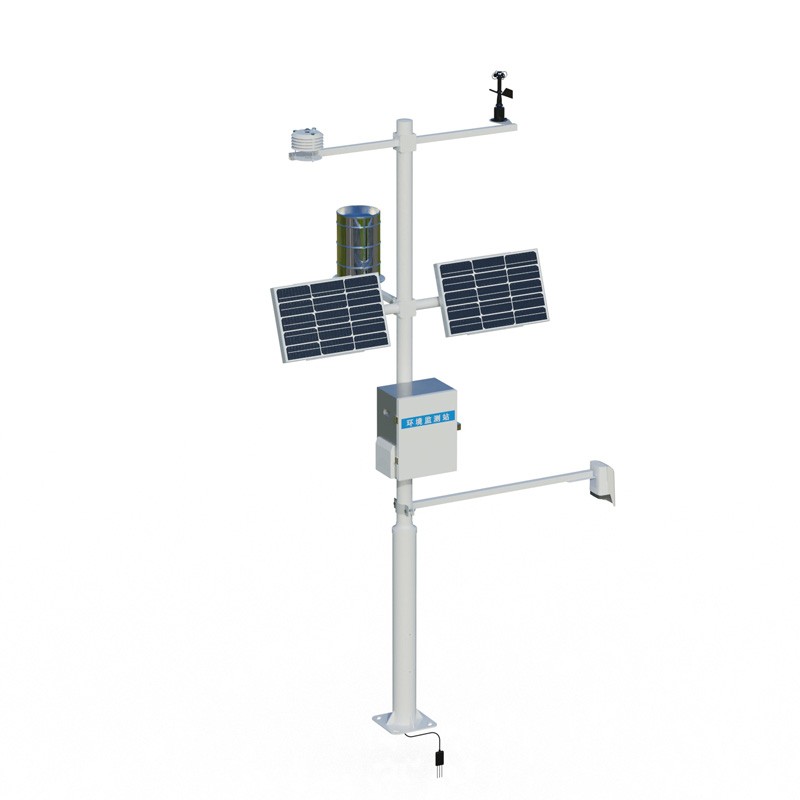
The 3-meter laser snow depth monitoring station measures snow depth using the phase-based laser ranging principle, with a measurement range of 0.05 to 3 meters, a resolution of 1 mm, and an accuracy of ±1.0 mm. The equipment overcomes the shortcomings of ultrasonic and electromagnetic wave sensors in identifying snow, and can operate independently or in a network for monitoring, with applications in meteorology, transportation, agriculture, and other fields.
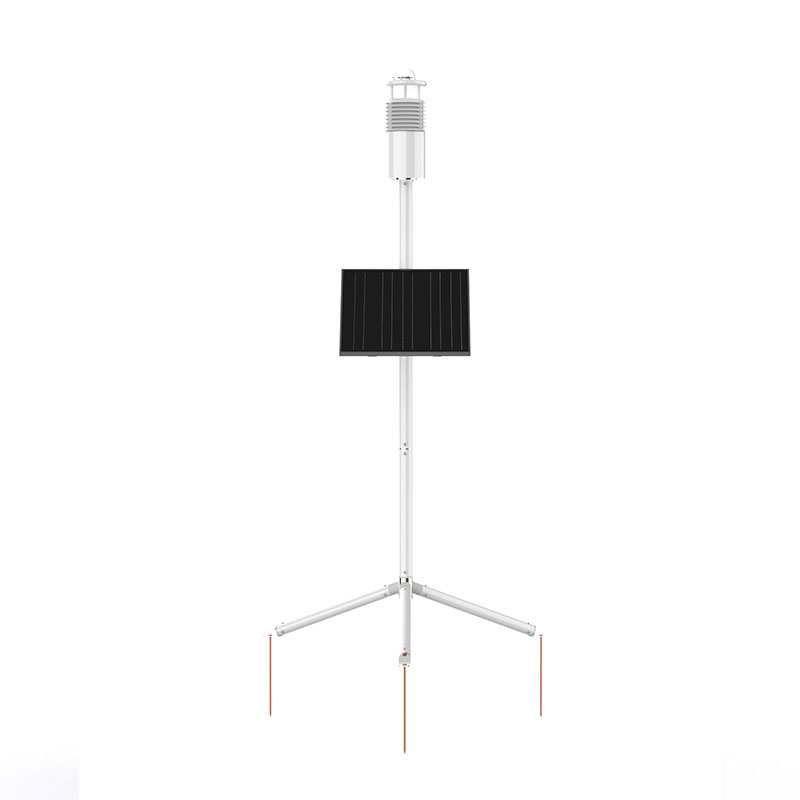
The 3-meter laser snow depth monitoring station is a professional snow depth measurement device based on the phase-based laser ranging principle. Traditional ultrasonic, electromagnetic wave, and weight-based sensors have technical limitations in identifying snow, failing to accurately distinguish snow from other materials, resulting in significant measurement data deviations. The laser snow depth monitoring station emits a laser beam and receives the reflected signal from the snow surface, using phase delay to calculate the precise distance from the sensor to the snow surface, and then combining this with the known installation height to determine the snow thickness.
In terms of technical parameters, the equipment has a snow depth measurement range of 0.05 to 3 meters, a resolution of 1 mm, and a measurement accuracy of ±1.0 mm. The equipment adopts a low-power design, with the data acquisition unit's static power consumption being less than 1 mA. The system comes standard with GPRS networking and supports extended Bluetooth and wired transmission. Data upload intervals are adjustable from 30 seconds to 65,535 seconds. The equipment features a 3-meter carbon steel bracket, and the protective case is made of ABS or stainless steel, achieving an IP66 waterproof rating, allowing for stable operation in outdoor environments for extended periods.
The monitoring station supports a solar power system and is equipped with an MPPT automatic power point tracking charger, offering 20% higher efficiency than ordinary controllers. An optional 7-inch Android touchscreen is available, supporting real-time data display and historical data query. The system has an SMS alarm function, sending alarm messages to designated mobile phones when snow depth exceeds a set threshold. The equipment can operate independently as an automatic snow depth monitoring and alarm system or be networked to form a diversified network monitoring system.
In terms of application scope, the 3-meter laser snow depth monitoring station is widely used in meteorological observation at weather stations, safety monitoring at ports and wharves, snow condition warnings for road traffic, runway safety assessments at airports, construction safety monitoring at construction sites, farmland snow condition analysis in agricultural production, and watershed snow accumulation monitoring in hydrology and water conservancy, among other fields. In the transportation sector, road snow depth data helps relevant departments promptly arrange snow removal operations to ensure road traffic capacity. In agriculture, snow depth in farmland is crucial to the extent of crop frost damage, allowing for proactive protective measures.
Laser snow depth monitoring stations offer significant advantages over ultrasonic snow measurement solutions. Laser ranging is unaffected by temperature changes. When interference from precipitation or animals occurs during measurement, it can be eliminated by extending the measurement time and filtering short-period echoes. Furthermore, the intensity of the echo signal can differentiate between snow accumulation and grassland. The non-contact measurement method avoids interference with the snow surface, and the fully sealed dustproof and waterproof casing, combined with low-temperature resistant components, allows it to adapt to extreme climatic environments. The equipment supports wireless data transmission and remote monitoring, providing real-time dynamic snow depth data and offering crucial data support for applications such as meteorological research, traffic management, and disaster early warning.
This paper addresses:https://fengtuweather.com/technical/969.html
Related products
Related article
-
Dust Monitoring Equipment: A Real-time Environmental Monitoring Solution for Construction Sites
2025-10-27 -
How many parameters can a park anion monitoring system measure?
2024-07-24 -
Vehicle-Mount Weather Station: Rapid-Deployment Magnetic Sensor for On-the-Go Meteorological Monitoring
2025-05-30 -
Scenic Weather Station: Empowering Negative Oxygen Ion Marketing in Tourist Attractions
2025-07-01 -
The Mobile Edge in Meteorology: Vehicle - Mount Weather Stations
2025-04-07 -
The PV module IV tester performs volt-ampere characteristic testing on outdoor PV modules
2026-08-07 -
The Prominent Role of Fengtu's Road Weather Station in Transportation
2024-11-19 -
Weather Observation Stations in Tea Gardens, Combining Agriculture and Technology
2024-07-23