

Product
-
Weather station
-
Road Weather Station
-
Photovoltaic Inspection
-
Atmospheric monitoring
-
Operating condition monitoring
Recommended article
- Power Quality Measurement Makes Power Grid Harmonic Detection and Data Logging More Efficient
- High-Precision Meteorological observation equipment Aids Field Environmental Monitoring
- How Forest Weather Station Improves Forest Fire Risk Early Warning Capabilities Through Real-Time Data Acquisition
- The Electrical Power Analyzer's four-channel synchronous measurement capability enhances the efficiency of photovoltaic grid-connected testing
- How Ultrasonic Snow Depth Monitoring Stations Achieve Accurate Snow Depth Measurement
- Application of the Series power supply 1500V High-Voltage Output in EL Testing
Contact us
Shandong Fengtu IOT Technology Co., Ltd
Sales Manager:Ms. Emily Wang
Cel,Whatsapp,Wechat:+86 15898932201
Email:info@fengtutec.com
Add:No. 155 Optoelectronic Industry Accelerator, Gaoxin District, Weifang, Shandong, China
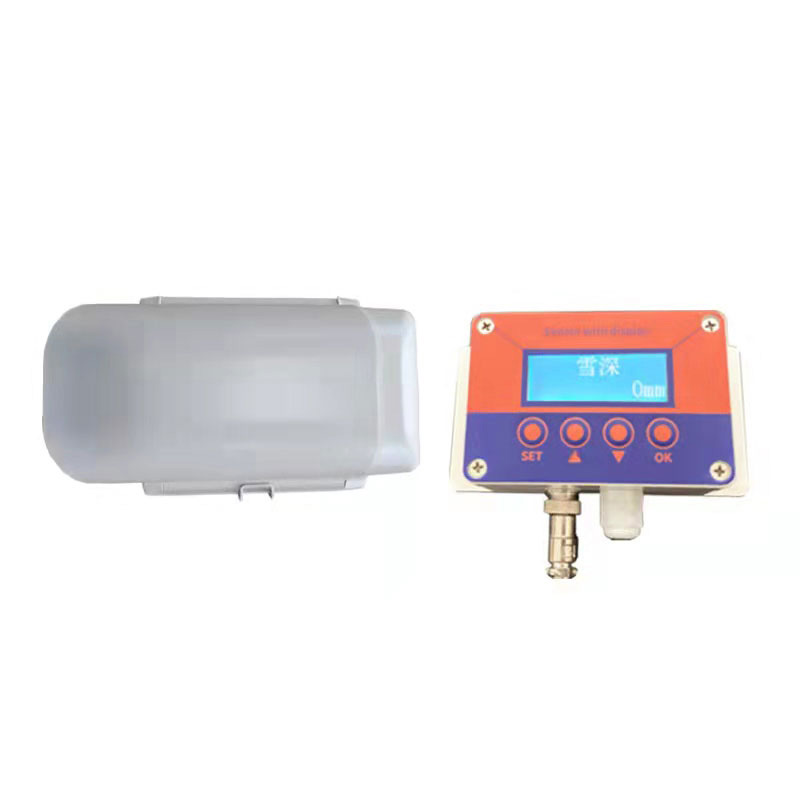
3-Meter Laser Snow Depth Monitoring Station Achieves Millimeter-Level Measurement Accuracy Using Phase-Shift Laser Ranging
Article source:Weather station time:2026-04-23 10:21:53 viewed:298times
The 3-meter laser snow depth monitoring station employs phase-shift laser ranging technology to measure snow accumulation depth. It overcomes the limitations of ultrasonic and electromagnetic sensors—specifically their inability to reliably detect snow—offering a measurement range of 0.05 to 3 meters with an accuracy of ±1.0 mm. The device supports both independent alarm functions and networked monitoring, making it suitable for use in meteorological stations and road traffic monitoring applications.
The 3-meter laser snow depth monitoring station is a high-precision snow depth measurement device based on the principles of phase-shift laser ranging. The device operates by emitting a laser beam onto the snow surface and receiving the reflected signal. By calculating the distance between the sensor and the snow surface based on the laser's round-trip time and the speed of light, and then subtracting this distance from the known installation height, the system accurately determines the depth of the accumulated snow. Compared to traditional ultrasonic, electromagnetic, and weight-based sensors, laser technology is capable of accurately identifying signals reflected from the snow surface, thereby resolving the technical deficiency—common to other sensor types—whereby snow cannot be reliably detected. This device can function as a standalone, automated snow depth monitoring and alarm system, or it can be integrated into a network to form a comprehensive, multi-point monitoring system.
In terms of technical specifications, the 3-meter laser snow depth monitoring station features a measurement range of 0.05 to 3 meters, a resolution of 1 mm, and a measurement accuracy of ±1.0 mm. The sensor utilizes an RS485 signal output interface; the laser operates within the 620–690 nm wavelength range, is classified as Class II, and has a power output of less than 1 mW. With an IP65 protection rating, the device is capable of operating normally in ambient temperatures ranging from -40°C to +50°C. The unit features a built-in automatic temperature control and heating function; when the internal cavity temperature drops below 0°C, the heating element activates automatically to prevent lens icing, thereby ensuring the device's continuous and stable operation under severe cold conditions. Regarding data acquisition, the system collects data once every 10 minutes when snow is present, and once every 30 minutes when there is no snow; this strategy ensures monitoring accuracy while simultaneously minimizing power consumption. The system comes standard with GPRS networking capabilities and supports expansion via Bluetooth and wired transmission interfaces. Additionally, it offers optional solar power supply systems and MPPT (Maximum Power Point Tracking) functionality to meet the long-term operational requirements of unattended field environments. In terms of application areas, the 3-meter laser snow depth monitoring station is widely utilized in fields such as meteorological snow depth observation, port and dock safety monitoring, road traffic safety monitoring, airport runway snow monitoring, structural safety monitoring, agricultural production monitoring, and hydrology and water conservancy. In traffic management scenarios, this device enables real-time monitoring of road snow depth, providing essential data support for snow removal and traffic flow maintenance operations. In agricultural settings, its millimeter-level precision allows farmers to accurately assess the thermal insulation provided by snow cover for crop root systems. The device facilitates continuous, end-to-end monitoring of snow depth—operating autonomously with unattended, independent monitoring and self-recording capabilities—thereby reducing the workload on observation personnel while simultaneously enhancing the quality and efficiency of data collection.
This paper addresses:https://fengtuweather.com/company/928.html
Related products
Related article
-
Scenic Weather Station: Empowering Negative Oxygen Ion Marketing in Tourist Attractions
2025-07-01 -
Integrated PV inverter tester optimises power generation efficiency
2024-06-04 -
Combatting Urban Dust Pollution: The Role of Dust Detectors in Real-Time Monitoring
2025-05-27 -
Weather station monitoring system for defence against meteorological disasters
2024-02-21 -
Power Quality Measurement Monitoring Multiple Electrical Parameters
2026-03-11 -
Forestry Weather Station: A Powerful Tool for Forest and Grassland Fire Prevention and Control
2025-07-08 -
Intelligent Road Weather Station: Mitigating Risks in Adverse Conditions
2025-09-22 -
Dust Monitoring Equipment: A Real-time Environmental Monitoring Solution for Construction Sites
2025-10-27