

Product
-
Weather station
-
Road Weather Station
-
Photovoltaic Inspection
-
Atmospheric monitoring
-
Operating condition monitoring
Recommended article
- photovoltaic testers 400V/20A Range Meets the On-Site Testing Needs of Photovoltaic Modules
- Application of Low-Power Meteorological observation equipment in Unattended Field Monitoring
- How Portable Solar Cell Testers Rapidly Perform PV String I-V Curve Testing
- The price of meteorological monitoring systems varies from 3,900 to 39,800 yuan depending on the number of monitored elements
- Power Quality Measurement Makes Power Grid Harmonic Detection and Data Logging More Efficient
- High-Precision Meteorological observation equipment Aids Field Environmental Monitoring
Contact us
Shandong Fengtu IOT Technology Co., Ltd
Sales Manager:Ms. Emily Wang
Cel,Whatsapp,Wechat:+86 15898932201
Email:info@fengtutec.com
Add:No. 155 Optoelectronic Industry Accelerator, Gaoxin District, Weifang, Shandong, China
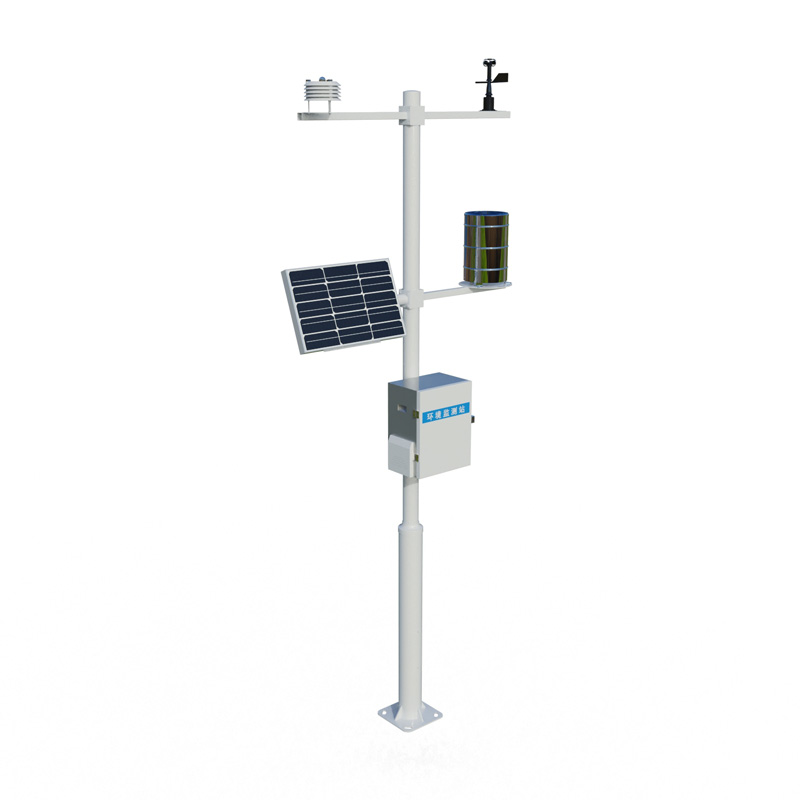
The FT series of meteorological observation equipment covers various types, including portable, explosion-proof, ultrasonic, and hydrological models
Article source:Weather station time:2026-06-18 09:39:42 viewed:121times
The meteorological observation equipment models include multiple series such as FT-QC, PQX, BQX, XQ, SQ, and CQX, corresponding to portable, explosion-proof, ultrasonic, miniature, hydrological, and enhanced types, respectively. Each model is distinguished by its numerical designation based on measurement elements and accuracy, suitable for meteorological, chemical, and water conservancy fields. Users can select the appropriate configuration according to their specific needs.
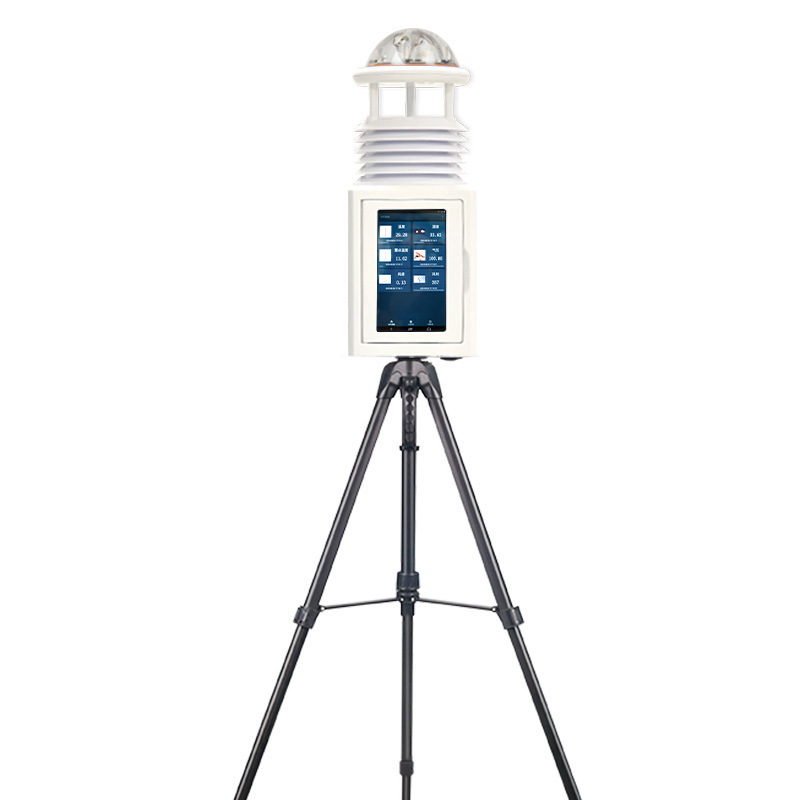
The model number of the meteorological observation equipment is an important basis for identifying and selecting specific meteorological station products. Taking the FT series as an example, its product line is divided into several sub-series according to application scenarios and technical characteristics. The FT-QC series (QC2 to QC12) belongs to portable meteorological stations, mainly targeting emergency monitoring, mobile observation, and temporary deployment needs. The higher the numerical designation in this series, the more types of sensors are integrated. For example, QC2 only measures temperature, humidity, and air pressure, while QC12 additionally includes total radiation, ultraviolet radiation, and soil temperature and humidity. These models all adopt an integrated design, are battery powered, and can be quickly stored in a carrying case.
The FT-PQX series (PQX2 to PQX12) are explosion-proof meteorological observation devices. Their housings and circuits comply with Exd IIB explosion-proof standards, making them suitable for locations with flammable gases or dust, such as petroleum, chemical, and coal mines. This series also offers various sensor combinations, with numerical designations reflecting configuration levels. For example, PQX8 includes wind speed and direction, temperature, humidity, pressure, rainfall, and solar radiation, while PQX2 only includes the five basic elements. These devices typically use stainless steel construction and sealed cable connectors to ensure safe operation in hazardous environments.
Both the FT-BQX and FT-CQX series utilize ultrasonic technology to measure wind speed and direction, eliminating the need for traditional mechanical anemometers and wind vanes. The BQX series (BQX2 to BQX12) emphasizes portability and low power consumption, making it suitable for unmanned field stations without mains power. The CQX series (CQX2 to CQX12) adds a heating and de-icing function to the ultrasonic technology, making it suitable for low-temperature, high-humidity areas to prevent sensor icing from affecting measurements. While both series represent a similar number of elements, the CQX series offers stronger protection and interference resistance.
The FT-XQ series (XQ1 to XQ4) are miniature meteorological observation devices, small in size and lightweight, suitable for use with drones, vehicles, or in confined spaces. Higher numbers indicate slightly increased size and weight, but also a greater number of measurable elements. The FT-SQ series (SQ2 to SQ17) are integrated stations specifically designed for hydrological monitoring, simultaneously measuring rainfall and water level. Some models also integrate flow velocity sensors; the number in the model number indicates the maximum number of sensors that can be connected.
When selecting a model, users should first determine if the environment requires explosion-proof protection, then consider whether mechanical rotating parts are permissible (if not, choose an ultrasonic series), and finally determine the model number based on the specific elements to be measured (e.g., radiation, water level). Furthermore, power supply method, data communication distance, and installation space will also influence the final model selection. These meteorological observation equipment models basically cover a variety of needs from ground-based meteorological stations to professional hydrological monitoring; appropriate selection can effectively balance cost and observation accuracy.
This paper addresses:https://fengtuweather.com/company/958.html
Related products
Related article
-
24/7 Meteorological Support for Fisheries: Solar Powered Weather Stations
2025-08-01 -
The All - in - One Grassland Ecological Monitoring Station (FT - CQX9)
2025-01-23 -
Discovering the Small Automatic Weather Station
2024-12-11 -
Vehicle - Mount Weather Station,Mobile Monitoring in Action
2024-12-27 -
Construction Site Dust Control with Dust Detector
2025-04-16 -
Multifunctional weather station Enables Automatic Meteorological Data Acquisition and Transmission
2026-06-23 -
Series power supply Enabling Precise Detection of Internal Defects in PV Modules via Reverse-Bias Electroluminescence
2026-04-16 -
Integrated meteorological monitoring station High-Efficiency Monitoring for Multi-Domain Applications
2026-01-28