

Product
-
Weather station
-
Road Weather Station
-
Photovoltaic Inspection
-
Atmospheric monitoring
-
Operating condition monitoring
Recommended article
- photovoltaic testers 400V/20A Range Meets the On-Site Testing Needs of Photovoltaic Modules
- Application of Low-Power Meteorological observation equipment in Unattended Field Monitoring
- How Portable Solar Cell Testers Rapidly Perform PV String I-V Curve Testing
- The price of meteorological monitoring systems varies from 3,900 to 39,800 yuan depending on the number of monitored elements
- Power Quality Measurement Makes Power Grid Harmonic Detection and Data Logging More Efficient
- High-Precision Meteorological observation equipment Aids Field Environmental Monitoring
Contact us
Shandong Fengtu IOT Technology Co., Ltd
Sales Manager:Ms. Emily Wang
Cel,Whatsapp,Wechat:+86 15898932201
Email:info@fengtutec.com
Add:No. 155 Optoelectronic Industry Accelerator, Gaoxin District, Weifang, Shandong, China
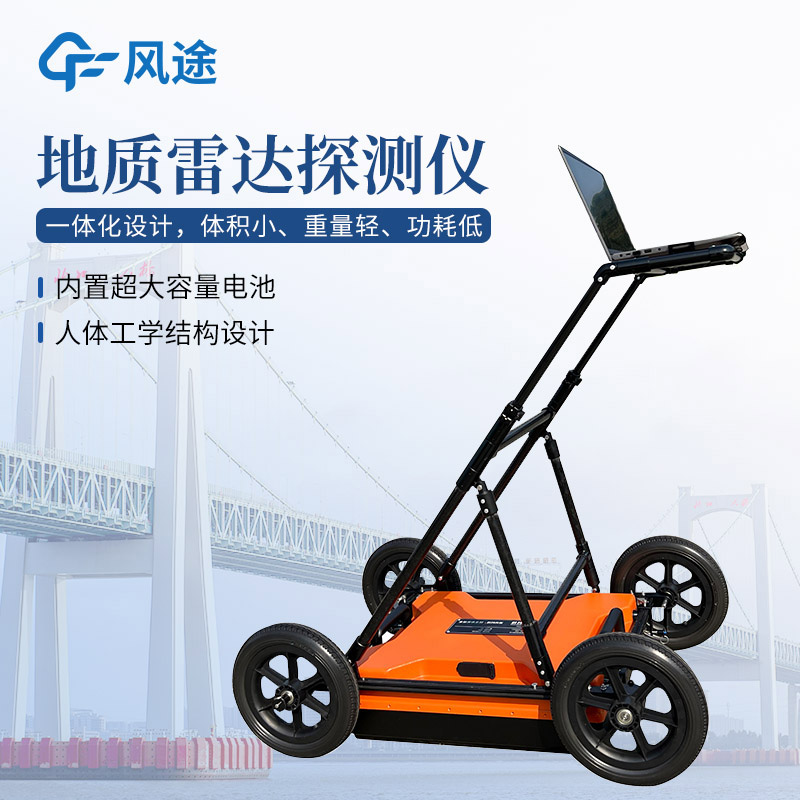
Ground Penetrating Radar for Detecting Roadway Surrounding Rock Loose Zone
Article source:Weather station time:2025-07-29 09:17:28 viewed:503times
In underground engineering construction, the stability of roadway surrounding rock is related to construction safety and project service life. After roadway excavation, the original rock stress balance is broken, and a certain range of loose areas will form inside the surrounding rock, namely the surrounding rock loose zone. The rock mass structure in this area is fragmented, with reduced strength, which is prone to geological disasters such as collapse and spalling. Therefore, construction parties need to accurately detect the scope and characteristics of the loose zone.
Ground Penetrating Radar realizes the detection of the loose zone based on the principle of electromagnetic wave propagation. The core principle is to use the differences in propagation speed and reflection intensity of high-frequency electromagnetic waves in different media to judge the changes in rock mass structure. When electromagnetic waves are transmitted from the transmitting antenna into the surrounding rock, they will be reflected when encountering the interface between the loose zone and the intact rock mass. After the receiving antenna captures the reflected signal, it is processed to form a radar image.
Due to the high degree of fragmentation and developed fractures, the rock mass in the loose zone has obvious differences in dielectric constant from the intact rock mass. This causes changes in speed and energy attenuation when electromagnetic waves propagate in this area. These characteristics will form specific reflected waveforms in the radar image. By analyzing these waveform characteristics and combining with geological data, the boundary position and scope of the loose zone can be determined. Areas with strong reflected wave energy and disordered waveforms usually correspond to the scope of the loose zone, while the reflected signals in the intact rock mass area are relatively stable and continuous.
Ground Penetrating Radar has the advantages of non-destructiveness, high efficiency and high resolution, and has become one of the main means for detecting the loose zone of roadway surrounding rock, providing reliable technical support for the safe construction of underground engineering.
This paper addresses:https://fengtuweather.com/industry/756.html
Related products
Related article
-
Forest Fire Detection Improves Forest Fire Early Warning and Suppression Efficiency by Relying on Meteorological Factor Data
2026-05-26 -
Small meteorological monitoring stations for agriculture
2024-07-09 -
Ground Penetrating Radar: Non-Destructive Precision Detection for Voids Beneath Building Floors
2025-07-17 -
Voltage Quality Challenges and Solutions with Power Quality Analyzers (FT - DN2)
2025-03-13 -
FT - FZ5 Negative Oxygen Ion Monitoring System: Your Reliable Air Guardian
2024-10-29 -
Weather Observation Stations in Tea Gardens, Combining Agriculture and Technology
2024-07-23 -
Dust Detector Systems: Comprehensive Environmental Monitoring for Effective Pollution Control
2025-09-25 -
What are forest fire risk factor collection stations for?
2024-07-17