

Product
-
Weather station
-
Road Weather Station
-
Photovoltaic Inspection
-
Atmospheric monitoring
-
Operating condition monitoring
Recommended article
- photovoltaic testers 400V/20A Range Meets the On-Site Testing Needs of Photovoltaic Modules
- Application of Low-Power Meteorological observation equipment in Unattended Field Monitoring
- How Portable Solar Cell Testers Rapidly Perform PV String I-V Curve Testing
- The price of meteorological monitoring systems varies from 3,900 to 39,800 yuan depending on the number of monitored elements
- Power Quality Measurement Makes Power Grid Harmonic Detection and Data Logging More Efficient
- High-Precision Meteorological observation equipment Aids Field Environmental Monitoring
Contact us
Shandong Fengtu IOT Technology Co., Ltd
Sales Manager:Ms. Emily Wang
Cel,Whatsapp,Wechat:+86 15898932201
Email:info@fengtutec.com
Add:No. 155 Optoelectronic Industry Accelerator, Gaoxin District, Weifang, Shandong, China
The Structure, Advantages and Applications of Negative Oxygen Ion Monitoring Station
Article source:Weather station time:2025-09-17 09:25:18 viewed:575times
The concentration of negative oxygen ions is a key indicator for measuring air quality and the quality of the ecological environment. It is relatively high in natural areas such as forests and wetlands, and plays a positive role in air purification and human health. With the public's growing attention to environmental quality, the demand for real-time data on negative oxygen ion concentration has become increasingly urgent in fields such as environmental protection, scenic area operation, and scientific research. Traditional manual sampling and monitoring have problems such as low efficiency, delayed data, and narrow monitoring range. The Negative Oxygen Ion Monitoring Station is a core device developed to solve these problems and meet the needs of real-time monitoring.
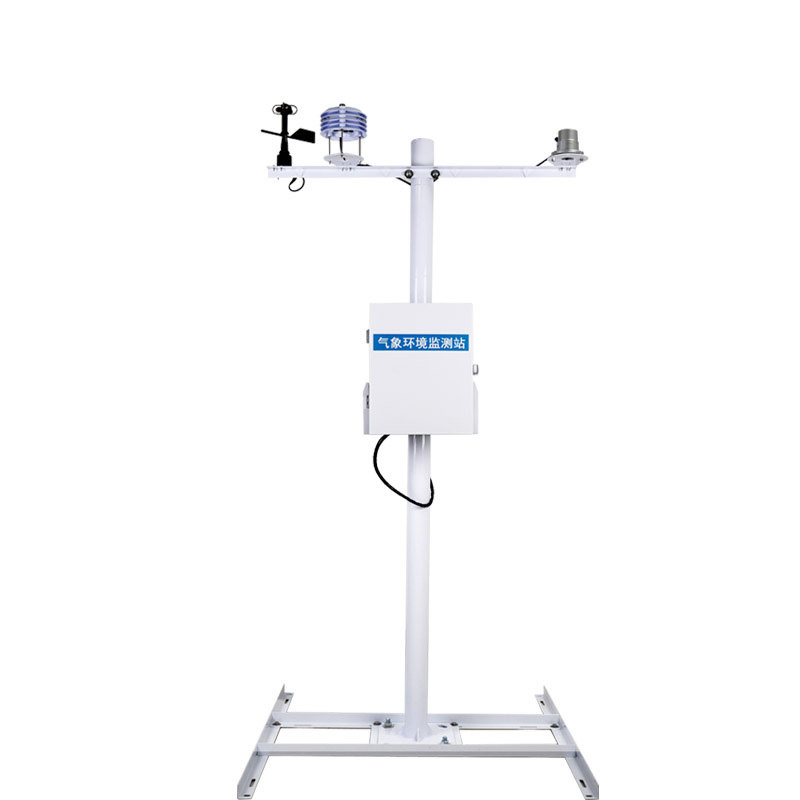
This system mainly consists of three key parts: perception, data processing and transmission, and user application. The core of the perception part is the negative oxygen ion monitoring sensor, which can accurately monitor negative oxygen ions in the air. According to actual monitoring needs, it can also simultaneously monitor air pollutants, temperature, humidity and other related environmental parameters, and can adapt to complex outdoor environmental conditions such as forests, mountains, and scenic areas.
The data processing and transmission part is mainly responsible for signal conversion and information transmission. Specialized acquisition equipment converts the signals obtained by the sensors into digital information, which is then uploaded to the cloud data platform in real time via a wireless communication network. The platform can realize automatic storage, classification, sorting and backup of data, effectively ensuring the continuity and security of monitoring data.
The user application part mainly provides various data services for users. Managers can remotely view real-time monitoring data through terminal devices such as computers and mobile phones. The data platform also has functions such as data trend analysis, monitoring station management, and automatic alarm for abnormal situations. Some systems can also synchronize monitoring data to outdoor LED displays to publicly announce real-time environmental quality to the public.
The system adopts a modular design concept, where each component can be flexibly combined and replaced, and monitoring indicators can also be adjusted according to needs. The system is equipped with dedicated installation brackets and protective devices, making installation and later maintenance relatively convenient. It also supports solar power supply, which can be adapted to remote areas without municipal power supply. Currently, the system has been widely used in multiple scenarios such as forest parks, nature reserves, and eco-tourism scenic areas, providing reliable data support for ecological environment assessment, scenic area environmental management, and related scientific research work.
This paper addresses:https://fengtuweather.com/industry/795.html
Related products
Related article
-
Forestry Weather Station Determining Fire Risk Levels via Meteorological Factor Monitoring
2026-03-23 -
Power Quality Measurement Makes Power Grid Harmonic Detection and Data Logging More Efficient
2026-07-22 -
What are air quality monitoring stations?
2024-06-06 -
Why Small Automatic Weather Station Stands Out: Monitoring, Configuration & Practicality
2025-09-10 -
Differences between grassland weather stations and other weather stations
2024-03-28 -
Transmission Line Weather Station FT - WQX6: Guarding the 'Power Blood Vessels' of Cities
2025-04-24 -
Real-Time Dust Monitoring: How Dust Detectors Protect Public Health and the Environment
2025-05-15 -
What is a facility agro-weather station?
2024-02-04