

Product
-
Weather station
-
Road Weather Station
-
Photovoltaic Inspection
-
Atmospheric monitoring
-
Operating condition monitoring
Recommended article
- photovoltaic testers 400V/20A Range Meets the On-Site Testing Needs of Photovoltaic Modules
- Application of Low-Power Meteorological observation equipment in Unattended Field Monitoring
- How Portable Solar Cell Testers Rapidly Perform PV String I-V Curve Testing
- The price of meteorological monitoring systems varies from 3,900 to 39,800 yuan depending on the number of monitored elements
- Power Quality Measurement Makes Power Grid Harmonic Detection and Data Logging More Efficient
- High-Precision Meteorological observation equipment Aids Field Environmental Monitoring
Contact us
Shandong Fengtu IOT Technology Co., Ltd
Sales Manager:Ms. Emily Wang
Cel,Whatsapp,Wechat:+86 15898932201
Email:info@fengtutec.com
Add:No. 155 Optoelectronic Industry Accelerator, Gaoxin District, Weifang, Shandong, China
Dust Monitoring Equipment and PM2.5 Surveillance
Article source:Weather station time:2025-09-19 09:05:12 viewed:591times
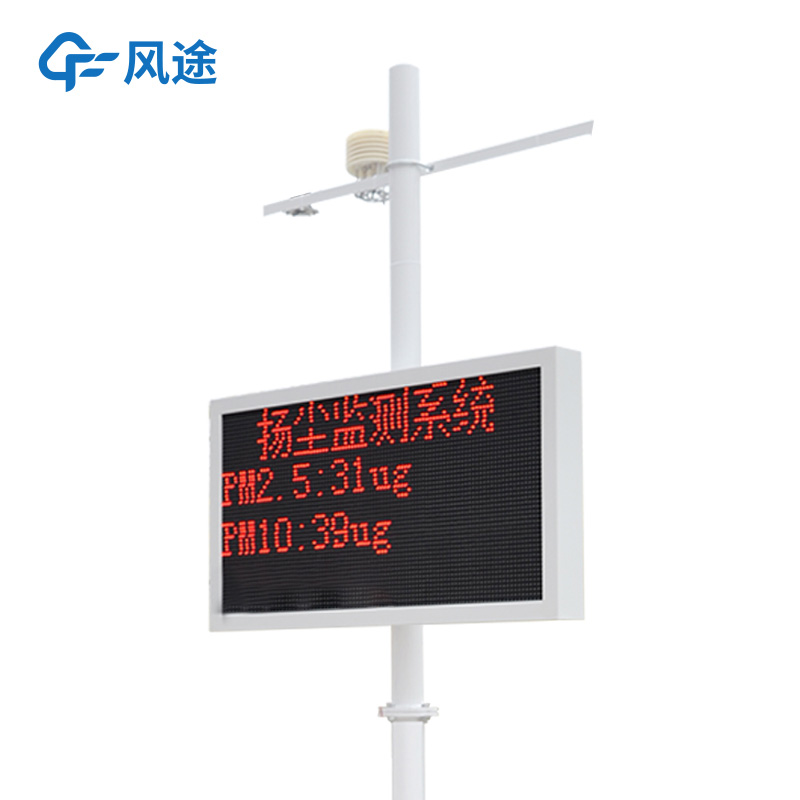
PM2.5 refers to particulate matter in ambient air with an aerodynamic diameter of 2.5 micrometers or less, also known as fine particulate matter or respirable particulate matter. Its diameter is less than 1/20 the thickness of a human hair. It can remain suspended in the air for a long time, and when inhaled into the human body through respiration, it can cause various health hazards. Even in areas with generally good air quality, external factors such as cross-regional dust transport, seasonal straw burning, or sudden industrial pollution diffusion may lead to a short-term surge in particulate matter concentration, making Dust Monitoring Equipment an essential monitoring device.
The core function of Dust Monitoring Equipment is to monitor the concentration of fine particulate matter in the air in real time and accurately track changes in PM2.5 values, providing data for air quality assessment. It utilizes sensing technology to collect and analyze particulate matter in the air through specific detection modules, enabling rapid response to concentration fluctuations. Even in the face of short-term surges caused by external factors, it can promptly capture and record the data.
Compared with traditional monitoring methods, Dust Monitoring Equipment has significant advantages in real-time performance, accuracy, and response speed. Traditional monitoring is prone to data lag and struggles to record short-term fluctuations. In contrast, this equipment can conduct 24/7 continuous monitoring with a high data update frequency. Moreover, its detection accuracy complies with national standards, and it can eliminate interference to ensure data accuracy and reliability.
The wide application of Dust Monitoring Equipment not only provides a powerful tool for environmental protection supervision but also allows the public to promptly grasp air quality conditions. Environmental protection departments use its data to formulate targeted prevention and control measures to address various external pollution; the public can adjust their travel plans and protective measures based on real-time data to reduce health risks.
This paper addresses:https://fengtuweather.com/industry/797.html
Related products
Related article
-
Small weather station for rain, snow and wind monitoring
2024-05-17 -
The FT series of meteorological observation equipment covers various types, including portable, explosion-proof, ultrasonic, and hydrological models
2026-06-18 -
Fengtu Technology Dust Monitoring Equipment: Comprehensive Solutions for Air Quality Management
2025-10-17 -
Negative Oxygen Ion Monitoring System: Nature's Gift in the Park
2024-10-08 -
Car Vehicle Mounted Auto Weather: A Flexible and Efficient Tool for Emergency Meteorological Monitoring
2025-07-28 -
Small Automatic Weather Station: MEMS-based Portable Solution for Real-time Environmental Monitoring
2025-10-14 -
Dust monitoring system for in-depth environmental protection
2024-02-20 -
Photovoltaic module efficiency testing equipment Provides High-Voltage, High-Power Performance Testing Solutions
2026-01-04