

Product
-
Weather station
-
Road Weather Station
-
Photovoltaic Inspection
-
Atmospheric monitoring
-
Operating condition monitoring
Recommended article
- photovoltaic testers 400V/20A Range Meets the On-Site Testing Needs of Photovoltaic Modules
- Application of Low-Power Meteorological observation equipment in Unattended Field Monitoring
- How Portable Solar Cell Testers Rapidly Perform PV String I-V Curve Testing
- The price of meteorological monitoring systems varies from 3,900 to 39,800 yuan depending on the number of monitored elements
- Power Quality Measurement Makes Power Grid Harmonic Detection and Data Logging More Efficient
- High-Precision Meteorological observation equipment Aids Field Environmental Monitoring
Contact us
Shandong Fengtu IOT Technology Co., Ltd
Sales Manager:Ms. Emily Wang
Cel,Whatsapp,Wechat:+86 15898932201
Email:info@fengtutec.com
Add:No. 155 Optoelectronic Industry Accelerator, Gaoxin District, Weifang, Shandong, China
photovoltaic testers High Voltage and Current Field Testing
Article source:Weather station time:2026-02-03 09:19:47 viewed:458times
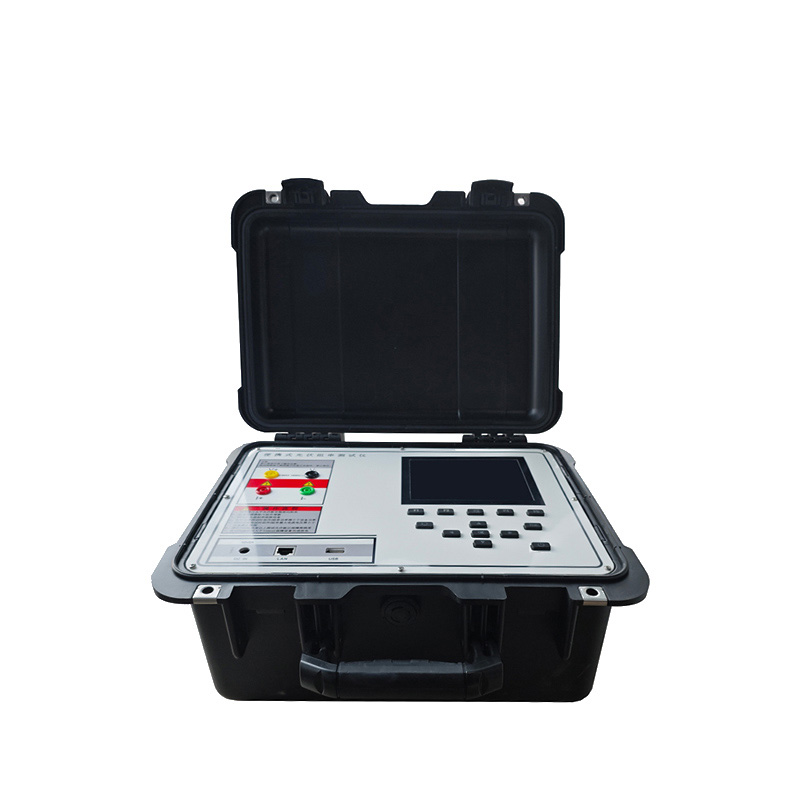
photovoltaic testers device offers voltage testing up to 1500V and current testing up to 30A, capable of testing 30kW modules. This equipment measures parameters such as open-circuit voltage, short-circuit current, and maximum power, and is specifically designed for on-site operation and maintenance of power plants, meeting the needs of high-precision diagnostics in all outdoor scenarios.
photovoltaic testers is a high-precision diagnostic device specifically designed for on-site operation and maintenance of photovoltaic power plants. This instrument has a voltage testing range of up to 1500V and a current testing range of up to 30A, capable of testing photovoltaic modules or arrays with a power output of up to 30kW. Its main function is to measure the current-voltage (IV) characteristic curve of solar cell modules or arrays on-site, and derive key parameters from it, including open-circuit voltage, short-circuit current, maximum power point power, fill factor, and conversion efficiency.
The tester works by using an electronic load to quickly scan the photovoltaic module under test in a short period of time, simultaneously collecting its voltage and current values to plot a complete IV curve. By analyzing the curve, the actual output performance of the module can be accurately calculated. This testing method effectively evaluates the power generation capacity of the module under real working conditions and can promptly identify problems such as power degradation, hot spots, wiring faults, or shading.
The device's design fully considers the needs of on-site operation and maintenance. The overall structure is compact and lightweight, making it easy for maintenance personnel to carry to different locations in the power plant. The instrument is usually equipped with a robust casing to withstand dust, moisture, and certain weather changes in outdoor working environments. The operation interface is intuitive, and the testing process is highly automated, allowing for the testing of a single string or array within minutes, directly displaying key results and curve graphs. Some models support data storage and export functions for subsequent analysis and report generation.
In the actual operation and maintenance of photovoltaic power plants, this tester has a wide range of applications. Maintenance personnel can use it for initial performance acceptance after power plant installation to ensure that the module output meets design standards. During regular inspections, by comparing the IV curves of the same module at different times, its power degradation can be monitored, and the module's health status can be assessed. When the power generation of the power plant system drops abnormally, this instrument can be used to quickly locate problematic strings or modules, distinguishing whether it is a single module failure or a series mismatch. Furthermore, it is often used to assess the specific impact of factors such as shading, dust accumulation, or PID effects on component output.
The device's high voltage and high current testing capabilities allow it to directly test strings composed of multiple series-connected components, improving the efficiency of on-site testing. Its portability and rapid diagnostic features reduce the weight and working time for maintenance personnel during tower climbing and rooftop inspections, thereby lowering safety risks.
With the continuous growth of photovoltaic power plant installed capacity and the increasing demand for refined operation and maintenance, portable IV power testers have become one of the standard tools for efficient power plant operation and maintenance. They provide direct data for performance assurance, fault diagnosis, and power generation revenue optimization of photovoltaic assets, helping to improve the overall operating efficiency and return on investment of power plants.
This paper addresses:https://fengtuweather.com/industry/873.html
Related products
Related article
-
FT-WQX8 Outdoor Weather Sensors: A Multi-Parameter Monitoring Solution for Smart Cities and Environmental Protection
2025-07-09 -
Odor Monitoring System achieves 24-hour gas concentration monitoring through a multi-sensor array
2026-05-14 -
Three Portable Weather Stations, Only Better
2024-03-18 -
Effective Measures for Construction Site Dust Control with Online dust Monitoring system
2024-12-02 -
Tailored for Emergencies: The Complementary Advantages of Two Weather Monitoring Tools
2025-04-22 -
Advantages of Atmospheric Negative Oxygen Ion Monitoring System
2024-02-05 -
Small Automatic Weather Station: The Future of Distributed Meteorological Monitoring
2025-10-11 -
Agricultural Weather Stations, making farming more modern and smarter
2024-08-16