

Product
-
Weather station
-
Road Weather Station
-
Photovoltaic Inspection
-
Atmospheric monitoring
-
Operating condition monitoring
Recommended article
- photovoltaic testers 400V/20A Range Meets the On-Site Testing Needs of Photovoltaic Modules
- Application of Low-Power Meteorological observation equipment in Unattended Field Monitoring
- How Portable Solar Cell Testers Rapidly Perform PV String I-V Curve Testing
- The price of meteorological monitoring systems varies from 3,900 to 39,800 yuan depending on the number of monitored elements
- Power Quality Measurement Makes Power Grid Harmonic Detection and Data Logging More Efficient
- High-Precision Meteorological observation equipment Aids Field Environmental Monitoring
Contact us
Shandong Fengtu IOT Technology Co., Ltd
Sales Manager:Ms. Emily Wang
Cel,Whatsapp,Wechat:+86 15898932201
Email:info@fengtutec.com
Add:No. 155 Optoelectronic Industry Accelerator, Gaoxin District, Weifang, Shandong, China
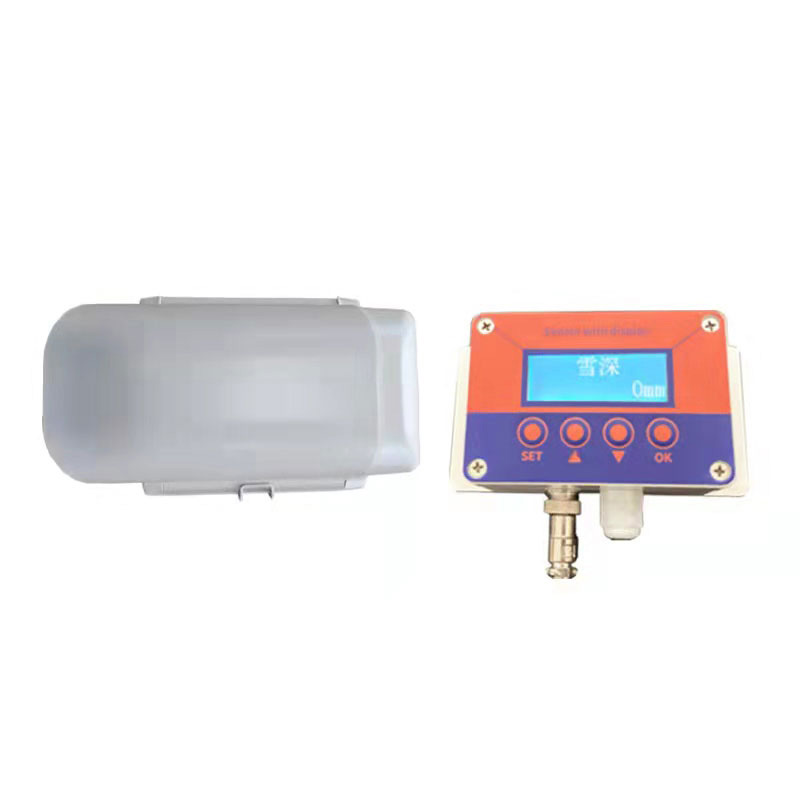
Ultrasonic Snow Depth Detector Achieving Millimeter-Level Automatic Snow Depth Measurement Using Ultrasonic Ranging Principles
Article source:Weather station time:2026-03-19 10:16:23 viewed:300times
Ultrasonic Snow Depth Detector employs ultrasonic ranging principles to achieve automatic snow depth measurement with a range of 0–2000 mm, a resolution of 1 mm, and an accuracy of ±1 mm ±0.2% F.S. The device automatically collects snow layer thickness data and uploads it in real-time, providing a precise basis for road snow removal operations and early warning systems for snow and ice-related hazards.
Ultrasonic Snow Depth Detector is an automated device specifically designed for measuring accumulated snow depth. It utilizes ultrasonic ranging technology to accurately identify the snow surface and perform precise measurements. The device operates by emitting ultrasonic pulses toward the snow surface and receiving the reflected signals; by calculating the round-trip time of these pulses, it determines the distance between the sensor and the snow surface, thereby deriving the snow depth data. Furthermore, it can be used to analyze the volume of snowfall occurring within a specific time interval.
In terms of technical principles, Ultrasonic Snow Depth Detector overcomes the limitations of traditional infrared or laser sensors, which often struggle to accurately identify snow surfaces due to diffuse reflection. Ultrasonic waves are less susceptible to the diffuse reflection characteristic of snow layers, enabling the device to accurately pinpoint the true position of the snow surface and maintain stable measurement performance—even during active snowfall. The device features an integrated internal temperature compensation function that corrects for measurement errors caused by variations in the speed of sound due to ambient temperature fluctuations, thereby ensuring data accuracy.
Regarding technical specifications, the monitoring station offers a snow depth measurement range of 0–2000 mm with a resolution of 1 mm, allowing it to accurately capture even minute changes in snow accumulation. Its measurement accuracy is rated at ±1 mm ±0.2% of full scale; at the full-scale range of 2000 mm, the maximum error does not exceed 4 mm, thereby meeting the stringent accuracy requirements for meteorological monitoring and traffic management applications.
The device's operation is fully automated and requires no manual intervention. An internal data logger automatically performs measurements at pre-configured intervals, and the data can be transmitted in real-time to a control center or cloud-based platform via various communication methods, including 4G, Ethernet, or RS485. Administrators can access real-time snow depth data, historical trend charts, and daily snowfall statistics via computer or mobile device interfaces, enabling them to stay fully informed regarding current snow conditions.
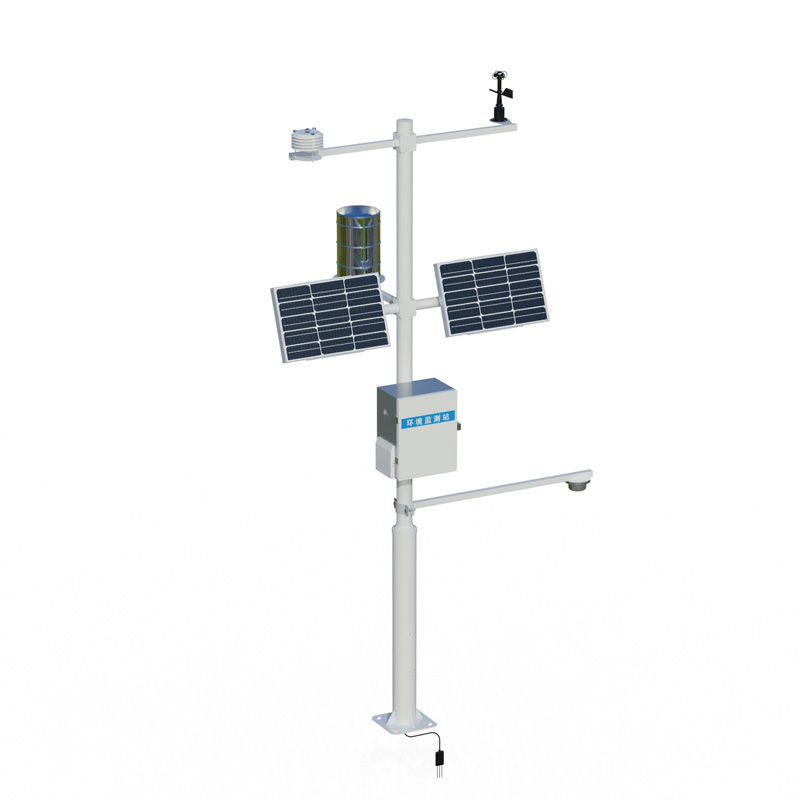
In terms of application scenarios, Ultrasonic Snow Depth Detector is primarily deployed in critical areas such as highways, major urban thoroughfares, airport runways, and railway switches. During winter snowfall, the device continuously monitors changes in snow depth; once the snow depth reaches a preset threshold, the system automatically issues a warning alert, providing precise data support for road clearing and snow removal operations. Meteorological agencies can also utilize this data to conduct snow accumulation monitoring and assess the risks associated with heavy snow disasters.
The device features a compact structure, making installation and maintenance simple. Its housing is constructed from corrosion-resistant materials, enabling it to withstand prolonged exposure to harsh outdoor environments. With a wide operating temperature range, it is well-suited for use during winter in frigid, high-latitude regions. Furthermore, it offers flexible power options—supporting both mains electricity and solar power—facilitating easy deployment in remote areas.
As the demand for winter traffic safety and operational support continues to rise, this automated snow depth monitoring device has become an integral component of smart transportation and meteorological monitoring networks, providing a scientific basis for decision-making in response to icy and snowy weather conditions.
This paper addresses:https://fengtuweather.com/industry/896.html
Related products
Related article
-
How EL series of DC power supply Solves the EL Testing Challenge in Photovoltaic Power Plants
2026-05-18 -
How Dust Monitoring Equipment Safeguards Construction Site Air Quality
2025-08-14 -
Voltage Quality Challenges and Solutions with Power Quality Analyzers (FT - DN2)
2025-03-13 -
Introduction to the Integrated Forest and Grassland Fire Risk Factor Monitoring Station
2024-02-06 -
How Negative Ion Monitoring Enhances Air Quality and Boosts Tourism in Forest Areas
2024-12-31 -
Detecting Deep - Buried Non - Metallic Pipelines with Ground Penetrating Radar
2025-03-05 -
Agricultural Weather Stations, making farming more modern and smarter
2024-08-16 -
What are the must-have equipment for a small weather station on campus?
2024-06-28