

Product
-
Weather station
-
Road Weather Station
-
Photovoltaic Inspection
-
Atmospheric monitoring
-
Operating condition monitoring
Recommended article
- Radar speed gun utilizes the Doppler effect to achieve multi-scenario speed measurement
- Ultrasonic Snow Depth Detector Automated Snow Depth Measurement Using Ultrasonic Technology
- Speed enforcement system Achieves Precise Speed Measurement and Evidence Collection Based on the Doppler Principle
- Miniature Weather Stations Enable Precise Multi-Parameter Integrated Environmental Meteorological Monitoring
- What Testing Instruments are Required for Photovoltaic Power Generation Acceptance?
- Road meteorological monitoring systems collect road condition and meteorological data to ensure road safety
Contact us
Shandong Fengtu IOT Technology Co., Ltd
Sales Manager:Ms. Emily Wang
Cel,Whatsapp,Wechat:+86 15898932201
Email:info@fengtutec.com
Add:No. 155 Optoelectronic Industry Accelerator, Gaoxin District, Weifang, Shandong, China
EL Test Power Supply provides 0 to 1500V DC output
Article source:Weather station time:2026-05-20 10:55:51 viewed:228times
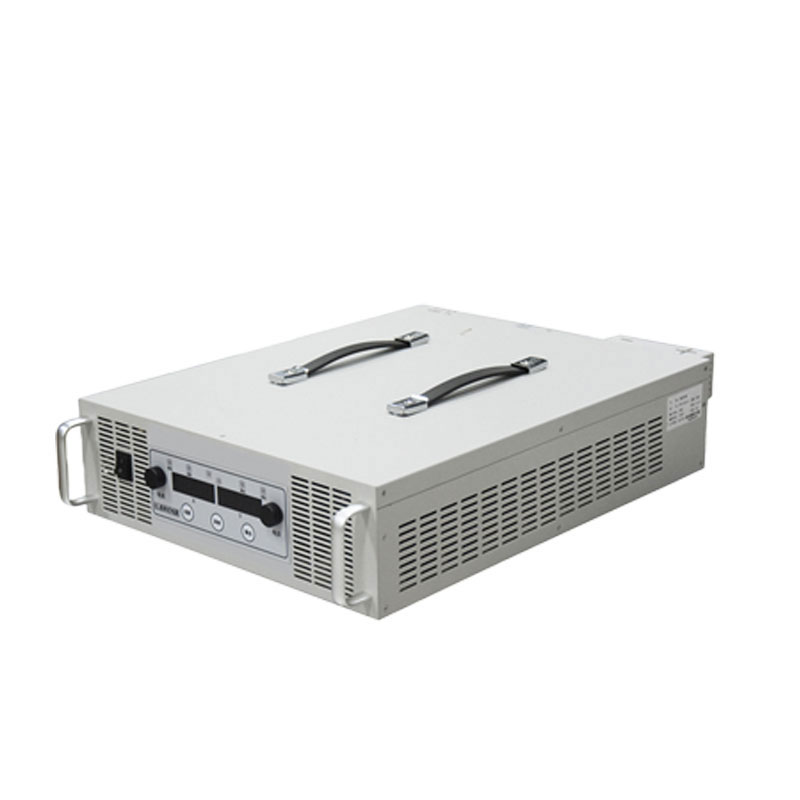
EL Test Power Supply is a programmable power supply device specifically developed for the reverse-energizing characteristics of photovoltaic (PV) power plant strings. It converts AC to DC power, inputs it to the solar panels to excite electroluminescence, and is used for detecting defects such as microcracks, broken grids, and poor solder joints within PV modules. The device has an output voltage range of 0 to 1500V, a maximum current of 3A, and a maximum power output of 4.5KW. It features multiple protection functions and is suitable for PV production quality inspection, power plant acceptance, and operation and maintenance scenarios.
The core function of EL Test Power Supply is to provide the forward bias power supply required for electroluminescence detection of PV modules. Electroluminescence detection involves applying voltage to the PV module to excite carrier recombination and emission within the cells. An infrared camera captures the emission image, thereby identifying internal defects such as microcracks, broken grids, black spots, and poor solder joints. As a key device providing a stable bias voltage, the performance of EL Test Power Supply directly affects the testing accuracy and efficiency.
This power supply equipment was developed specifically for the reverse-energizing characteristics of photovoltaic power plant strings. It converts AC power to DC power to be input into the solar panels, thereby enabling internal defect testing of the photovoltaic array (EL). In terms of technical specifications, EL Test Power Supply offers multiple models to suit different testing scenarios. Power parameters cover a voltage range of 0 to 1500V and a maximum current output of 3A, with a maximum power output of 4.5KW. The voltage output range is 0 to 1500V, with the programmable imported model achieving a voltage accuracy of 0.001V, a current accuracy of 0.001A, and power stability controlled within ±0.002%. The high-precision programmable model is suitable for EL testing scenarios using both an EL detector and a drone, capable of simultaneously testing 1 to 32 photovoltaic panels, meeting the needs of large-scale string testing.
Regarding protection functions, EL Test Power Supply is equipped with multiple safety protection mechanisms. The reverse current protection function allows setting a reverse current impedance threshold to prevent reverse current flow from the string; the short-circuit protection function prevents diode breakdown caused by reverse connection of the photovoltaic string; the programmable buffer protection uses a buffered on/off method to prevent high current from directly damaging the photovoltaic panel; the programmable steady-state output can adaptively match the current and voltage according to the different power components in the string to avoid damaging the component diodes. The overvoltage protection function allows setting the current and voltage protection limit value (OVP), and the overload protection function allows setting an overload threshold, automatically stopping the output when overloaded to prevent equipment burnout. In addition, the equipment also has internal overheat protection and high-voltage isolation protection to ensure the safety of operators working with high-voltage electricity around the casing and panel. For higher-specification models, the equipment is also equipped with a programmable remote interface (RS-485C and analog interface 0-10V), supporting remote parameter setting and programmable control of power on/off time.
In terms of hardware design, EL Test Power Supply adopts a modular design, with each module capable of independently connecting to 1 to 2 photovoltaic strings. MPPT technology tracks the maximum power output of each string in real time, avoiding the "weakest link" effect caused by uneven illumination between strings or differences in component degradation. The equipment integrates rectification, filtering, and inversion circuits, and features overvoltage, overcurrent, and overtemperature protection functions to ensure operational safety. Some energy storage models utilize high-power lithium battery systems, supporting multi-module string-parallel power-on testing. A single full charge can test up to 1500 modules, and it is equipped with a 4G Wi-Fi transceiver system and APP IoT control functionality.
EL Test Power Supply applications in the photovoltaic industry cover multiple stages, from production line to power plant operation and maintenance. During photovoltaic module production, this equipment is used for batch EL defect detection to ensure product quality. During power plant construction, acceptance personnel and maintenance teams use this equipment to perform EL testing on installed strings, promptly identifying component damage that may have occurred during transportation and installation. For photovoltaic power plants already in operation, this equipment can be used for regular inspections and troubleshooting, enabling early detection of degradation and damage to components during long-term operation. This power supply equipment has been widely used in photovoltaic power plant construction, photovoltaic module production and quality testing, playing a fundamental role in ensuring the long-term stable operation of photovoltaic power plants.
This paper addresses:https://fengtuweather.com/industry/944.html
Related products
Related article
-
Industrial-Grade Dust Detector System for Real-Time Construction Site Dust Monitoring and Intelligent Control
2025-05-29 -
Functions of the Integrated Cloud Gauge application
2024-03-21 -
The Crucial Role of Online dust Monitoring system in Controlling Construction Dust Pollution
2024-11-18 -
Application Analysis of Road Weather Information System
2025-11-20 -
The Portable Meteorograph for Mobile Weather Tracking
2024-09-02 -
Forest fire weather station, intelligent fire prevention
2024-03-20 -
Ultrasonic Weather Station: Precision - Driven Data for Informed Decision - Making
2025-02-21 -
Highway Visibility Detector for Enhanced Safety
2024-08-23