

Product
-
Weather station
-
Road Weather Station
-
Photovoltaic Inspection
-
Atmospheric monitoring
-
Operating condition monitoring
Recommended article
- The price of Fengtu automatic weather stations is affected by the configuration of monitoring elements
- Odor gas detector Enables 24-Hour Continuous Monitoring of Odor Pollution in Industrial Plants
- Shandong Fengtu, a manufacturer of meteorological observation equipment, supplies high-precision integrated field monitoring equipment
- Odor gas detector utilizes a multi-sensor array to perform on-site monitoring of odor factors according to national standards
- Application Introduction of Weather Monitoring Equipment High-Precision Environmental Monitoring Equipment in the Field
- Police radar gun Achieves Precise Speed Measurement in Multiple Scenarios Based on the Doppler Effect
Contact us
Shandong Fengtu IOT Technology Co., Ltd
Sales Manager:Ms. Emily Wang
Cel,Whatsapp,Wechat:+86 15898932201
Email:info@fengtutec.com
Add:No. 155 Optoelectronic Industry Accelerator, Gaoxin District, Weifang, Shandong, China
Odor Monitoring System is widely used in various odor pollution sources
Article source:Weather station time:2026-03-02 09:50:30 viewed:334times
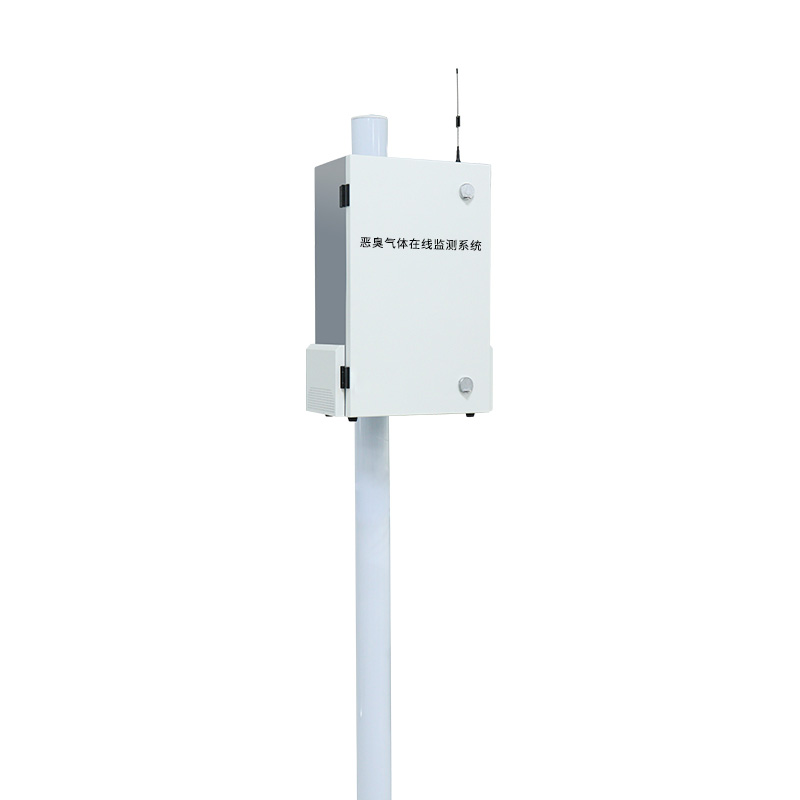
Odor Monitoring System integrates metal oxide sensors, PID photoionization detectors, electrochemical sensors, and ETO sensors, enabling real-time monitoring of ten odorous substances, including odor concentration (OU), ammonia, styrene, hydrogen sulfide, VOCs, trimethylamine, dimethyl sulfide, methanethiol, dimethyl disulfide, and carbon disulfide. It is widely used in waste treatment plants, chemical plants, and livestock farms.
Odor Monitoring System is an intelligent device capable of real-time monitoring of odorous gas concentrations and related air quality indicators in the environment. It consists of a hybrid array of multiple sensors, including metal oxide sensors, PID photoionization detectors, electrochemical sensors, and ETO sensors. Utilizing multi-sensor fusion and intelligent algorithm technology, it can simultaneously detect multiple odorous substances such as odor concentration (OU), ammonia, styrene, hydrogen sulfide, VOCs, trimethylamine, dimethyl sulfide, methanethiol, dimethyl disulfide, and carbon disulfide.
The sensor configuration of Odor Monitoring System employs a modular design. Metal oxide sensors are suitable for broad-spectrum detection of various odorous gases, electrochemical sensors achieve high-precision detection of hydrogen sulfide and ammonia, PID photoionization detectors have a fast response to VOCs components, and ETO sensors can detect specific organic gases. Each sensor can be individually plugged in, calibrated, and replaced, allowing for on-site calibration without the need to transport it back to the laboratory. The device incorporates temperature and humidity compensation algorithms and multi-gas cross-interference correction technology to automatically correct for the impact of environmental factors on sensor output, ensuring long-term data stability.
This equipment can be widely applied to various odorous pollution sources. In urban waste management, it can be used for real-time monitoring of landfills, waste treatment plants, waste-to-energy plants, and waste incineration sites. In industrial pollution sources, it is suitable for chemical plants, electronics factories, furniture factories, pharmaceutical factories, petrochemical plants, fine chemical plants, biopharmaceutical plants, and fertilizer plants. In agricultural pollution sources, it can be applied to large-scale livestock farms, animal husbandry, feed processing, livestock product processing, fishmeal processing, and food processing. Furthermore, this equipment can also be deployed for odor monitoring in automobile dealerships, sewage treatment plants, and cement kiln solid waste disposal sites. The Odor Monitoring System system typically features a 7-inch true-color LCD touchscreen, displaying all real-time monitoring data and system operating status. It has a built-in high-capacity storage chip for storing large amounts of data and supports USB data copying. Communication methods support multiple transmission paths including 4G wireless, RS485 wired, and LoRa, and is compatible with the HJ212-2017 environmental protection protocol, enabling remote monitoring via a regulatory platform. The device has audible and visual alarm functions, providing timely warnings when gas concentrations exceed standards, offering a scientific basis for environmental supervision, industrial emission control, and public health protection.
This paper addresses:https://fengtuweather.com/technical/885.html
Related products
Related article
-
Odor gas detector Real-time Monitoring of Odor Concentration (OU) and Concentration of Multiple Odor Gases
2025-12-18 -
GPR Technology: Detecting Collapse Hazards Before They Strike in Urban Construction
2025-07-03 -
Ultrasonic Weather Station: Precision - Driven Data for Informed Decision - Making
2025-02-21 -
FT - FZ5 Negative Oxygen Ion Monitoring System: Your Reliable Air Guardian
2024-10-29 -
Functions of automatic meteorological monitoring station for field microclimate
2024-07-25 -
Fengtu Small Automatic Weather Station: Integrated Monitoring for Timely Meteorological Insights
2025-07-10 -
What is a small automatic weather station device?
2024-05-20 -
photovoltaic testers is a portable photovoltaic module testing device
2025-12-01