

Product
-
Weather station
-
Road Weather Station
-
Photovoltaic Inspection
-
Atmospheric monitoring
-
Operating condition monitoring
Recommended article
- Application Introduction of Weather Monitoring Equipment High-Precision Environmental Monitoring Equipment in the Field
- Police radar gun Achieves Precise Speed Measurement in Multiple Scenarios Based on the Doppler Effect
- The forest meteorological fire risk monitoring station collects real-time meteorological data related to forest fire risk
- Radar speed gun utilizes the Doppler effect to achieve multi-scenario speed measurement
- Ultrasonic Snow Depth Detector Automated Snow Depth Measurement Using Ultrasonic Technology
- Speed enforcement system Achieves Precise Speed Measurement and Evidence Collection Based on the Doppler Principle
Contact us
Shandong Fengtu IOT Technology Co., Ltd
Sales Manager:Ms. Emily Wang
Cel,Whatsapp,Wechat:+86 15898932201
Email:info@fengtutec.com
Add:No. 155 Optoelectronic Industry Accelerator, Gaoxin District, Weifang, Shandong, China
What are the main classifications and common equipment of meteorological instruments?
Article source:Weather station time:2026-02-25 09:53:18 viewed:379times
Meteorological instruments are mainly divided into two categories: ground-based meteorological instruments and upper-air meteorological sounding instruments. These encompass a variety of equipment, including automatic weather stations, visibility meters, precipitation sensors, sunshine sensors, evaporation observers, snow depth observers, lightning location systems, and upper-air meteorological sounding radars. Different instruments monitor different meteorological elements, and observation stations are configured with different types of instruments according to their actual needs.
Meteorological instruments are specialized equipment used in meteorological services such as weather forecasting and monitoring. Based on the observation platform, they are mainly divided into two categories: ground-based meteorological instruments and upper-air meteorological sounding instruments. These two types of instruments together constitute a complete atmospheric sounding system, enabling continuous monitoring of meteorological elements from the ground to the upper atmosphere.
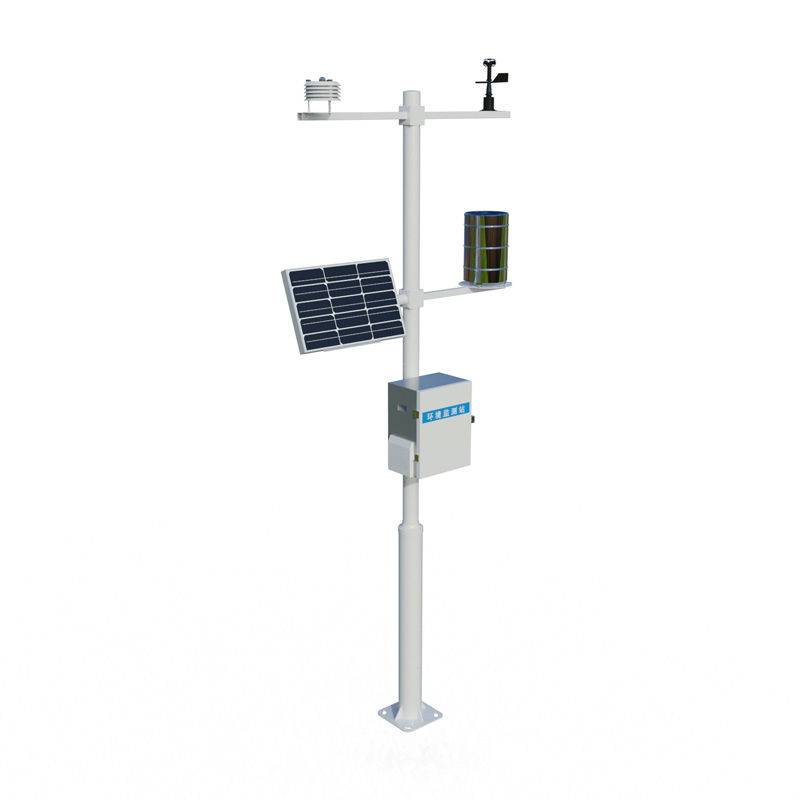
Ground-based meteorological instruments are the core equipment for the daily operation of weather stations, used to measure meteorological elements in the near-surface layer. Automatic weather stations, as the basic platform for ground observation, are typically equipped with various sensors: Temperature measurement uses platinum resistance temperature sensors or platinum wire resistance thermometers, utilizing the characteristic of metal resistance changing with temperature to achieve high-precision temperature measurement; humidity measurement often uses capacitive humidity sensors or hair hygrometers, determining relative humidity by measuring changes in capacitance or length caused by moisture adsorption by the sensing material; air pressure observation uses capacitive pressure sensors or silicon diaphragm sensors, calculating air pressure values by utilizing changes in capacitance caused by diaphragm deformation. Wind observation typically uses anemometers and wind vanes; the rotation rate of the anemometer is proportional to the wind speed, and the direction the wind vane points indicates the wind direction.
Precipitation-related observation equipment is more diverse. Tipping bucket rain gauges are conventional instruments for measuring rainfall, accumulating rainfall through the number of bucket flips. Precipitation weather phenomenon instruments use optical principles, employing a laser emitter and receiver. When precipitation particles pass through the sampling area, changes in light intensity are used to calculate particle size and falling velocity, thereby identifying precipitation types such as rain, snow, drizzle, and hail. Visibility observation primarily utilizes forward-scattering visibility meters and transmission visibility meters. The former estimates the extinction coefficient by measuring the intensity of forward-scattered light from the atmosphere, while the latter directly measures the average extinction coefficient of the horizontal air column. Laser ceilometers and micro-pulse lidar are used for cloud observation, calculating the cloud base height by measuring the time difference between laser emission and reception. Lightning locators utilize the electromagnetic field characteristics of lightning radiation to remotely measure discharge parameters, recording the time, location, intensity, and polarity of lightning strikes. Sunshine sensors employ photoelectric digital sunmeters to automatically record sunshine duration. Evaporation and snow depth observers are used to measure water surface evaporation and snow depth, respectively.
Upper-air meteorological instruments are used to acquire meteorological data at various altitudes above the ground. Weather balloons carrying digital radiosondes are launched to measure temperature, humidity, and air pressure in real time, and obtain wind direction and speed data via GPS or navigation systems. Upper-air meteorological radar systems track weather balloons, receiving and processing the data. Meteorological rockets can probe altitudes of 30 to 80 kilometers, used for measuring temperature, density, air pressure, and wind fields in the middle and upper atmosphere. In addition to carrying conventional observation instruments, meteorological aircraft are equipped with meteorological radar and atmospheric physics sampling equipment for the study of cloud physics and severe convective weather systems. Wind profiler radar continuously detects the vertical distribution of upper-air wind fields by emitting electromagnetic waves and receiving atmospheric turbulence echoes. These various upper-air meteorological detection methods complement each other, enabling three-dimensional monitoring of the atmosphere from the boundary layer to the stratosphere.
The configuration of different {XXX123XXXX} stations depends on the functional positioning and operational needs of the observation station. Baseline climate stations are typically equipped with a complete set of observation instruments, including automatic weather stations, visibility meters, precipitation meters, radiation sensors, and lightning location systems. Agricultural meteorological observation stations add sensors for soil moisture, soil temperature, leaf surface humidity, and photosynthetically active radiation for monitoring farmland microclimates and crop growth environments. Traffic meteorological stations focus on monitoring factors affecting traffic safety, such as visibility, road icing, and snow accumulation. With the development of meteorological observation technology, automation, remote sensing and multi-sensor integration have become the main trends. The integrated weather phenomenon observation instrument integrates a scattering visibility meter, a precipitation detection system and a temperature, humidity and wind sensor into one unit, and automatically determines weather phenomena through multivariate logic analysis.
This paper addresses:https://fengtuweather.com/technical/882.html
Related products
Related article
-
Police radar gun Precise, Non-Contact Speed Measurement via Radio Waves
2026-03-27 -
Meteorological equipment for disaster prevention and mitigation
2024-03-01 -
The price of small integrated meteorological instruments ranges from 3900 to 39800 yuan
2026-06-15 -
Road Weather Stations: Enhancing Highway Safety Through Advanced Meteorological Monitoring
2025-10-16 -
Agricultural Monitoring System: Bridging Terminal Devices and Management Platform for Agriculture
2025-03-10 -
Dust monitoring system installation specification
2024-06-11 -
Integrated forest fire risk factor monitoring station component
2024-05-16 -
Multifunctional weather station Enables Real-Time Online Monitoring of Oil Conditions
2026-05-19