

Product
-
Weather station
-
Road Weather Station
-
Photovoltaic Inspection
-
Atmospheric monitoring
-
Operating condition monitoring
Recommended article
- The price of Fengtu automatic weather stations is affected by the configuration of monitoring elements
- Odor gas detector Enables 24-Hour Continuous Monitoring of Odor Pollution in Industrial Plants
- Shandong Fengtu, a manufacturer of meteorological observation equipment, supplies high-precision integrated field monitoring equipment
- Odor gas detector utilizes a multi-sensor array to perform on-site monitoring of odor factors according to national standards
- Application Introduction of Weather Monitoring Equipment High-Precision Environmental Monitoring Equipment in the Field
- Police radar gun Achieves Precise Speed Measurement in Multiple Scenarios Based on the Doppler Effect
Contact us
Shandong Fengtu IOT Technology Co., Ltd
Sales Manager:Ms. Emily Wang
Cel,Whatsapp,Wechat:+86 15898932201
Email:info@fengtutec.com
Add:No. 155 Optoelectronic Industry Accelerator, Gaoxin District, Weifang, Shandong, China
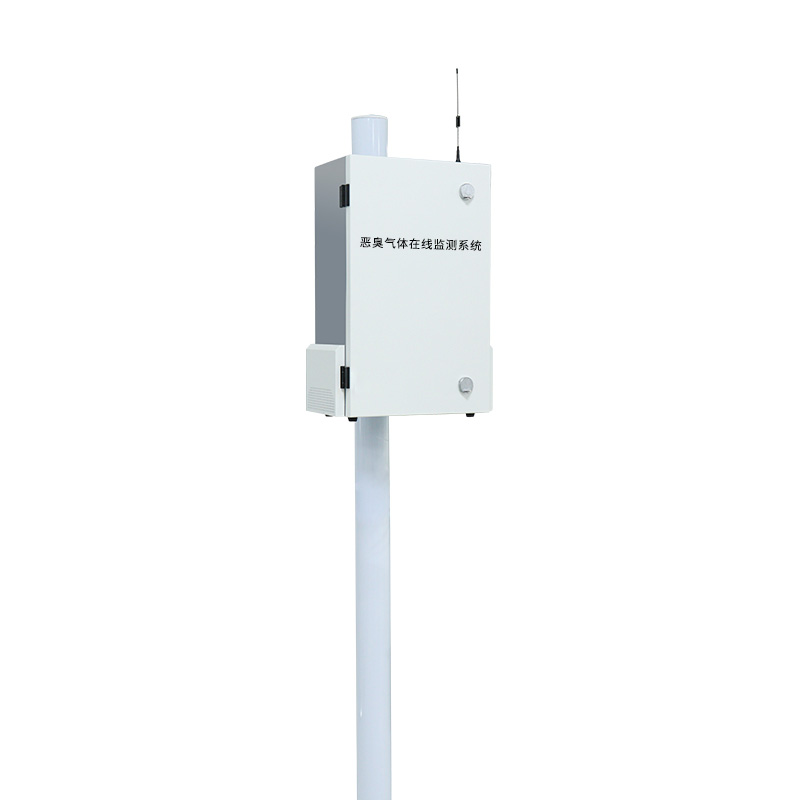
Odor Online Monitoring System Enables 24-Hour Continuous Monitoring of Odor Concentration (OU), Ammonia, and Hydrogen Sulfide
Article source:Weather station time:2026-04-14 10:12:18 viewed:299times
Odor Online Monitoring System integrates metal oxide sensors, PID photoionization detectors, electrochemical sensors, and ETO sensors to provide 24-hour continuous monitoring of odor concentration (OU values), ammonia, and hydrogen sulfide. It is ideally suited for locations with fugitive emissions, such as waste treatment facilities, sewage treatment plants, and industrial plant boundaries.
Odor Online Monitoring System is primarily deployed in areas prone to generating odors—including waste disposal sites, sewage treatment plants, fixed pollution sources, and plant perimeters. The fugitive malodorous gases emitted from these areas comprise ammonia, hydrogen sulfide, and various volatile organic compounds (VOCs); traditional olfactometry methods are incapable of providing continuous, online monitoring for such substances. By utilizing a combination of multiple sensor types, Odor Online Monitoring System achieves real-time monitoring of odor concentration (OU values), ammonia, and hydrogen sulfide.
The type of sensor employed is the critical factor determining the system's overall performance. Metal oxide sensors exhibit a broad-spectrum response to various reducing malodorous gases, making them suitable as a basis for assessing overall odor concentration. PID photoionization detectors offer high sensitivity and rapid response times for volatile organic compounds, making them ideal for detecting VOC components present in landfill leachate and chemical-related odors. Electrochemical sensors demonstrate superior selectivity and linear output characteristics specifically for inorganic malodorous gases, such as ammonia and hydrogen sulfide. ETO sensors are utilized for monitoring specific industrial exhaust gases, such as ethylene oxide. By integrating these diverse sensors into a single device, the system enables the simultaneous detection of various malodorous gases, thereby ensuring the accuracy and continuity of the monitoring data.
Odor Online Monitoring System supports two operational modes: intermittent monitoring and 24-hour continuous monitoring. For plant boundaries and areas surrounding sensitive receptors, the continuous monitoring mode is typically employed; in this mode, the system generates and uploads a set of monitoring data every minute to an environmental management platform via 4G or RS485 connectivity. Should the concentration of any monitored gas exceed a pre-configured threshold, the system automatically triggers an alarm signal. To address fugitive surface-source emissions at sewage treatment plants and waste disposal sites, the system can be configured with multiple monitoring points to establish a grid-based monitoring network, thereby assisting facility managers in identifying primary odor sources and tracking their dispersion pathways.
Regarding data accuracy, Odor Online Monitoring System features built-in temperature compensation and zero-point calibration capabilities. Electrochemical and PID sensors are significantly susceptible to environmental temperature and humidity fluctuations; consequently, the system mitigates drift errors by continuously acquiring real-time temperature and humidity parameters and applying corrections to the sensor outputs. Metal oxide sensors require a preheating and stabilization period before entering an active monitoring state; the system automatically manages this preheating process to ensure the validity of data immediately following a cold start. Furthermore, the ETO sensor incorporates a cross-interference compensation algorithm to prevent other gases from skewing measurements of the target gas.
In practical applications, the Odor Online Monitoring System system has been successfully deployed in various settings, including the downwind perimeters of landfills, the vicinities of aeration tanks at wastewater treatment plants, and the boundaries of livestock and poultry farms. The generated monitoring data serves as a basis for enforcement actions by environmental protection agencies, while also providing a valuable reference for enterprises to utilize in their own internal environmental management. Compared to traditional manual sampling followed by laboratory analysis, this online monitoring system offers vastly improved temporal resolution and spatial coverage, enabling the capture of the true concentrations of short-duration emission spikes. As sensor lifespans extend and costs decline, the Odor Online Monitoring System system is undergoing a comprehensive expansion—shifting from the monitoring of organized emissions from fixed pollution sources to the broader monitoring of fugitive emissions within the ambient air environment.
This paper addresses:https://fengtuweather.com/technical/921.html
Related products
Related article
-
Road Weather Information System: Tackling the Challenge of Dense Fog Patches
2024-09-30 -
Beyond Gas and Particles: The Versatile Air Quality Monitoring Station
2025-08-07 -
Ultrasonic Snow Depth Detectors: Enabling Accurate, 24/7 Snow Depth Monitoring for Meteorological and Traffic Sectors
2025-08-29 -
Power Quality Measurement Makes Power Grid Harmonic Detection and Data Logging More Efficient
2026-07-22 -
"Highlights" of the integrated forest fire risk factor monitoring stations
2024-07-15 -
3-Meter Laser Snow Depth Monitoring Station: Non-Contact, High-Frequency Laser Measurement of Snow Thickness
2026-03-16 -
Shandong Fengtu, an environmental monitoring station manufacturer, focuses on the R&D and manufacturing of meteorological monitoring equipment
2026-07-01 -
Fengtu's Weather Monitoring Equipment: Versatile, Customizable and Network-Ready
2025-08-05