

Product
-
Weather station
-
Road Weather Station
-
Photovoltaic Inspection
-
Atmospheric monitoring
-
Operating condition monitoring
Recommended article
- photovoltaic testers 400V/20A Range Meets the On-Site Testing Needs of Photovoltaic Modules
- Application of Low-Power Meteorological observation equipment in Unattended Field Monitoring
- How Portable Solar Cell Testers Rapidly Perform PV String I-V Curve Testing
- The price of meteorological monitoring systems varies from 3,900 to 39,800 yuan depending on the number of monitored elements
- Power Quality Measurement Makes Power Grid Harmonic Detection and Data Logging More Efficient
- High-Precision Meteorological observation equipment Aids Field Environmental Monitoring
Contact us
Shandong Fengtu IOT Technology Co., Ltd
Sales Manager:Ms. Emily Wang
Cel,Whatsapp,Wechat:+86 15898932201
Email:info@fengtutec.com
Add:No. 155 Optoelectronic Industry Accelerator, Gaoxin District, Weifang, Shandong, China
What is Weather Station, and what are its functions?
Article source:Weather station time:2025-11-28 09:30:21 viewed:685times
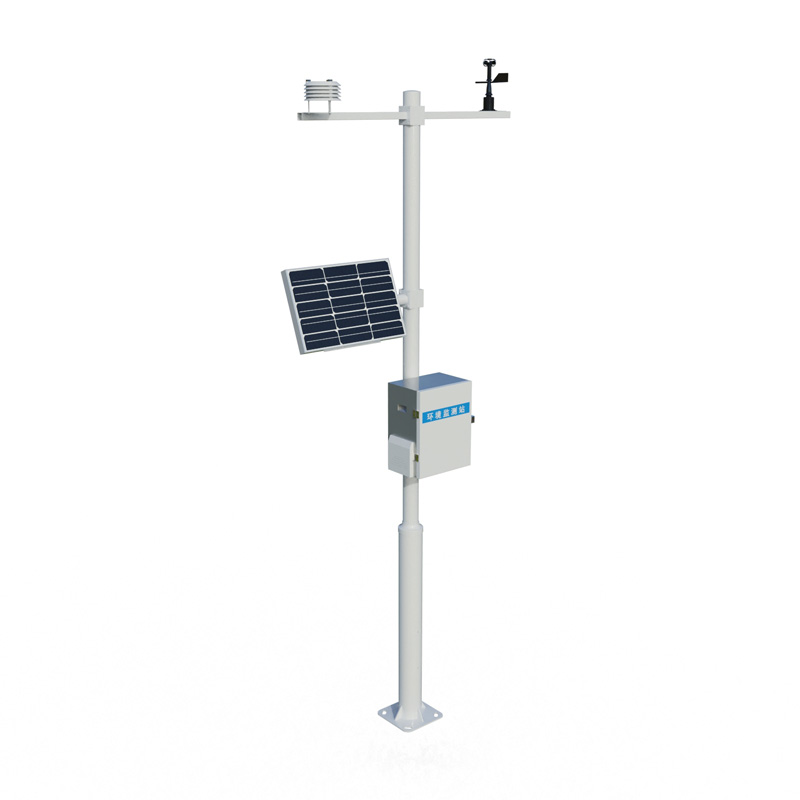
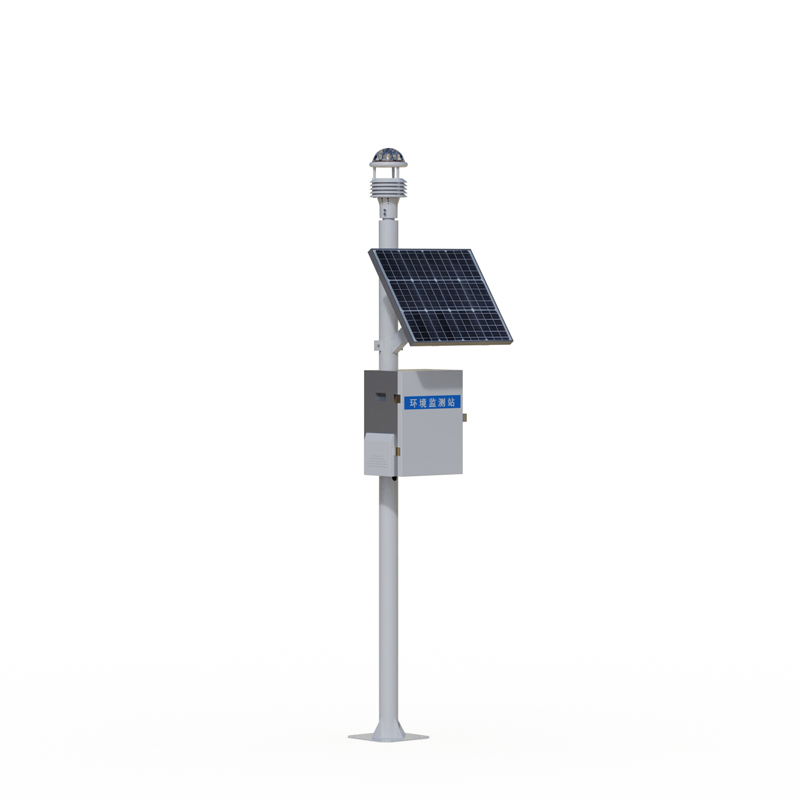
Weather Station is a device used for observing, recording, and reporting weather data. It consists of a data acquisition system, communication system, power supply system, and a supporting pole structure. It is specifically designed to measure elements such as temperature, humidity, atmospheric pressure, wind speed, wind direction, precipitation, and radiation. It integrates data acquisition, storage, and communication, and connects to backend management software or a central control room's PLC/DCS system via a wired connection for data processing and analysis.
Weather Station is a comprehensive device specifically designed for observing and recording various meteorological elements. Its core function is to continuously collect meteorological data from the environment and process it to form reliable weather information. A typical Weather Station consists of several key components, including a data acquisition system, a communication system, a power supply system, and a supporting pole structure. These components work together to ensure the continuity and accuracy of meteorological monitoring.
In terms of system composition, the data acquisition system is responsible for receiving signals from various sensors. These sensors are precisely calibrated to capture subtle changes in the atmosphere. The communication system transmits the collected data to a designated terminal; wired communication is a common transmission method, establishing a connection with backend management software via cables, or directly interfacing with the central control room's PLC/DCS system. The power supply system provides stable power to the entire device, usually combining mains power with a solar power backup solution. The supporting pole structure not only provides physical support but is also designed to withstand wind and corrosion, ensuring the sensors are at the optimal observation height.
The basic elements measured by Weather Station include important parameters such as temperature, humidity, atmospheric pressure, wind speed, wind direction, precipitation, and solar radiation. Temperature is usually measured using platinum resistance sensors, humidity is detected by capacitive polymer film elements, and atmospheric pressure is monitored by silicon piezoresistive sensors. Wind speed and direction are observed using cup anemometers and wind vanes, respectively, precipitation is recorded by a tipping bucket rain gauge, and radiation intensity is quantified by photoelectric sensors. The simultaneous monitoring of these elements provides a multidimensional data foundation for weather analysis.
Modern Weather Station integrates data acquisition, storage, and communication upload functions, forming a complete data link. The collected raw data is first processed and temporarily stored within the device, and then transmitted to the central processing system via a wired network. This integrated design reduces intermediate steps and improves data reliability. When interfacing with backend systems, Weather Station can directly exchange data with upper-level management software, or integrate with PLC and DCS systems in the industrial control field for further data processing and analysis.
In practical applications, the data flow of Weather Station involves multiple stages. Starting from sensor data acquisition, after signal conditioning and analog-to-digital conversion, the data is processed by a microprocessor and stored in memory. The communication module packages and sends the data according to the set protocol, and finally, the data is parsed and visualized in the upper-level software. This complete workflow ensures the timeliness and accuracy of meteorological data, providing necessary data support for weather forecasting, climate research, and various industrial applications.
The deployment location of Weather Station needs to follow professional standards to avoid interference from buildings and trees. Regular maintenance includes sensor calibration, power supply checks, and data link verification, which ensures the quality and comparability of monitoring data. With technological advancements, modern Weather Station is developing towards higher precision and stronger compatibility, playing an irreplaceable role in meteorological services, agricultural planning, and environmental monitoring.
This paper addresses:https://fengtuweather.com/company/846.html
Related products
Related article
-
Handheld Radar SpeedGun Calculating the Speed of Moving Objects Based on the Doppler Effect
2026-04-28 -
Miniature weather station Integrated Meteorological and Air Quality Monitoring System is suitable for field deployment
2026-02-02 -
Hardware configuration of forest fire risk factor monitoring stations
2024-08-06 -
Forest Weather Monitoring System to protect against hill fires
2024-04-29 -
What are the main classifications and common equipment of meteorological instruments?
2026-02-25 -
Principles and Applications of Online dust particle counter
2025-11-21 -
Mechanical and Ultrasonic Small Automatic Weather Stations
2025-09-04 -
Ecological display, less scenic environment monitoring system
2024-05-24