

Product
-
Weather station
-
Road Weather Station
-
Photovoltaic Inspection
-
Atmospheric monitoring
-
Operating condition monitoring
Recommended article
- photovoltaic testers 400V/20A Range Meets the On-Site Testing Needs of Photovoltaic Modules
- Application of Low-Power Meteorological observation equipment in Unattended Field Monitoring
- How Portable Solar Cell Testers Rapidly Perform PV String I-V Curve Testing
- The price of meteorological monitoring systems varies from 3,900 to 39,800 yuan depending on the number of monitored elements
- Power Quality Measurement Makes Power Grid Harmonic Detection and Data Logging More Efficient
- High-Precision Meteorological observation equipment Aids Field Environmental Monitoring
Contact us
Shandong Fengtu IOT Technology Co., Ltd
Sales Manager:Ms. Emily Wang
Cel,Whatsapp,Wechat:+86 15898932201
Email:info@fengtutec.com
Add:No. 155 Optoelectronic Industry Accelerator, Gaoxin District, Weifang, Shandong, China
Odour Monitoring Real-time Monitoring of Odor Units (OU), Ammonia, and Hydrogen Sulfide
Article source:Weather station time:2025-12-03 09:24:04 viewed:595times
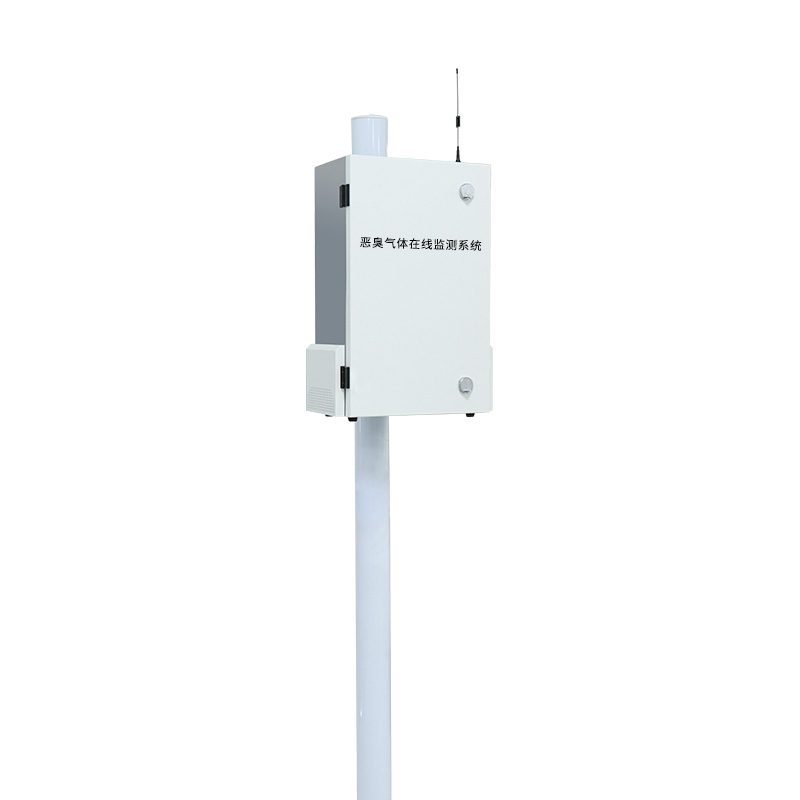
Odour Monitoring is specifically designed for real-time tracking of odor pollution, primarily monitoring odor concentration (OU value), ammonia, and hydrogen sulfide. This system continuously collects and analyzes air samples using high-sensitivity sensors, enabling 24-hour concentration monitoring and exceedance warnings, helping enterprises understand emission status, optimize processes, and improve environmental management.
Odour Monitoring is a professional environmental monitoring solution designed to address the complex odor gas emission problems within industrial parks. The main objective of this system is to achieve accurate and real-time tracking of characteristic odor substances, providing reliable data support for environmental management and process improvement.
The system's core monitoring elements include three key indicators: odor concentration (OU value), ammonia (NH3) concentration, and hydrogen sulfide (H2S) concentration. Odor concentration (OU value) is a comprehensive dimensionless indicator that reflects the overall odor intensity of a gas sample through olfactory sensors or dynamic dilution methods. Ammonia and hydrogen sulfide are the most common and characteristic inorganic odor substances in chemical industrial parks, and their individual monitoring is crucial for tracing specific pollution sources.
The system is built upon high-sensitivity electrochemical sensors, metal oxide semiconductor sensors, or more precise optical analysis technologies. Sensor arrays are deployed at key locations such as factory boundaries, key production areas, and downwind areas of the industrial park, automatically collecting air samples and performing real-time analysis at minute intervals. The system design supports two operating modes: continuous 24-hour monitoring of key areas, and cyclical intermittent monitoring of multiple points as needed, thus achieving a balance between monitoring network coverage and cost efficiency.
During operation, the monitoring system continuously performs data collection, analysis, and warning tasks. The data acquisition platform aggregates and stores real-time concentration values from each monitoring point. The analysis module performs trend statistics, spatio-temporal distribution comparisons, and automatically determines whether concentrations exceed preset alarm thresholds. Once the monitored OU value, ammonia, or hydrogen sulfide concentration reaches the warning level, the system immediately issues an alarm through the monitoring software interface, audible and visual alarms, or SMS messages, notifying industrial park environmental management personnel for timely investigation.
The direct benefit of deploying Odour Monitoring is helping enterprises to grasp the emission levels and diffusion patterns of odor substances in real time. By analyzing long-term monitoring data, companies can more accurately assess the treatment efficiency of environmental protection facilities, identify weak points in fugitive emissions, and thus optimize production processes and waste gas treatment plans in a targeted manner. Furthermore, the objective and continuous monitoring data provided by the system serves as an important basis for industrial parks to fulfill their environmental social responsibilities, address complaints from surrounding communities, and conduct compliance self-assessments.
In summary, Odour Monitoring, by using technological means to transform the difficult-to-quantify "odor" problem into manageable and controllable objective data, is a key infrastructure for chemical industrial parks to achieve refined environmental management and promote green and sustainable development.
This paper addresses:https://fengtuweather.com/company/849.html
Related products
Related article
-
10-Component Dust Monitoring System for Playgrounds: Precision Tracking of PM2.5, PM10, and Meteorological Factors
2025-05-23 -
Dust monitoring system improves supervision
2024-06-12 -
Road Weather Station: The Core Infrastructure for Highway Traffic Safety
2025-09-16 -
3-Meter Laser Snow Depth Monitoring Station Achieves Millimeter-Level Measurement Accuracy Using Phase-Shift Laser Ranging
2026-04-23 -
Shandong Fengtu An Integrated Manufacturer of Weather Stations with a Complete Production Chain
2026-03-25 -
Dust Detector Systems: Comprehensive Environmental Monitoring for Effective Pollution Control
2025-09-25 -
Why install a snow depth monitoring station?
2024-01-25 -
Dust Monitoring Equipment: Real-Time Monitoring Solution for Fugitive Dust Pollution Management
2025-09-11