

Product
-
Weather station
-
Road Weather Station
-
Photovoltaic Inspection
-
Atmospheric monitoring
-
Operating condition monitoring
Recommended article
- Speed enforcement system Achieves Precise Speed Measurement and Evidence Collection Based on the Doppler Principle
- Miniature Weather Stations Enable Precise Multi-Parameter Integrated Environmental Meteorological Monitoring
- What Testing Instruments are Required for Photovoltaic Power Generation Acceptance?
- Road meteorological monitoring systems collect road condition and meteorological data to ensure road safety
- The PV module IV tester performs volt-ampere characteristic testing on outdoor PV modules
- The price of small weather stations varies depending on their model and configuration
Contact us
Shandong Fengtu IOT Technology Co., Ltd
Sales Manager:Ms. Emily Wang
Cel,Whatsapp,Wechat:+86 15898932201
Email:info@fengtutec.com
Add:No. 155 Optoelectronic Industry Accelerator, Gaoxin District, Weifang, Shandong, China
High-precision Weather Station enable multi-element automatic monitoring and remote data transmission
Article source:Weather station time:2026-06-30 09:49:00 viewed:61times
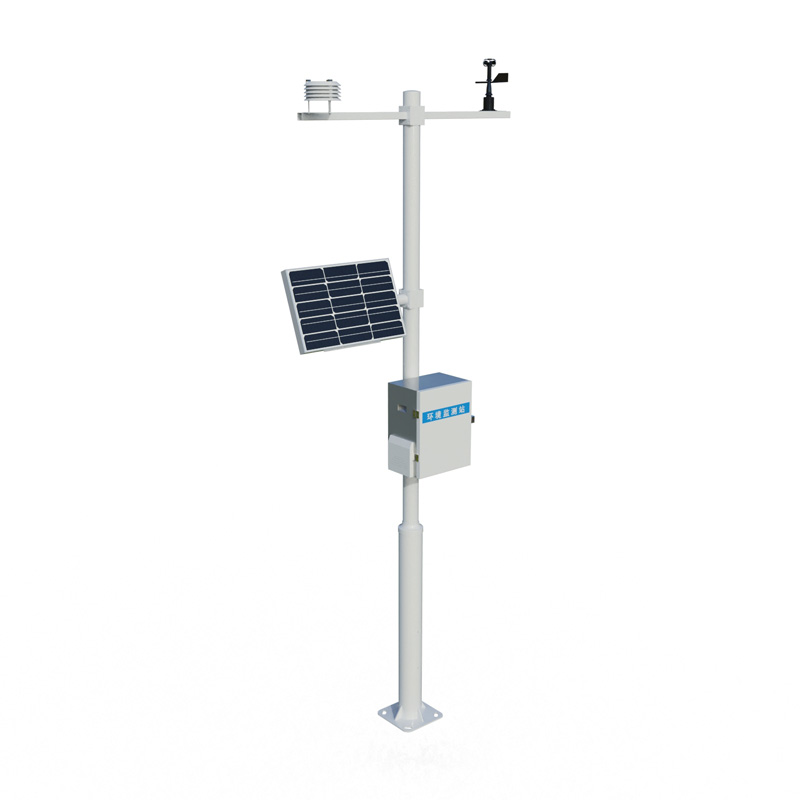
The Weather Station system consists of five parts: a meteorological sensor, a data logger, a power supply system, a pole support, and a cloud platform. It adopts a highly integrated design for rapid installation and deployment. The equipment has low power consumption and is suitable for long-term field monitoring, widely serving meteorological, agricultural, forestry, environmental protection, marine, airport, port, and educational fields.
Weather Station are the basic institutions for meteorological observation and the grassroots units for meteorological departments to carry out meteorological information collection, weather forecasting, and meteorological services. Modern Weather Station have evolved from traditional manual observation to highly automated integrated observation systems, consisting of five parts: a meteorological sensor, a data logger, a power supply system, a pole support, and a cloud platform. This equipment adopts a modular design, allowing for rapid installation and deployment, and can be put into operation without complex debugging. It is suitable for long-term monitoring in various complex environments such as the field, mountains, and islands.
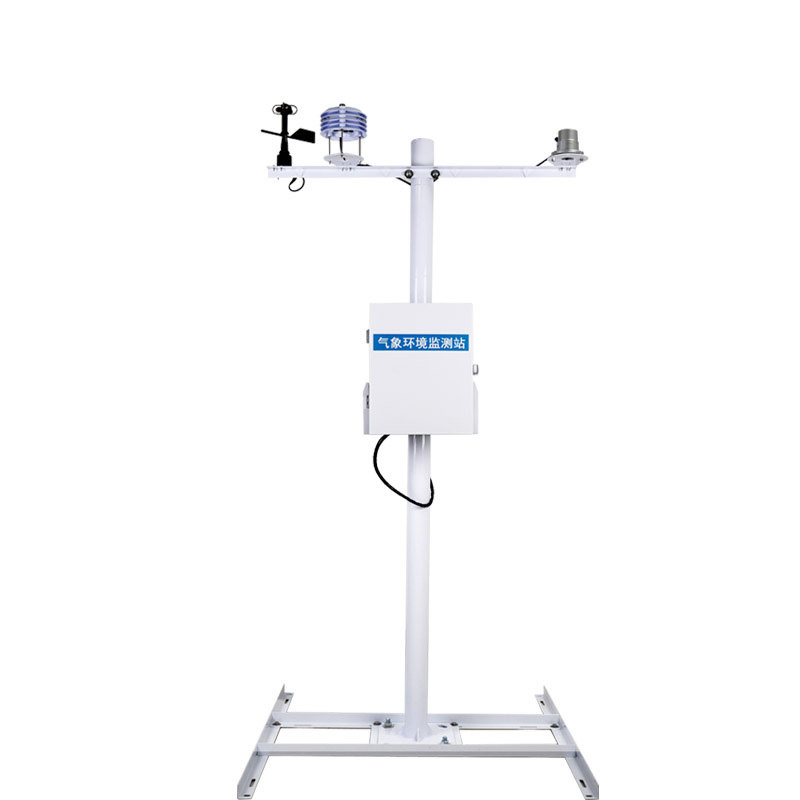
In terms of hardware, the system integrates multiple high-precision sensors, enabling all-weather on-site monitoring of meteorological elements such as wind speed, wind direction, air temperature, air humidity, atmospheric pressure, precipitation, and light intensity. The data acquisition unit collects the output signals from each sensor, processes them, and then transmits the data to the central station or cloud platform periodically via a communication module. The power supply system supports a hybrid approach of solar power and mains power, resulting in low total power consumption and ensuring continuous operation in areas without grid coverage. The standardized pole support provides a stable mounting platform for the sensors, ensuring the representativeness and accuracy of the observation data.
From a classification perspective, based on the spatial range of observation, the system is divided into ground-based and upper-air systems. Based on the differences in the tasks performed, ground-based systems can be further divided into weather stations, climate stations, and specialized systems such as agricultural, aviation, and hydrological stations. At the national level, ground meteorological observation stations are classified into three categories: national benchmark climate stations, national basic meteorological stations, and national general meteorological stations. As of 2016, the national meteorological departments had more than 2,400 national comprehensive ground meteorological observation stations and nearly 58,000 regional automatic meteorological observation stations.
In practical applications, meteorological stations widely serve agriculture, forestry, aviation, military, marine, airports, ports, scientific research, and school education. In agriculture, they are used for observing crop growth, phenological observation, and soil moisture monitoring. Weather radar stations use radar to detect weather systems, providing data support for weather forecasting. In school education, meteorological stations can serve as a popular science teaching tool, helping students understand the basic principles and methods of meteorological observation. The application of cloud platforms allows users to remotely view real-time data, historical curves, and statistical reports via computers or mobile devices, enabling centralized data management and analysis.
This paper addresses:https://fengtuweather.com/company/964.html
Related products
Related article
-
One - Stop Dust Monitoring Solution
2025-01-16 -
Grassland weather stations protect against grassland fires
2024-04-30 -
Detecting Deep - Buried Non - Metallic Pipelines with Ground Penetrating Radar
2025-03-05 -
Vehicle-Mount Weather Station: Bridging the Gaps in Environmental Monitoring Networks
2024-12-17 -
Automated Weather Station Installation Costs Range from ¥3,900 to ¥9,800
2026-05-06 -
Atmospheric electric field meters provide early warnings of thunderstorm activity by monitoring changes in the ground electric field
2026-06-02 -
Scenic anion monitors are a highlight of scenic publicity!
2024-03-26 -
The Intelligent Visibility Monitoring Station: Optimizing Highway Traffic Flow in Low Visibility
2024-11-27