

Product
-
Weather station
-
Road Weather Station
-
Photovoltaic Inspection
-
Atmospheric monitoring
-
Operating condition monitoring
Recommended article
- Application Introduction of Weather Monitoring Equipment High-Precision Environmental Monitoring Equipment in the Field
- Police radar gun Achieves Precise Speed Measurement in Multiple Scenarios Based on the Doppler Effect
- The forest meteorological fire risk monitoring station collects real-time meteorological data related to forest fire risk
- Radar speed gun utilizes the Doppler effect to achieve multi-scenario speed measurement
- Ultrasonic Snow Depth Detector Automated Snow Depth Measurement Using Ultrasonic Technology
- Speed enforcement system Achieves Precise Speed Measurement and Evidence Collection Based on the Doppler Principle
Contact us
Shandong Fengtu IOT Technology Co., Ltd
Sales Manager:Ms. Emily Wang
Cel,Whatsapp,Wechat:+86 15898932201
Email:info@fengtutec.com
Add:No. 155 Optoelectronic Industry Accelerator, Gaoxin District, Weifang, Shandong, China
I-V Curve Tracer is used for testing outdoor solar cell modules
Article source:Weather station time:2026-02-24 10:29:25 viewed:438times
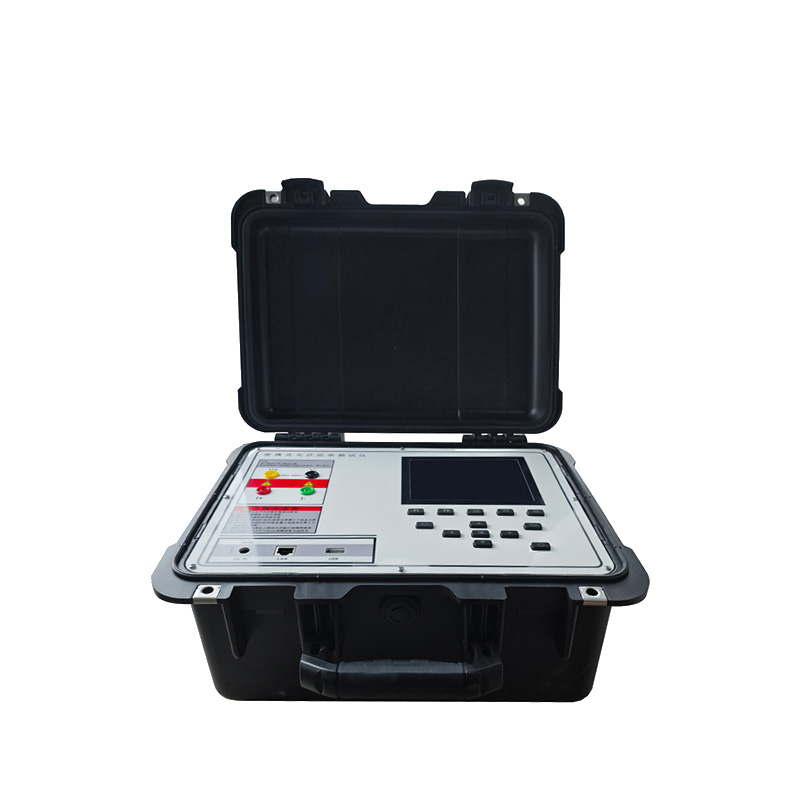
I-V Curve Tracer is specifically designed for testing the volt-ampere (I-V) characteristics of outdoor solar cell modules, enabling rapid testing of their operating characteristics under natural sunlight. The device integrates irradiance and temperature sensors to comprehensively evaluate photovoltaic module performance, making it an essential testing tool for power plant construction units, quality inspection departments, manufacturers, and research institutions in power plant design, acceptance, and maintenance.
Throughout the entire lifecycle of photovoltaic power plant construction and operation, accurately understanding the actual operating characteristics of solar cell modules is crucial for ensuring power generation efficiency and system stability. I-V Curve Tracer, as a field testing tool specifically designed for outdoor scenarios, can conveniently and quickly test the I-V characteristic curves of solar cell arrays and modules under natural sunlight, providing reliable data support for photovoltaic project quality control.
The core function of I-V Curve Tracer is to use high-precision electronic load technology to collect key parameters such as open-circuit voltage, short-circuit current, maximum power point voltage, and current of the module in real time under natural sunlight, and generate intuitive I-V and P-V curves. The equipment is typically equipped with independent irradiance meters and temperature sensors, simultaneously recording ambient temperature, solar panel temperature, and solar irradiance, providing complete environmental background data for test results. Some models offer voltage testing ranges up to 1500V and current testing ranges up to 30A, covering testing needs from single modules to 30kW photovoltaic arrays.
Regarding outdoor testing adaptability, these devices generally feature an integrated portable design, dust and splash resistance, and a high-brightness, sunlight-readable color LCD screen, ensuring clear readability even in strong light conditions. Built-in high-capacity replaceable lithium batteries support 8 to 15 hours of continuous operation, meeting all-weather on-site testing needs. Wireless connections are commonly used between the main unit and probes, with a maximum transmission distance of up to 100 meters, significantly improving on-site deployment flexibility and ease of operation.
Data processing capability is another key technical focus of I-V Curve Tracer. The equipment incorporates a rich database of solar cell module correction models, covering product specifications from major module manufacturers, and can automatically convert on-site test data into equivalent parameters under standard test conditions. The internal memory typically stores over 2000 test waveforms, supports SD card or USB interface expansion, and the accompanying analysis software generates standardized test reports for easy data traceability and performance comparison. Some high-end models also feature continuous testing capabilities, automatically completing a test every 10 to 20 seconds to monitor the temporal changes in component performance.
In terms of application areas, I-V Curve Tracer widely serves multiple links in the photovoltaic industry chain. Power plant construction units use it during the construction and acceptance phase to verify the quality of component installation and the actual output capacity of the system; quality inspection departments can conduct third-party testing and certification according to international standards such as IEC 61215 and IEC 62446; operation and maintenance teams use the equipment to regularly check for hidden faults such as component degradation, hot spot effects, or potential-induced degradation; research institutions and universities use it as a key experimental device for outdoor verification of photovoltaic materials and devices.
In actual operation of photovoltaic power plant field testing, I-V Curve Tracer demonstrates a significant efficiency advantage. Complete testing of a single module or string can be completed within 10 seconds, and the one-click operation interface reduces the professional skills required of on-site personnel. By inputting module barcodes via a wireless barcode scanner, test data can be automatically matched with module identification information, facilitating the establishment of a full lifecycle performance tracking profile. For space-constrained scenarios such as distributed rooftop power stations, the lightweight design and flexible deployment capabilities enable the equipment to adapt to various complex installation conditions.
As the photovoltaic industry develops towards refined operation and maintenance and full lifecycle management, I-V Curve Tracer is becoming a standardized configuration for power station quality control. The accurate volt-ampere characteristic data it provides not only serves project acceptance but also provides quantitative basis for subsequent power generation assessment, fault diagnosis, and module replacement decisions.
This paper addresses:https://fengtuweather.com/industry/881.html
Related products
Related article
-
Principles and Applications of Online dust particle counter
2025-11-21 -
Comprehensive Monitoring and Early Warning Scheme for Geological Disasters
2025-06-25 -
Cameras-Enabled Vehicle-Mount Weather Station FT-CZ5S
2025-03-31 -
Mechanical Weather Stations & Ultrasonic Weather Stations
2024-02-01 -
compact weather station Multi-Element Monitoring and Multi-Domain Applications
2026-01-26 -
Strategies for Using Dust Detectors to Avoid Penalties under Stringent Environmental Regulations
2025-06-10 -
Dust monitoring and control systems for steel companies
2024-03-19 -
Mechanical weather station fills the "blind spots" in meteorological monitoring!
2024-09-23