

Product
-
Weather station
-
Road Weather Station
-
Photovoltaic Inspection
-
Atmospheric monitoring
-
Operating condition monitoring
Recommended article
- What Testing Instruments are Required for Photovoltaic Power Generation Acceptance?
- Road meteorological monitoring systems collect road condition and meteorological data to ensure road safety
- The PV module IV tester performs volt-ampere characteristic testing on outdoor PV modules
- The price of small weather stations varies depending on their model and configuration
- photovoltaic testers 400V/20A Range Meets the On-Site Testing Needs of Photovoltaic Modules
- Application of Low-Power Meteorological observation equipment in Unattended Field Monitoring
Contact us
Shandong Fengtu IOT Technology Co., Ltd
Sales Manager:Ms. Emily Wang
Cel,Whatsapp,Wechat:+86 15898932201
Email:info@fengtutec.com
Add:No. 155 Optoelectronic Industry Accelerator, Gaoxin District, Weifang, Shandong, China
Multi-channel Field Measurement of Power Quality Monitoring Equipment
Article source:Weather station time:2026-02-11 09:50:15 viewed:370times
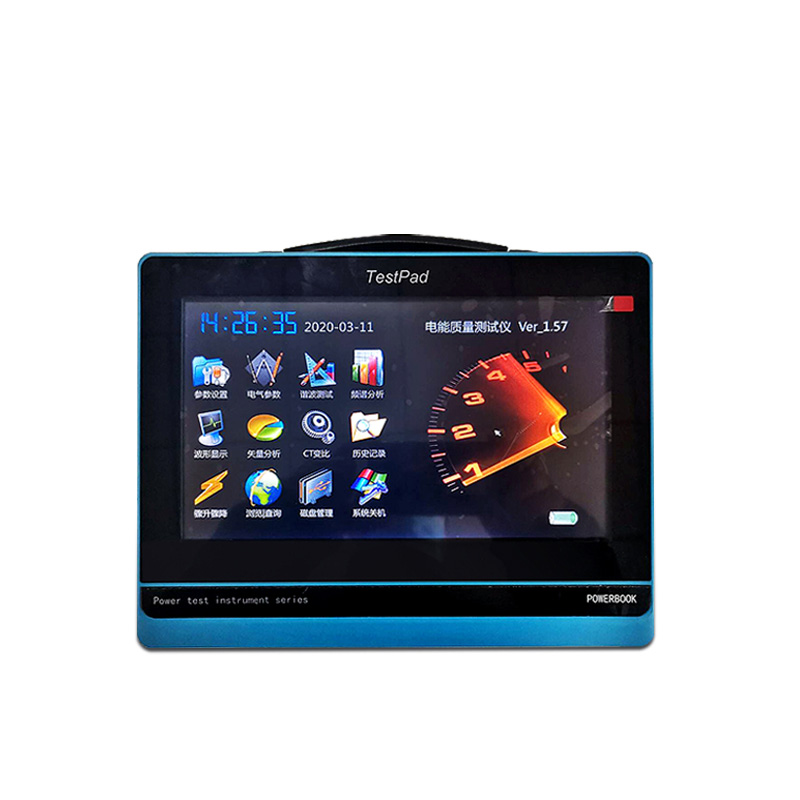
The Power Quality Monitoring Equipment is a portable field testing device that can simultaneously measure multiple parameters such as voltage and current amplitude, phase, frequency, and power. It features four voltage and four current input channels, is easy to operate, and is commonly used for on-site assessment of power grid power quality.
The core function of the Power Quality Monitoring Equipment lies in the simultaneous, high-precision measurement of multiple electrical parameters. The device can measure the true RMS values of voltage and current in real time and accurately capture the phase difference between them. Based on this fundamental data, the instrument can further calculate key indicators such as frequency, active power, reactive power, apparent power, and power factor. This comprehensive measurement capability provides a complete dataset for a comprehensive assessment of the power status of a circuit or node.
A significant feature of this instrument is its multi-channel input capability. Equipped with four independent voltage channels and four current channels, it allows testers to simultaneously measure three-phase circuits and the neutral line. This design is crucial for analyzing three-phase imbalance, assessing neutral line current, and comprehensively recording the real-time power consumption status of the entire system. Synchronous sampling across all channels ensures highly accurate phase relationships between parameters, making advanced analysis results such as harmonic analysis and power calculations more reliable.
The device's integrated, tablet-style design makes it particularly suitable for on-site testing and inspection. It integrates the display unit, operating interface, and measurement host, eliminating the cumbersome steps of connecting to an external computer. Testers can carry the device directly to the power distribution room, production workshop, or equipment installation site for quick wiring and measurements. The intuitive touchscreen interface facilitates parameter setting and data viewing, improving on-site work efficiency.
In practical applications, this tester is primarily used to understand and diagnose the actual power quality of the power grid. It can help engineers identify problems such as voltage sags, spikes, excessive harmonic content, and low power factors. By comparing parameters before and after switching on electrical equipment, its impact on the power grid can be assessed. The recorded steady-state and transient data provide objective evidence for dispute arbitration between power suppliers and users, energy efficiency assessments, and electrical fault diagnosis.
To ensure measurement accuracy, care must be taken to correctly connect the voltage line and current sensor, and to select an appropriate range based on the approximate range of the measured signal. Regular calibration of the equipment and its current clamp is essential for maintaining long-term measurement accuracy.
In summary, the Power Quality Monitoring Equipment, with its multi-channel synchronous measurement and portability, has become a practical tool for on-site power quality monitoring and daily power consumption inspections. It directly reflects various electrical parameters in the interaction between the power grid and electrical equipment, providing crucial data support for ensuring power supply reliability, improving energy utilization efficiency, and maintaining equipment safety.
This paper addresses:https://fengtuweather.com/technical/878.html
Related products
Related article
-
Odor Monitoring System achieves 24-hour gas concentration monitoring through a multi-sensor array
2026-05-14 -
Small Automatic Weather Stations: Tailored Solutions for Hazardous Chemical Environments
2025-06-09 -
Digital weather stations in schools to foster scientific literacy among schoolchildren
2024-07-22 -
FT - CZ5SVehicle - Mount Weather Station: Uniting Surveillance and Mobility for Environmental Monitoring
2025-04-15 -
The miniature weather station equipment outputs twelve monitoring data points simultaneously via a digital interface
2026-06-03 -
Embrace Precision Monitoring with Fengtu Negative Oxygen Ion Monitoring Station
2025-02-13 -
What kind of instrument is a miniature weather station device?
2024-06-13 -
Road Weather Station on Patrol Vehicles: Dynamic Monitoring for Road Traffic Safety
2025-07-30