

Product
-
Weather station
-
Road Weather Station
-
Photovoltaic Inspection
-
Atmospheric monitoring
-
Operating condition monitoring
Recommended article
- The PV module IV tester performs volt-ampere characteristic testing on outdoor PV modules
- The price of small weather stations varies depending on their model and configuration
- photovoltaic testers 400V/20A Range Meets the On-Site Testing Needs of Photovoltaic Modules
- Application of Low-Power Meteorological observation equipment in Unattended Field Monitoring
- How Portable Solar Cell Testers Rapidly Perform PV String I-V Curve Testing
- The price of meteorological monitoring systems varies from 3,900 to 39,800 yuan depending on the number of monitored elements
Contact us
Shandong Fengtu IOT Technology Co., Ltd
Sales Manager:Ms. Emily Wang
Cel,Whatsapp,Wechat:+86 15898932201
Email:info@fengtutec.com
Add:No. 155 Optoelectronic Industry Accelerator, Gaoxin District, Weifang, Shandong, China
Meteorological observation station Enables High-Precision Automatic Acquisition of Meteorological Elements Across Multiple Scenarios
Article source:Weather station time:2026-06-25 09:50:29 viewed:71times
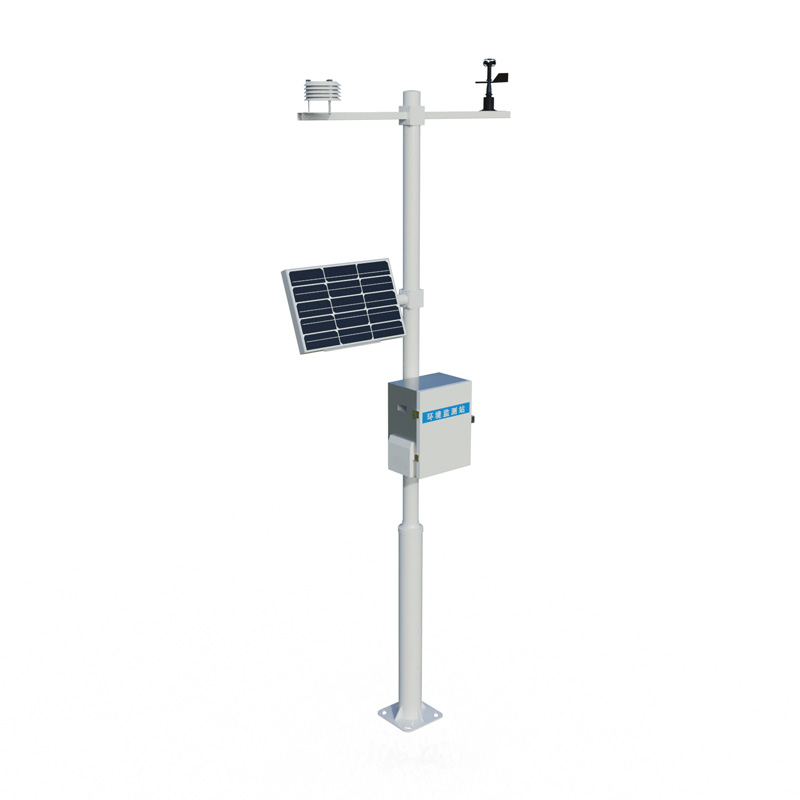
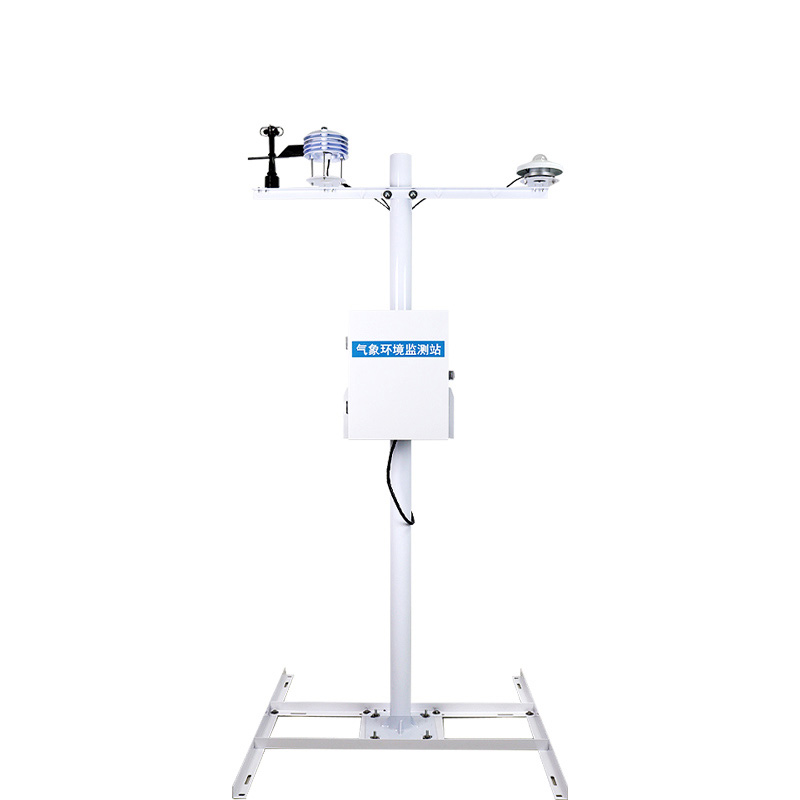
Meteorological observation station is a highly integrated, low-power, and rapidly installable high-precision meteorological observation device, composed of five parts: meteorological sensors, a data logger, a solar power system, a pole support, and a cloud platform. The device requires no debugging, can be quickly deployed, and is widely used in meteorology, agriculture, forestry, environmental protection, marine science, airports, ports, scientific research, and educational institutions.
Meteorological observation station is a professional facility for real-time monitoring and recording of atmospheric environmental parameters. It detects multiple atmospheric and soil parameters through a sensor array and is widely used in agriculture, forestry, aviation, military, environmental protection, marine science, airports, ports, scientific research, and educational institutions. This highly integrated, low-power, rapidly installable, and easy-to-use high-precision meteorological observation device consists of five parts: meteorological sensors, a data logger, a solar power system, a pole support, and a cloud platform. The device adopts a modular design and is factory-calibrated and debugged, allowing users to directly put it into use after on-site installation without complex adjustments, significantly reducing deployment time and labor costs.
In terms of system composition, meteorological sensors are the core component of the equipment, responsible for collecting data on various meteorological elements such as wind speed, wind direction, temperature, humidity, air pressure, rainfall, and radiation. The data logger uses industrial-grade processing chips to perform real-time acquisition, linearization, and quantitative conversion of sensor signals, transforming engineering quantities into meteorological element values. The power supply system supports complementary power supply from mains and solar energy, with the total power of the equipment generally not exceeding 20W, meeting the needs of long-term unattended operation in the field. The pole support is made of carbon steel or stainless steel, with a height typically ranging from 2 to 10 meters, which can be customized according to actual observation requirements. The cloud platform provides functions such as remote data viewing, historical record querying, data curve analysis, and alarm threshold setting. Users can access monitoring data anytime via mobile phone or PC browser.
In terms of technical parameters, Meteorological observation station has a wind speed measurement range of 0 to 60 m/s with an accuracy of ±0.2 m/s; a wind direction measurement range of 0 to 360° with an accuracy of ±1°; an ambient temperature measurement range of -40 to 80°C with an accuracy of ±0.3°C; an ambient humidity measurement range of 0 to 100%RH, with an accuracy of ±3%RH within the 20% to 80% range; an air pressure measurement range of 300 to 1100 hPa with an accuracy of ±0.25%; and a total radiation measurement range of 0 to 2000 W/m² with an accuracy of <±3%. The equipment has an IP65 or higher protection rating, enabling it to adapt to various harsh outdoor environmental conditions.
Meteorological observation station can continuously monitor multiple meteorological elements, including wind speed, wind direction, temperature, humidity, air pressure, rainfall, total radiation, and sunshine duration, around the clock. Observational data is transmitted in real-time to a cloud platform via GPRS, 4G, or BeiDou satellite communication methods. In remote mountainous areas, islands, and other regions without public network coverage, some devices utilize BeiDou satellite direct connection technology to achieve stable data transmission. This equipment helps users stay informed about changes in the regional meteorological environment, providing fundamental data support for weather forecasting, climate research, disaster early warning, and agricultural production scheduling.
This paper addresses:https://fengtuweather.com/industry/962.html
Related products
Related article
-
Differences between grassland weather stations and other weather stations
2024-03-28 -
Multi-channel Field Measurement of Power Quality Monitoring Equipment
2026-02-11 -
Forestry Weather Station is used for comprehensive monitoring and early warning of grassland and forest fire risk factors
2025-12-17 -
Fighting Against Dust: The Role of Dust Detector in Urban Sustainability
2024-12-18 -
3-Meter Laser Snow Depth Monitoring Station Achieves Millimeter-Level Measurement Accuracy Using Phase-Shift Laser Ranging
2026-04-23 -
Combatting Urban Dust Pollution: The Role of Dust Detectors in Real-Time Monitoring
2025-05-27 -
Ultrasonic Snow Depth Detector Achieving Millimeter-Level Automatic Snow Depth Measurement Using Ultrasonic Ranging Principles
2026-03-19 -
Online Dust Monitoring System: An Intelligent Solution for Urban Dust Pollution Control
2025-06-04