

Product
-
Weather station
-
Road Weather Station
-
Photovoltaic Inspection
-
Atmospheric monitoring
-
Operating condition monitoring
Recommended article
- photovoltaic testers 400V/20A Range Meets the On-Site Testing Needs of Photovoltaic Modules
- Application of Low-Power Meteorological observation equipment in Unattended Field Monitoring
- How Portable Solar Cell Testers Rapidly Perform PV String I-V Curve Testing
- The price of meteorological monitoring systems varies from 3,900 to 39,800 yuan depending on the number of monitored elements
- Power Quality Measurement Makes Power Grid Harmonic Detection and Data Logging More Efficient
- High-Precision Meteorological observation equipment Aids Field Environmental Monitoring
Contact us
Shandong Fengtu IOT Technology Co., Ltd
Sales Manager:Ms. Emily Wang
Cel,Whatsapp,Wechat:+86 15898932201
Email:info@fengtutec.com
Add:No. 155 Optoelectronic Industry Accelerator, Gaoxin District, Weifang, Shandong, China
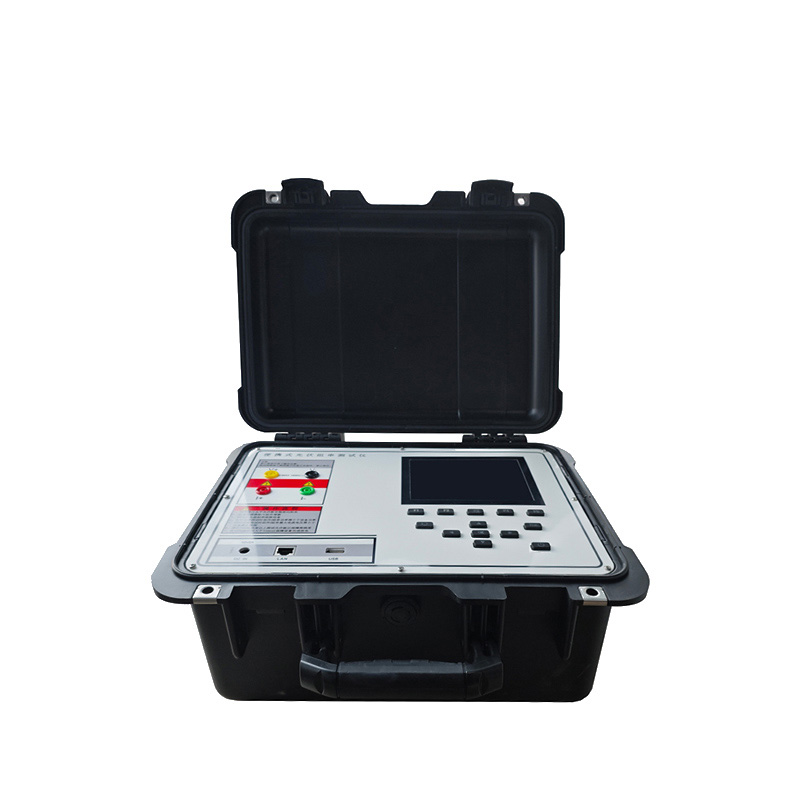
Portable IV Curve Tester is used for on-site performance testing of photovoltaic modules
Article source:Weather station time:2025-12-12 09:48:41 viewed:540times
Portable IV Curve Tester is a device specifically designed for on-site testing of photovoltaic power plants. It is used to quickly measure the current-voltage characteristic curve of solar cell modules or strings under current illumination conditions, and to obtain key parameters such as open-circuit voltage, short-circuit current, and maximum power point to evaluate their actual power generation performance.
The core function of Portable IV Curve Tester is to acquire the current-voltage (I-V) characteristic curve of photovoltaic modules or strings on-site. Under natural illumination, the tester rapidly scans the tested object through an electronic load, recording the voltage and current changes from open circuit to short circuit. Based on this curve, the device can directly calculate and display core parameters such as open-circuit voltage, short-circuit current, peak power, and fill factor. By comparing the measured peak power with the rated power of the module under standard test conditions, the power conversion efficiency and power degradation rate relative to the initial nominal value of the module can be calculated, thus intuitively judging its performance status.
Depending on the scale of the tested object and the testing purpose, this device is mainly used on two levels. First, it involves detailed testing of individual photovoltaic modules, commonly used for spot checks of incoming materials at power plants, post-installation acceptance, or diagnosis of specific modules suspected of being faulty. Second, it involves overall testing of strings of multiple modules connected in series. Modern equipment typically has a DC voltage measurement capability of up to 1500V, meeting the testing requirements of high-voltage strings in large power plants. This string-level testing is highly efficient and a standard method for periodic inspections, efficiency assessments, and troubleshooting in power plants.
In actual operation, the use of Portable IV Curve Tester requires adherence to standardized procedures to ensure data accuracy and operational safety. Before measurement, an irradiance meter and temperature sensor must be used to simultaneously record the actual solar irradiance and module backsheet temperature during the test. During connection, it is essential to confirm that the positive and negative terminals of the tester correctly correspond to the string polarity and to comply with high-voltage operation safety regulations. After testing, the instrument can correct and convert the measurement results to standard test conditions based on the measured environmental data using a built-in algorithm, allowing for a fair comparison with the module's factory nominal values.
Portable IV Curve Tester is of significant value for the full lifecycle management of photovoltaic power plants. In the early stages of power plant construction, it is used for component acceptance upon arrival, preventing the use of substandard products. During the installation and commissioning phase, it tests each string of components to ensure correct installation and connections, preventing power loss due to wiring errors, shading, or component defects. Throughout the decades of operation and maintenance of power plants, regular inspections using the I-V tester are the core basis for assessing the power plant's health, locating deteriorating components, and developing precise maintenance plans.
Currently, Portable IV Curve Tester is developing towards higher integration and greater intelligence. High-end models generally integrate high-precision irradiance meters, temperature sensors, and environmental data loggers, and are equipped with touchscreens and graphical interfaces, capable of directly displaying clear I-V curves and comparative analysis results. Data can be wirelessly transmitted to mobile devices or cloud platforms, enabling automatic generation and management of test reports. As an indispensable on-site diagnostic tool in the photovoltaic industry, its portability, accuracy, and efficiency continuously provide crucial technical support for ensuring the power generation efficiency and asset security of photovoltaic power plants.
This paper addresses:https://fengtuweather.com/technical/852.html
Related products
Related article
-
How PV Weather Station Optimizes Photovoltaic Power Generation and Management
2024-11-28 -
Automated systems for meteorological stations
2024-04-18 -
The Vehicle - Mount Weather Station: Optimized for Dynamic Monitoring
2025-04-09 -
Real-time data from the road meteorological monitoring system supports traffic early warning
2026-06-01 -
Road surface temperature monitoring station application range
2024-06-25 -
Dust Monitoring Equipment: Guarding the Environment and Public Health against Construction Dust
2024-11-20 -
Fengtu Vehicle-Mounted Weather Station Monitoring System: Empowering Mobile Meteorological Data Acquisition
2025-07-18 -
What are the main classifications and common equipment of meteorological instruments?
2026-02-25