

Product
-
Weather station
-
Road Weather Station
-
Photovoltaic Inspection
-
Atmospheric monitoring
-
Operating condition monitoring
Recommended article
- Miniature Weather Stations Enable Precise Multi-Parameter Integrated Environmental Meteorological Monitoring
- What Testing Instruments are Required for Photovoltaic Power Generation Acceptance?
- Road meteorological monitoring systems collect road condition and meteorological data to ensure road safety
- The PV module IV tester performs volt-ampere characteristic testing on outdoor PV modules
- The price of small weather stations varies depending on their model and configuration
- photovoltaic testers 400V/20A Range Meets the On-Site Testing Needs of Photovoltaic Modules
Contact us
Shandong Fengtu IOT Technology Co., Ltd
Sales Manager:Ms. Emily Wang
Cel,Whatsapp,Wechat:+86 15898932201
Email:info@fengtutec.com
Add:No. 155 Optoelectronic Industry Accelerator, Gaoxin District, Weifang, Shandong, China
Sensor Array Technology and Application Scenarios of Odor gas detector
Article source:Weather station time:2026-06-29 09:24:17 viewed:72times
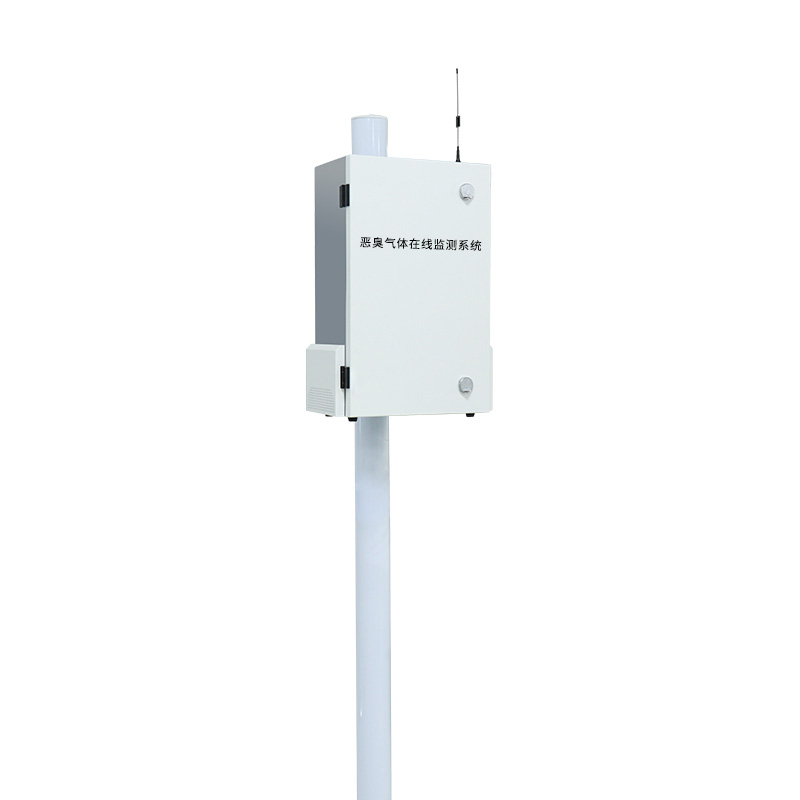
Odor gas detector is an intelligent gas monitoring terminal integrating multiple sensors such as metal oxide, PID photoionization, and electrochemical sensors. It can simultaneously monitor odor concentration and multiple odor pollutants specified in GB14554 standards, including ammonia and hydrogen sulfide. It is widely used in waste treatment plants, sewage treatment plants, and chemical industrial parks.
Odor gas detector is an intelligent device for real-time monitoring of odor gas concentrations in the air, widely used in environments such as waste treatment plants, sewage treatment plants, chemical plants, and industrial parks. This device can perform intermittent or continuous 24-hour monitoring of odor in polluted areas. The standard monitoring indicators cover the pollutant control categories specified in GB14554, including odor concentration (OU), ammonia, styrene, hydrogen sulfide, VOCs, trimethylamine, dimethyl sulfide, methanethiol, dimethyl disulfide, and carbon disulfide. The device consists of a hybrid array of multiple sensors, including metal oxide sensors, PID photoionization detectors, and electrochemical sensors.
The working principle of the online odor monitoring system is based on electrochemistry and semiconductor principles. The system draws in ambient gas via a sampling pump, which is then fed into the detection unit after passing through a multi-channel point-to-point sampling system and a pre-processing unit. The detection unit employs a sensor array consisting of metal oxide sensors, electrochemical sensors, and photoionization sensors to simultaneously detect multiple odor components. The system processes the data using data fusion, compensation, and cross-interference algorithms, ultimately outputting the concentration values of individual gases such as hydrogen sulfide, ammonia, and VOCs, as well as dimensionless OU values.
In terms of equipment composition, the online odor monitoring system typically consists of a power supply unit, a sampling unit, a sample gas processing unit, a sensor detection unit, a data processing unit, a display unit, and a transmission unit. The power supply unit provides electrical energy to the entire system. The sampling unit draws odor samples into the sensor detection unit via a sampling pump. The sample gas processing unit filters moisture and dust from the odor samples. The sensor detection unit identifies and analyzes different odor components in the odor samples. The equipment supports remote transmission in multiple modes including WiFi, GSM, GPRS, 3G, and 4G, and is compatible with communication protocols such as TCP/IP and MODBUS. It can upload data to environmental protection bureaus, control rooms, and cloud platforms.
The application scenarios of Odor gas detector cover heavily polluting industries such as petrochemicals, waste treatment, sewage treatment, livestock farming, and pharmaceutical manufacturing, as well as open environments such as urban factory boundaries and industrial park boundaries. A typical application example is the deployment of 115 sets of equipment in the Tianjin Binhai New Area Chemical Industrial Park, enabling 24-hour online monitoring of 40 factories with an early warning accuracy rate exceeding 80%. The equipment can integrate meteorological parameter monitoring (temperature, humidity, wind speed, wind direction), automatic alarm devices, and automatic sample retention systems, supporting evidence locking and law enforcement collection for sudden pollution incidents. The equipment adopts a modular design, with sensor lifespans of 3 to 5 years, and supports remote calibration and fault diagnosis, effectively reducing operation and maintenance costs.
This paper addresses:https://fengtuweather.com/technical/963.html
Related products
Related article
-
Cameras-Enabled Vehicle-Mount Weather Station FT-CZ5S
2025-03-31 -
Forestry Weather Station Determining Fire Risk Levels via Meteorological Factor Monitoring
2026-03-23 -
Monitoring Forest Litter Moisture Content
2025-01-17 -
Beyond Gas and Particles: The Versatile Air Quality Monitoring Station
2025-08-07 -
Portable IV Curve Tester is used for on-site performance testing of photovoltaic modules
2025-12-12 -
Highway Visibility Detector for Enhanced Safety
2024-08-23 -
Ground Penetrating Radar for Detecting Roadway Surrounding Rock Loose Zone
2025-07-29 -
Dust: A Major Contributor to PM and the Solution of Detection
2024-12-20